Parenting
0 min read
Baby’s first Halloween: Costume and sleep safety


Cradlewise Staff
It is your baby’s first Halloween, and you’ve probably been looking forward to this little “family-first” for a while. Maybe you already have the costume picked out. Maybe you’re planning pumpkin pictures, decorating the house, or taking your baby along while the older kids go trick-or-treating.
Halloween can feel a little different once there’s a baby in the picture. The house may be busier. There can be more noise, unfamiliar faces, extra layers of clothing, and a bedtime that happens later than usual. And somewhere between getting everyone dressed and answering the door for the tenth trick-or-treater, it’s easy to forget that your little pumpkin still needs a comfortable outfit and their usual safe sleep setup.
You don’t have to skip the Halloween fun. A few small changes can make it easier for your baby to enjoy the evening without turning bedtime into a whole new adventure.
How should I dress my baby for their first Halloween?
It’s your baby’s first Halloween, so of course you want to make it memorable with the cutest costume. But when it comes to babies, safety comes first.
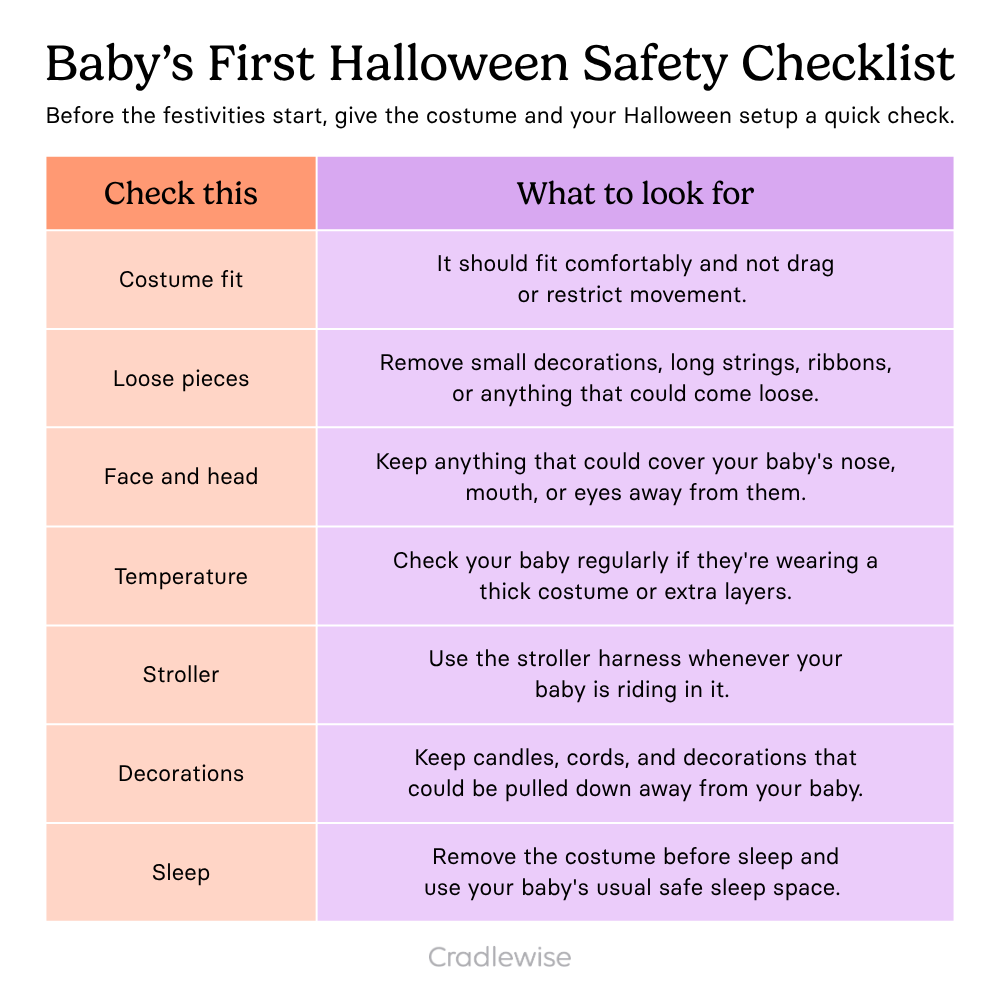
Start with a costume that fits your baby comfortably and lets them move freely. The Consumer Product Safety Commission (CPSC) recommends choosing costumes that fit well and don’t drag or become a tripping hazard. For babies, that can mean a simple themed sleeper or onesie works better than a complicated costume with lots of extra pieces.
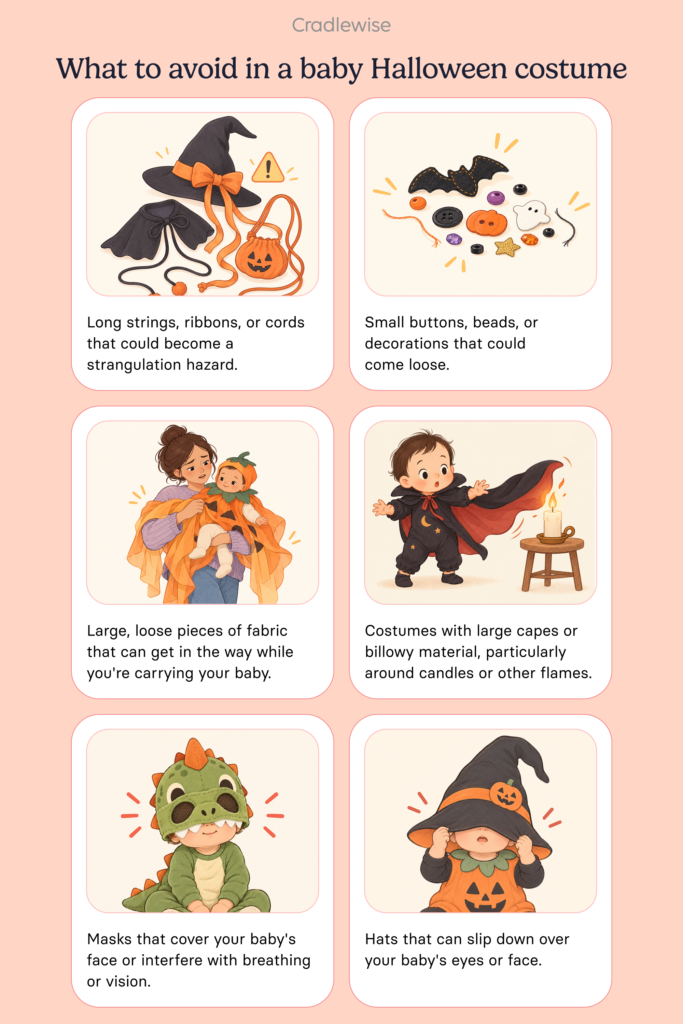
Check the costume before Halloween night. Look for loose threads, small decorations that could come off, long strings, or anything that could get around your baby’s neck.
If you’re buying a costume, check the label for flame-resistant material. This is particularly important around candles, jack-o’-lanterns, fireplaces, or other open flames. And don’t feel like the costume has to stay on all evening. If your baby is happy in it long enough for a few pictures, you’ve already got the Halloween photo you wanted.
What should I avoid in a baby Halloween costume?
Some costume details are better left out when you’re dressing a baby. A hat can be adorable for a picture, but if it keeps slipping over your baby’s eyes, take it off. You can always put it back on for the next photo.
How can I keep my baby from overheating in a Halloween costume?
Halloween costumes can be warmer than they look, especially when they’re made from thick fabric or worn over regular clothes.
Check your baby’s temperature while they’re wearing the costume, particularly if you’re moving between a chilly outdoor evening and a warm house or car. If the outfit feels too warm, remove a layer rather than waiting until your baby becomes uncomfortable.
You may also want to think about where your baby will spend most of the evening. A thick costume that works for a chilly walk outside may be too warm once you’re indoors. If you’re carrying your baby in a carrier, pay attention to the combined warmth of the costume, your body, and the carrier. Keep your baby’s face visible and make sure the costume isn’t bunching around their neck or face.
Can my baby wear a Halloween costume while sleeping?
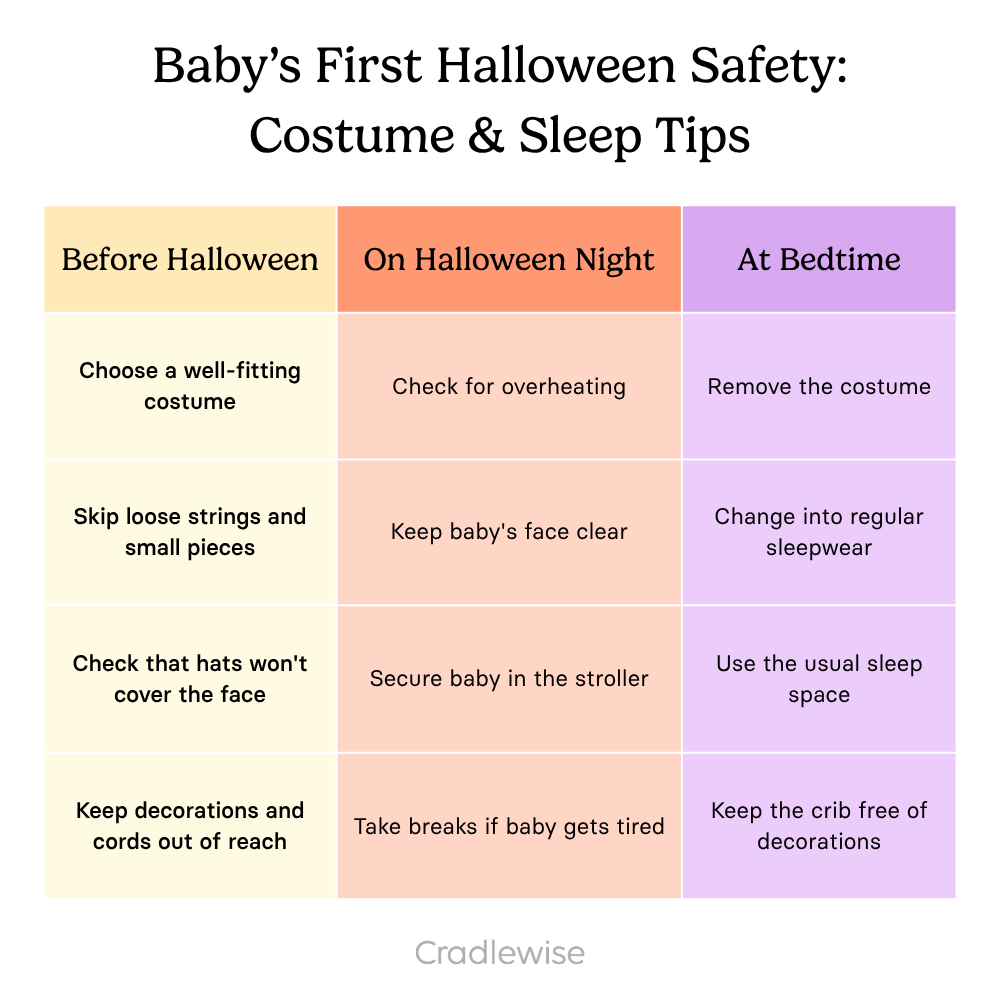
No. Halloween costumes aren’t sleepwear. Before putting your baby down for a nap or bedtime, take off the costume along with hats, headbands, capes, and other accessories. These items don’t belong in your baby’s sleep space.
The American Academy of Pediatrics (AAP) recommends placing babies on their backs for sleep on a firm, flat surface with only a fitted sheet. The crib, bassinet, or play yard should be kept free of loose items. That means the adorable little pumpkin costume should come off before bedtime, even if your baby looks especially cute in it.
If your baby falls asleep unexpectedly while you’re out, move them to a firm, flat sleep surface as soon as possible. The AAP also specifically recommends moving a sleeping baby from a car seat, stroller, swing, infant carrier, or sling to a safe sleep surface when possible.
Is it safe to take my baby trick-or-treating?
Your baby can tag along while the family goes trick-or-treating, but they won’t get much out of the candy part just yet. For a young baby, the outing is really about being with the family and taking in a new environment. Keep your baby close, especially around unfamiliar people, pets, decorations, steps, and busy sidewalks.
If you’re using a stroller, make sure your baby is properly secured with the stroller’s harness. CPSC warns that an unsecured baby can slip through the opening between the seat and tray, creating an entrapment or strangulation risk.
If you’re using a carrier, keep your baby’s face visible and make sure nothing from the costume is covering their nose or mouth. You may also find that a shorter outing works better than trying to stay out until everyone else is ready to go home. Babies can get tired quickly when there’s a lot happening around them.
What about Halloween decorations around my baby?
Halloween decorations deserve a baby-proofing check too. Keep candles and lit jack-o’-lanterns well away from places where your baby’s costume could come into contact with the flame. CPSC recommends keeping candles away from doorsteps and other areas where costumes may brush against them.
Once your baby is mobile, decorations become especially interesting. A crawling baby may head straight for a light cord, pumpkin, table decoration, or anything else that looks new.
Keep cords out of reach and check that decorations can’t be pulled down. CPSC also advises keeping baby monitor cords out of a baby’s reach because of strangulation hazards. And if your baby has their own sleep space, keep Halloween decorations out of the crib or bassinet. A string of lights may look lovely in a nursery photo, but it shouldn’t be within your baby’s reach.
How can I protect my baby’s sleep on Halloween?
Halloween can easily push bedtime later. There may be visitors at the door, older siblings coming and going, or a family outing that runs longer than planned.
Try to keep your baby’s usual sleep cues familiar. If pajamas, a feed, a book, or another part of your normal routine usually happens before bed, keep those parts where you can. You don’t need to make the entire evening silent just because your baby has a bedtime. It can help, though, to give your baby some quieter time once the Halloween activity starts winding down.
If your baby normally sleeps in a dark room, keep the bright Halloween lights outside the sleep space. If your house is still busy, you may also want to settle your baby in their usual room rather than trying to make a new sleep arrangement for the night. The AAP recommends a firm, flat sleep surface with a fitted sheet and no other items in the sleep space.
What if my baby falls asleep during Halloween?
It would be pretty easy for a baby to fall asleep in the middle of Halloween. A stroller ride, car trip, or being carried around the neighborhood can do it.
If your baby nods off while you’re out, don’t leave them sleeping in their costume once you get home. Take off the costume and any accessories, then move your baby to their usual safe sleep space. If they’re asleep in a car seat, stroller, swing, carrier, or sling, the AAP recommends moving them to a firm, flat sleep surface on their back as soon as possible.
You may have to skip part of the evening while you get them settled. That’s a pretty reasonable trade when your baby’s eyelids are already telling you the party is over.
What should I do if my baby doesn’t want to wear the costume?
Some babies are perfectly happy to wear a tiny pumpkin hat. Others seem personally offended by the whole idea. If your baby keeps pulling at the costume, gets upset, or seems uncomfortable, take it off. You can still get Halloween pictures with a themed blanket, a simple onesie, or a costume piece held next to them while they’re supervised.
You can also dress your baby in the costume just for pictures and change them into regular clothes afterward. There is no requirement that the costume survive the entire evening.
Conclusion
Your baby’s first Halloween may look different from the Halloween you remember. You might spend more time taking pictures than trick-or-treating. The costume might come off after 20 minutes. Bedtime might happen before the neighborhood really gets going. And that’s okay.
Enjoy the part your baby is ready for, and let the rest wait. If the pumpkin costume lasts long enough for one good picture before your baby needs a diaper change and pajamas, that still counts as a first Halloween worth remembering.
FAQs
Q: 1. What should my baby wear for their first Halloween?
A: Choose a comfortable, well-fitting costume that lets your baby move freely. Avoid loose strings, small detachable pieces, masks, and anything that could cover their face.
Q: 2. Can my baby sleep in a Halloween costume?
A: No. Remove Halloween costumes, hats, headbands, and other accessories before sleep. Put your baby in their usual sleepwear and follow their normal safe sleep routine.
Q: 3. How can I keep my baby from overheating in a Halloween costume?
A: Check your baby regularly, especially if the costume is thick or layered. Adjust their clothing when moving between warm indoor spaces and cooler outdoor temperatures.
Q: 4. Is it safe to take my baby trick-or-treating?
A: Yes, with appropriate precautions. Keep your baby close, secure them properly in a stroller or carrier, and watch for hazards such as busy sidewalks, pets, decorations, and open flames.
Q: 5. What should I do if my baby falls asleep while trick-or-treating?
A: Once you can, remove the costume and move your baby to their usual firm, flat sleep surface. The AAP recommends moving a sleeping baby from a stroller, car seat, swing, carrier, or sling to a safe sleep surface as soon as possible.
Sources:
- Halloween costume and decoration safety. U.S. Consumer Product Safety Commission (CPSC). 2012. “Halloween Safety: Tips for Selecting Costumes and Décor”
- Safe sleep practices for babies. American Academy of Pediatrics (HealthyChildren.org). 2022. “A Parent’s Guide to Safe Sleep”
You may also like:
You may also like