Parenting
0 min read
Can babies sleep on their side? What safe sleep experts recommend

Medically Reviewed Badr Chaban, MD, MRCPCH MSc, Medical Director & Consultant Pediatrician at London Paediatric Clinic
Written by Cradlewise Staff
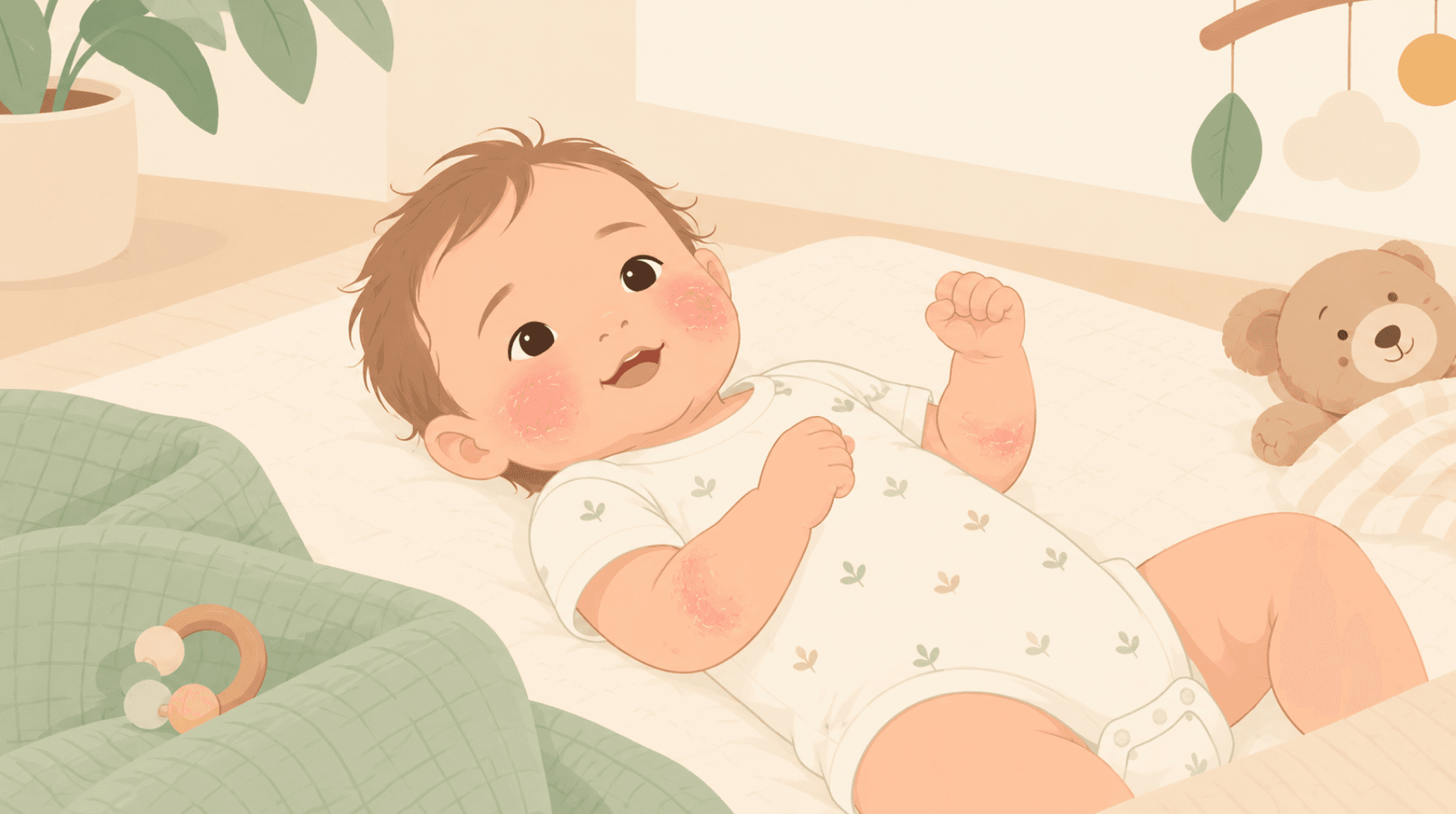
In the middle of the night, when you check your baby, you find them curled onto one side with their knees pulled up and a tiny fist beside their cheek. They look so peaceful that part of you wants to leave them sleeping as is. But another part of you wonders whether it is safe for babies to sleep on their side?
No. Side sleeping is not safe and is not recommended for babies under one. Babies should sleep on their backs for every sleep, naps included, until their first birthday.
Learn why side sleeping is not recommended for babies, what to do if you find your baby on their side, and how the guidance changes once your baby starts rolling, with input from Badr Chaban, MD, MRCPCH MSc, Medical Director & Consultant Pediatrician at London Paediatric Clinic.
Can babies sleep on their side?
The answer is no.
As per NICHD, side sleeping is not recommended as babies can roll onto their stomachs from that position. The side position is unstable and associated with the highest risk of SIDS.
The AAP says placing your baby on their back is the most effective way to reduce SIDS risk. The same guidance applies to every caregiver and every sleep, whether it is a quick nap or a full night.
Is it safe for an infant to sleep on their side?
It is natural to wonder, because some babies seem to settle more easily on their side, but it is not safe for an infant to sleep on their side, as they are more likely to fall onto their stomachs, and can be vulnerable to SIDS.
NICHD adds that the SIDS risk for babies who sleep on their sides and then fall onto their stomachs is much higher than the risk for babies who are always placed to sleep on their stomachs. The AAP describes the side position as carrying risks similar to the stomach position, partly because rolling is easier from there.
Can newborns sleep on their side?
Newborns follow the same rule from their very first sleep. You should place your newborn baby always on their back, alone, and in a bare bassinet with no incline.
What to do when newborn rolls to side while sleeping
Finding your newborn on their side after you laid them down on their back can be startling. Gently return your baby to their back.
What is the newborn curl?
The newborn curl, also called the newborn scrunch, is a flexed, curled-up posture or the fetal position in which a baby rests with their arms bent, hands closed, knees toward their chest, and back curved.
Dr. Badr Chaban explains why the curled position feels natural for newborn babies:
This posture is common and natural in newborns, and is not the same as rolling over.
Why do infants sleep with their arms up?
Many newborns rest with their arms up beside their head, and it is part of the same curled-up, flexed posture.
The Moro or startle reflex can also fling your baby’s arms outward. Our guide on Moro reflex in babies can help you understand what it is and how long it lasts.
What to do if you find your infant sleeping on their side?
Dr. Chaban describes the following steps:
- Gently move your baby onto their back.
- Check that the surface is firm and flat, with only a fitted sheet on the mattress.
- Remove any pillows, blankets, bumpers or positioners from the sleep space.
- If your baby is older and starting to roll, see the rolling section below for what changes.
Is it safe to swaddle a baby who curls to their side?
Swaddling can calm a newborn when it is done correctly, with your baby on their back every time. The AAP also notes that swaddling does not reduce the risk of SIDS.
A curled-up posture is not the same as trying to roll over. A newborn curl happens when a baby curls and lands on their side unintentionally, due to gravity, while rolling over is intentional. Hence, it is safe to swaddle a baby who curls to their side, but not rolls over.
You should stop swaddling when your baby looks like they are trying to roll over, which usually happens around 3 to 4 months, but sometimes can happen earlier too around 2 months. So watch out for the signs.
Why do some parents consider side sleeping
Most parents who ask about side sleeping do it out of concern for their baby. Dr. Chaban describes the worry he hears most often:
Spit-up, reflux, and choking worries
Watching milk come back up can be frightening, and it is natural to want your baby tilted to the side. However, your baby lying on their back is a safer position.
Dr. Chaban explains how:
“ Babies have built-in reflexes that help keep milk out of the lungs. When a baby lies on their back, the way that the windpipe sits above the food pipe makes it really difficult and unlikely for spit-up to enter the airway, and if any milk does come back up, babies just swallow it again or cough and gag to clear it.”
He adds: I’ve seen parents mistake such coughing for evidence that back sleeping is dangerous, when it’s actually a protective response. No sleeping position eliminates every risk, but back sleeping is safer overall, even for babies with reflux.
NICHD describes the same phenomenon: On the back, the windpipe sits on top of the food pipe, so anything that comes up has to work against gravity to reach the lungs. Infant deaths from choking during sleep are very rare, and they have not increased since back sleeping recommendations began in the 1990s.
The AAP says even babies with gastroesophageal reflux disease (GERD) should sleep flat on their backs. Raising one end of the crib mattress is not effective for reflux, and it can be dangerous because babies may slide down in the sleep space.
Premature babies
NICHD says the back position is the safest sleep position for all babies, including those born preterm, until they are 1 year old.
In the hospital, some sick or preterm babies may need to lie on their stomachs or sides for medical reasons, however, they should be switched to a safer sleep position long before they go home, as per AAP.
Dr. Chaban shares a practical step for families preparing for discharge:
“ For premature babies, you should ask the NICU team to demonstrate the exact home sleep setup before discharge, especially in cases of ongoing breathing, feeding, or developmental concerns, and unless your treating specialist gives specific medical instructions, the recommendation remains back sleeping.”
Flat spots on the head
Some babies develop flat spots on the back of the head from lying on their backs, or from pressure against a car seat, stroller, or carrier. As per AAP, a little bit of flattening usually goes away on its own once a baby starts sitting up, though more serious flattening may be permanent. However, it is not dangerous and doesn’t affect your baby’s brain or development.
You can help prevent flat spots by:
- Giving supervised tummy time while your baby is awake. It also helps strengthen the neck and shoulder muscles.
- Limiting long stretches in car seats and carriers.
- Alternating arms when feeding or carrying your baby upright.
How to stop a baby from sleeping on their side
You cannot choose your baby’s position once they are asleep, so it’s advisable you begin with the correct setup. Starting every sleep on the back, in a flat and empty space with nothing that can shift or cover your baby’s face, is the part within your control.
Set up a safe sleep space
Follow the safe sleep guidance:
- A firm, flat surface that does not indent under your baby and does not incline more than 10 degrees, such as a crib or bassinet that meets Consumer Product Safety Commission standards.
- A fitted sheet and nothing else: no pillows, quilts, blankets, bumper pads or stuffed toys.
- A wearable blanket, or one more layer than you would wear, in place of loose bedding.
- Your baby’s sleep space in your room but not in your bed, for at least the first 6 months.
Are sleep positioners, wedges, and rolled blankets safe?
No. The AAP says wedges, positioners, special mattresses and specialized sleep surfaces have not been shown to reduce the risk of SIDS, and it advises avoiding products that claim to do so.
The same goes for rolled towels or blankets tucked beside your baby, because a baby who rolls into soft items can have their airflow blocked.
Cradlewise Note: The Cradlewise Smart Crib holds multiple safety and environmental certifications meeting U.S. and international standards.
When can infant sleep on tummy or side
Once your baby can roll both ways on their own, they can stay on their tummy or side if they roll there. Until then, every sleep starts on the back. Our tummy time guide covers how to build the strength rolling needs while your baby is awake.
What age do babies roll over?
Most babies begin rolling from stomach to back. By 7 months, the AAP says most babies can roll in both directions.
Cradlewise Note: Some babies can roll over on their own as early as 2 months. Read our guide on when do babies roll over, their signs and safety tips.
Do I need to flip my baby back to their back?
NICHD says that once babies can roll from back to stomach and from stomach to back on their own, you can leave them in the position they choose after starting their sleep on their back. If they can roll only one way, you can reposition them onto their back when they roll onto their stomach during sleep.
Newborn sleep position: Back sleeping vs. Side sleeping vs. tummy sleeping
| Position | Guidance | Main concern | When it is okay |
| Back sleeping | Recommended for every sleep, naps included, until age 1 | Flat spots on the head, which are usually harmless | Always. Start every sleep here |
| Side sleeping | Not recommended for sleep | Unstable, so babies can roll onto their stomachs | Not for sleep. Once a baby rolls both ways on their own, they may stay where they settle. |
| Tummy sleeping | Not recommended for sleep | Carries the highest risk of SIDS, overheating, rebreathing exhaled air | Awake and supervised, as tummy time |
What if my baby falls asleep on their side outside the crib?
Babies can easily drift off in arms, carriers, swings and car seats. If your baby falls asleep in a car seat, stroller, swing, infant carrier or sling, move them to a firm sleep surface, on their back, as soon as possible.
Also avoid falling asleep with your baby on a couch or soft armchair, where the risk of sleep-related infant death is much higher. If you bring your baby into bed to feed or comfort them, place them back in their own sleep space before you go to sleep.
When to talk to your pediatrician
Dr. Chaban lists the following symptoms that warrant a call to your pediatrician if your baby:
- Is unable to tolerate back sleeping or unusual discomfort when placed on their back
- Has a medical condition that makes you uncertain about their sleep plan
- Looks unusually stiff or floppy
- Has markedly asymmetric movements
- Repeatedly adopts an unusual posture while awake as well as asleep
- Has noisy breathing
- Has persistent feeding difficulties
- Has recurrent choking-like episodes
Conclusion
The next time you find your baby curled on one side with a fist near their cheek, you will know what to do. Ease them gently onto their back, and check that the crib is bare except a firm mattress and a fitted sheet.
Over the coming months your baby will start to roll on their own, and you will have the signs to watch for and clear guidelines to follow: start every sleep on their back.
FAQs
Q: Is it safe for infant to sleep on side?
A: No, it is not safe for infants to sleep on their side. The AAP recommends babies should sleep on their back for the first 12 months of their life to reduce the risk of SIDS.
Q: At what age can babies sleep on their side?
A: Side sleeping is not recommended during your baby’s first year. Once a baby can roll both ways on their own, they can settle in whatever position they choose after starting on their back.
Q: Should I wake up to turn my baby onto their back?
A: If you notice your newborn or infant sleeping on their side, gently move them to their back. For a baby who can roll in both directions, there is no need to keep turning them back, so long as every sleep starts on their back.
Q: Which side is best for a baby to sleep on?
A: Neither side is recommended for sleep. Back is the safest position for every sleep until the first birthday.
Q: Can I let my baby sleep on their side while I breastfeed lying down?
A: Late-night feeds are exhausting, and lying down together can feel like the easiest option. The AAP recommends avoiding bed sharing, and says that if you bring your baby into your bed to feed, you should place them back in their own sleep space before you go to sleep.
Q: What do I tell grandparents when they put my baby to sleep on their side?
A: Inform them respectfully that the medical guidance has changed because we understand the risks better today. Politely ask them to put the baby on their back for every sleep, even if they seem to settle more easily on their side.
You may also like:
- Babywearing: Benefits, safety, and how to get started.
- Do you need a humidifier in your newborn’s room?
- Milk teeth schedule: When babies get (and lose) each tooth, with teeth chart.
Sources:
- Side sleeping is not recommended. NICHD. About Back Sleeping.
- Place your baby on your back to reduce the risk of SIDS. AAP. 2026. How to Keep Your Sleeping Baby Safe: AAP Policy Explained.
- Swaddling does not reduce the risk of SIDS. AAP. 2026. How to Keep Your Sleeping Baby Safe: AAP Policy Explained.
- Spit-up, reflux, and choking worries. NICHD. About Back Sleeping.
- Babies with gastroesophageal reflux disease (GERD) should sleep flat on their backs. AAP. 2026. How to Keep Your Sleeping Baby Safe: AAP Policy Explained.
- Premature babies. NICHD. About Back Sleeping.
- Premature babies and safe sleep position. AAP. 2021. Safe Sleep for Babies in the Neonatal Intensive Care Unit.
- Flat spots on the head. AAP. 2020. AAP Releases Clinical Report: Differentiating Infant Head Shape Abnormalities.
- Are sleep positioners, wedges, and rolled blankets safe? AAP. 2022. Swaddling: Is it Safe for Your Baby?
- Babies can roll in both directions by 7 months. AAP. 2021. Movement Milestones: Babies 4 to 7 Months.
- Babies can roll over in 2 months. NICHD. About Back Sleeping.
- Should you flip your baby back once they start rolling. NICHD. About Back Sleeping.
You may also like