Parenting
0 min read
Do you need a humidifier in your newborn’s room?


Cradlewise Staff
Do you need a humidifier in your newborn’s room? The answer depends largely on the air in your home. If your baby’s room is dry, a humidifier can add moisture and may help ease some symptoms, including dry skin, congestion, and a stuffy nose. But too much humidity can create its own set of problems, and a humidifier needs regular cleaning to prevent mold and bacteria growth inside it.
This guide walks you through when a humidifier can actually be helpful, what humidity level to aim for, and how to use one safely around your baby, and how to keep it clean.
We spoke to Dr. Tori Niemynski, a board-certified pediatrician, educator, and author, and also quoted experts from Consumer Reports, 2021, to learn about safety
What are signs a baby needs a humidifier?
A few signs point to dry air being the culprit. You need a humidifier in your newborn’s room, if you notice:
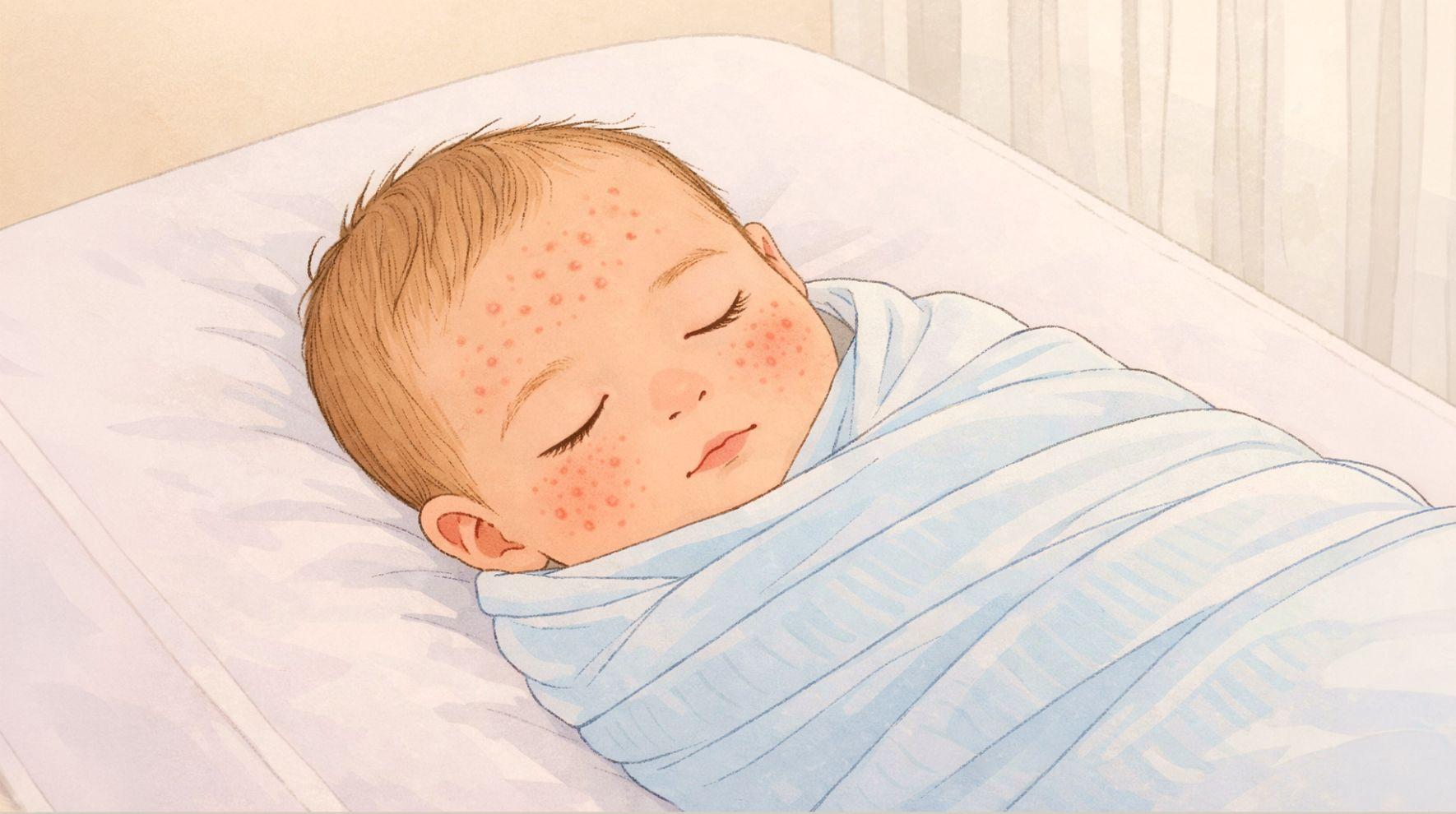
- chapped lips or dry
- flaky patches on your baby’s skin
- a stuffy nose that seems worse at night
- static that makes their hair stand up
- a scratchy-sounding cough that isn’t tied to an actual cold
If your heater runs often in winter, or you live somewhere naturally dry, you will notice these signs more.
Is a humidifier good for baby congestion?
Maybe, but a humidifier provides mainly comfort rather than a cure.
But, as per Consumer Reports, Dr. Hill adds that using over-the-counter saline nose drops and a suction bulb are more direct and effective for actually clearing congestion.
Dr. Joyce Yu, a pediatric allergist at Columbia University Irving Medical Center says, “Humidifiers help to keep the nares (nostrils), sinuses, and upper airway moist, which may help to reduce the possibility of upper respiratory tract infections.”
Dr. Yu, as per Consumer Reports, is careful to note that those medical benefits haven’t been proven. In other words, a humidifier can be a helpful part of managing a stuffy nose alongside saline drops and suctioning, but can’t replace them.
For more on easing a stuffy nose specifically, see our guide on helping your congested baby sleep better.
Is a humidifier safe for your newborn’s room?
It’s usually safe as long as it’s a cool-mist model, properly placed, and cleaned regularly.
The bigger safety questions aren’t only about whether to use a humidifier, but also which type, and how well you maintain it.
Should your baby sleep with a humidifier every night?
Many parents run one nightly, especially during dry winter months. Your baby’s skin is more vulnerable to moisture loss. As per Consumer Reports, a humidifier can prevent that loss and also help kids with atopic dermatitis, or eczema.
While Dr. Nanette Silverberg, Chief of pediatric dermatology at Mount Sinai agrees with this, she still still recommends daily moisturizing as the main defense, and avoiding aggressive cleansing.
However, keep in mind that a humidifier is a comfort choice, and not a must-have medical requirement. If your baby is breathing and sleeping fine without a humidifier, you don’t need to add it just because it’s on every baby registry checklist.
What are the downsides of using a humidifier in a newborn’s room?
There are a few worth knowing:
- Over-humidifying invites mold and dust mites in your newborn’s room and lead to breathing issues.
- Warm-mist models carry a burn risk if a curious toddler gets close.
- Cool-mist units, usually considered safer for younger children, do not heat water, and can project germs directly into the nursery if the water used is not distilled.
- Using essential oils or Vicks vapor rubs in the tank can release strong particles that irritate your newborn’s sensitive airways.
- Standing water in dirty water tanks that haven’t been cleaned regularly can grow bacteria and germs, and end up spreading them through the mist which your newborn breathes.
- Ultrasonic models can aerosolize minerals from tap water, thereby releasing a fine white dust into the nursery air that your baby can inhale.
How to use a humidifier in your newborn’s room
Run a humidifier during naps and overnight, when your baby spends the most time in the room, and check your hygrometer each morning. If you notice condensation on the windows or the walls feel damp, that’s your cue to dial it back or switch it off for a few hours.
There’s no need to run it 24/7; a few consistent hours during sleep is usually enough to keep your baby’s room at an adequate humidity level.
A humidifier is just one part of a healthy nursery environment. Keeping room temperature in a comfortable 68-72°F range, helps as much as humidity.
What humidity level is best for a baby’s room?
Aim for 30-50% relative humidity, the range recommended by EPA for indoor air generally.
Going much lower can dry out skin and airways; going above 60% creates the right conditions for mold and dust mites, which is exactly what you don’t want in your baby’s nursery. A simple hygrometer (an inexpensive humidity gauge) can help you make better decisions.
Where to put a humidifier in your newborn’s room?
A few standard rules are:
- Set it on a sturdy, raised surface like a dresser or shelf, not the floor, where it’s easy to tip over or bump
- Keep it a few feet from your baby’s bassinet or crib
- Aim the mist out into the room instead of directly at your baby
- Keep the cord completely out of reach, especially once your baby starts pulling up
How to choose a humidifier for your baby
Cool-mist is generally considered safer for a baby’s room, since it skips the burn risk that comes with warm mist or steam.
Beyond that, look for:
- a tank that’s easy to take apart and clean
- a quiet motor since you don’t want it interrupting sleep
- a size that matches your room without needing constant refills
- a model with an automatic shut-off feature so that the device doesn’t run on an empty tank and automatically turns off.
A humidifier that is also dishwasher-safe or has a built-in light and sound machine can tip the scales in its favor.
Cradlewise Note: Keep in mind that cool-mist units do not heat water and can project germs into the nursery. Hence, it is recommended to use distilled water only in your cool-mist unit.
Best humidifiers for the nursery
For specific model picks, Forbes maintains an updated roundup of tested options.
We’d rather point you to a source that re-tests and updates its picks than list products here that can go out of stock or get discontinued.
Humidifier cleaning tips
According to the CDC, germs can grow inside a humidifier’s water tank and spread through the mist it puts into the air, and infants 6 months or younger are one of the groups more likely to get sick from this kind of exposure.
To keep it clean:
- Empty all the water every day, don’t just top it off
- Clean it according to the manufacturer’s instructions (most recommend at least every 2-3 days)
- Let it air dry completely after cleaning, before refilling
- Use distilled or previously boiled (and cooled) water instead of straight tap water, to further reduce mineral buildup and germ growth
Cradlewise Tip: Keep a small brush (an old baby bottle brush works well) just for humidifier cleaning. It helps in reaching the difficult corners of the tank.
Conclusion
A humidifier isn’t a mandatory item for a nursery, but for a lot of families, it’s a small and comforting addition, especially through dry winter months.
Along with asking whether you need a humidifier for your newborn’s room, pay attention to choosing the right type, keeping the humidity in a sane range, and cleaning it often enough.
FAQs
Q: What months should you use a humidifier?
A: Humidifiers are most useful whenever indoor air is dry, most commonly in winter when heating systems are running, but also in naturally dry climates year-round. Your baby’s dry skin, stuffy nose, and the static in the room are clean signs that you should use a humidifier.
Q: Should you use a humidifier with AC?
A: Yes, you can run both. Air conditioning tends to dry out indoor air, so a humidifier can help balance that out, especially in summer. Keep an eye on your hygrometer, since running both changes the room’s humidity in different directions.
Q: Is a humidifier good for baby congestion?
A: It can help, mostly for comfort. It may loosen dried mucus and ease a stuffy nose, though pediatricians note that saline drops and a suction bulb are often more directly effective for the congestion.
Q: How do you use a humidifier for baby congestion?
A: Run a cool-mist humidifier in the room during sleep, keep it a few feet from the crib, and pair it with saline nasal drops and gentle suctioning for the congestion. The humidifier supports comfort; it isn’t a stand-alone treatment.
Q: Do pediatricians recommend humidifiers?
A: Most pediatricians are comfortable with cool-mist humidifiers used correctly, but they’re honest that the medical benefits aren’t strongly proven. It’s generally seen as a reasonable comfort measure.
You may also like:
- Best music for baby sleep: Lullabies, white noise, and more.
- Milk teeth schedule: When babies get (and lose) each tooth, with teeth chart.
- 15 sweet things to put in your baby’s time capsule.
Sources:
- Expert quotes. Consumer Reports. 2021. Does Your Baby Need a Humidifier?
- Over humidification. Sleep Foundation. 2026. Best Humidity Level for Sleeping.
- Humidity level in the room. EPA. 2025. Mold Course Chapter 2: Why and Where Mold Grows.
- Cool-mist is generally considered safer for a baby’s room. AAP. 2024. Cough & Cold Survival Kit: Symptom-Relief Essentials for Families.
- Humidifier cleaning tips. CDC. 2024. Preventing Waterborne Germs at Home.
You may also like