Parenting
0 min read
Baby eczema: Signs, triggers, treatment, and how to soothe flare-ups
Medically Reviewed Dr. Jess Cranston Klein, MD, FAAP, Pediatrician and Co-Founder Roo Organics
Written by Cradlewise Staff
If your baby has patches of dry, red, and itchy skin that refuses to go, you’re probably looking at baby eczema, also called infantile atopic dermatitis. It’s one of the most common skin conditions in infancy. Eczema in babies is also one of the most confusing skin ailments to manage as it often involves conflicting advice on creams, food triggers, and how many baths your baby requires.
This guide covers what causes baby eczema, how to tell it apart from other rashes like baby acne, and what helps calm an eczema flare, with input from Dr. Jess Cranston Klein, MD, FAAP, Pediatrician and Co-Founder of Roo Organics. Dr. Klein completed her residency in Pediatrics at UCLA where she spent significant time in their Pediatric Dermatology department.
What causes eczema in babies?
Baby eczema comes down to a mix of genetics and environment.
Many babies with eczema are born without enough filaggrin, a protein that helps skin form a strong barrier against the outside world. Without enough of it, the outer layer of skin struggles to hold onto moisture, and irritants and allergens get in more easily than they should.
Genetics set the stage; a family history of eczema, asthma, or seasonal allergies makes a baby more likely to develop it too.
Dr. Klein is candid about the misconception this creates for a lot of parents:
“ The biggest misconception is that eczema must be caused by something a parent fed their baby or put on their skin. Eczema is a condition involving the skin barrier and inflammation. Things like fragrance, harsh cleansers, heat, and dry air can make it worse, but that does not mean a parent caused it.”

Did you know?
Up to 1 in 4 children have an ongoing skin condition called eczema (atopic dermatitis).
Is eczema contagious?
No. Eczema is not contagious. You can’t catch it from another baby, and your baby can’t spread it to a sibling through normal contact.
What triggers baby eczema?
Once your baby’s skin barrier function is compromised, everyday things can also set off a flare:
- Allergens like pet dander, dust, pollen, and certain foods
- Fragranced lotions, wipes, or powders
- Fabrics like wool or certain synthetics
- Harsh soaps, shampoos, and laundry detergents
- Heat, dry air, and sweat
- Infections, including the common cold
Figuring out your baby’s specific triggers, even loosely, can significantly cut down on how often flares occur.
Can food cause baby eczema?
Food doesn’t cause eczema, but certain food allergies can aggravate existing symptoms of eczema.
Dr. Jess adds: If a baby develops hives, swelling, vomiting, or another clear reaction after eating, that deserves a separate evaluation. I would not recommend removing milk, eggs, or other foods solely because a baby has eczema without speaking with their pediatrician.
This is in line with AAP guidance: Eczema and food allergies often travel together, especially in more severe cases, but that’s different from food being the cause.
Cradlewise Note: Cutting out milk, eggs, or other common allergens on your own, without checking with a pediatrician first, isn’t recommended and can create unnecessary nutritional gaps.
Eczema symptoms
What does eczema rash on babies look like?
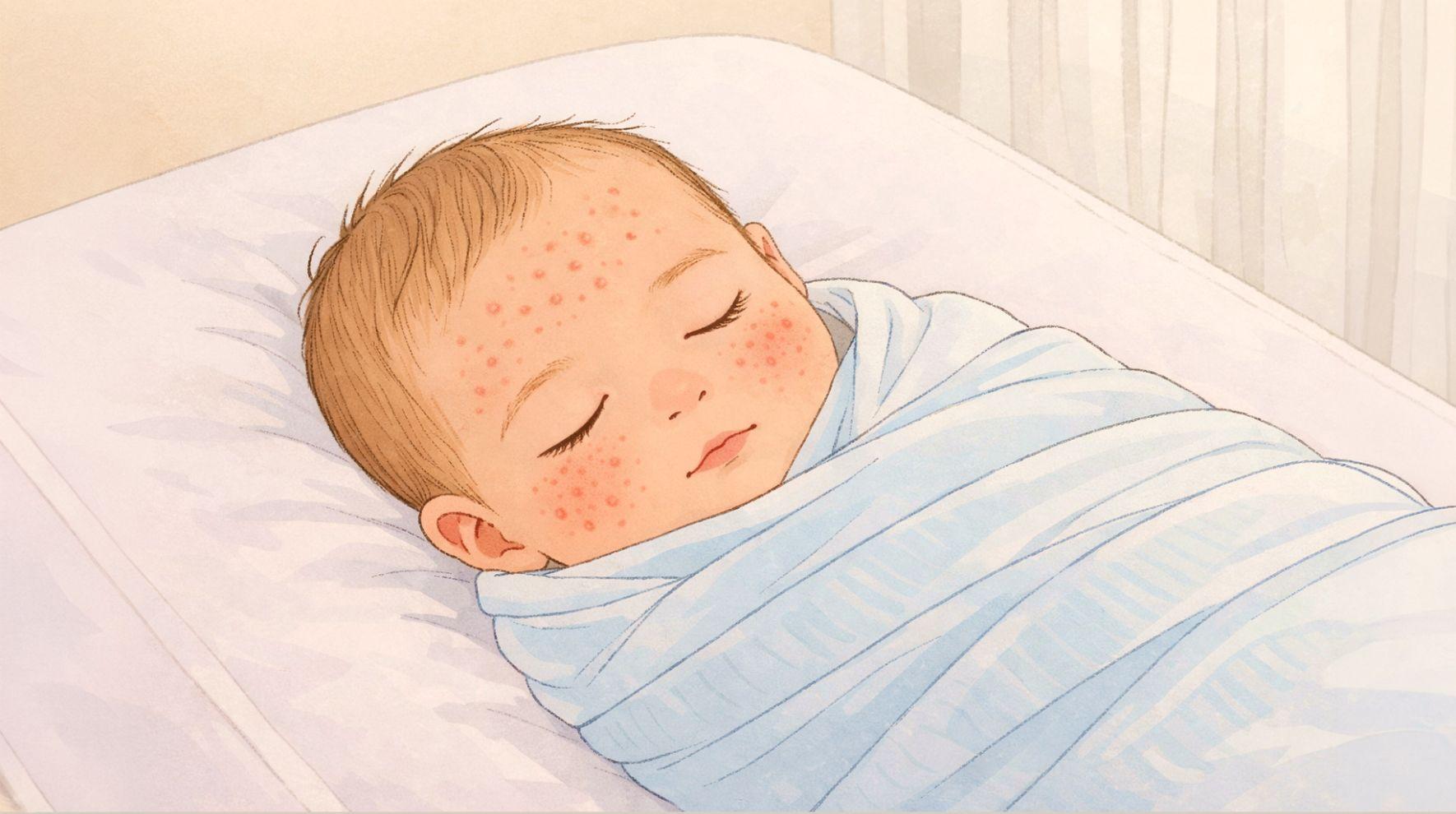
Eczema often manifests as dry skin, rough, red patches (or darker patches on babies with deeper skin tones) that look inflamed and feel uncomfortable.
- In babies younger than 6 months, it tends to affect the scalp and face first.
- After 6 months, it often shows up around the elbow and knee creases too.
- During a flare-up (active phase), the symptoms include the patches becoming acutely red (or darker/purple) and hot to the touch, tiny bumps weeping and oozing, crusts forming over the inflamed patches, and intense itching.
- Between flares (calm phase), the skin feels rough and scaly, skin lines become more prominent from all the scratching, and the patch color fades from bright red to a duller tone.
Baby eczema on face
The cheeks, forehead, and chin are the most common early spots, since a young baby’s face gets the most exposure to drool, spit-up, fabric, and whatever’s on your hands.
Both baby acne and eczema appear on these parts of the face, which is part of the reason why parents often confuse the two.
Baby scalp eczema
On the scalp, eczema can look similar to cradle cap: dry, flaky, sometimes slightly red patches.
Eczema tends to be itchier and more inflamed-looking than the greasy, scaly patches typical of a cradle cap. If you’re not sure which one your baby has, it’s advisable to check in with your pediatrician.
Baby acne vs. eczema
“ Baby acne usually appears as small bumps or pimples on the face, often in the first few weeks of life. Eczema is more likely to look like dry, rough patches and may seem itchy or uncomfortable. Both can affect the cheeks, so if the rash persists or the baby seems bothered by it, I would have a pediatrician take a look.”
| Feature | Baby acne | Baby eczema |
| Appearance | Small bumps or pimples | Dry, rough, red (or darker) patches |
| Usually starts | First few weeks of life | As early as 2 months, often within the first year |
| Feel | Not usually itchy | Itchy and uncomfortable |
| Common spots | Face (cheeks, nose, forehead) | Face and scalp at first; elbows and knees later |
Source: J. Pediatr, Eczema in early life
When do early signs of eczema in babies are seen?
45% of all eczema develops in infants two to six months of age with itching, redness, and small bumps on the cheeks, forehead or scalp that may later spread to the trunk, as per the publication by J. Pediatr.
Is baby eczema the same as adult eczema?
She adds, “In babies, it commonly affects the cheeks, forehead, and scalp. As children get older, patches often appear in areas such as the elbow and knee creases. Some children outgrow eczema, while others continue to have flares later in life.”
Baby eczema treatment
There’s no cure for baby eczema, but there’s a lot you can do to calm flares and keep your baby comfortable.
Baby eczema treatment includes the following three things working together:
- consistent moisturizing
- avoiding known triggers
- topical medication when needed
Baby eczema cream (and the 3-minute rule)
Moisturizing is the single most important habit you can follow. However, a lot of parents get the timing wrong.
Dr. Jess recommends applying a generous layer of fragrance-free moisturizer and balm, after bathing and continuing a consistent routine. If the skin is inflamed, moisturizer alone may not be enough, and a pediatrician can advise whether treatment is needed.
A simple way to build this habit is the 3-minute rule: Apply a thick, fragrance-free moisturizer within 3 minutes of taking your baby out of the bath, while their skin is still slightly damp.
It locks in moisture and helps rebuild the skin barrier.
For active flares, over-the-counter mild, low potency topical corticosteroids like a topical hydrocortisone steroid cream can help with mild eczema, while moderate or severe cases may need a prescription-strength option from your pediatrician. However, it is advisable to check with your pediatrician before using hydrocortisone on your baby’s skin, especially on their face.
Cradlewise Tip: Keep your baby’s eczema cream right next to the towel, along with your baby’s other toiletries. The 3-minute window goes by fast with a squirmy, freshly-bathed baby, and having it within arm’s reach helps you follow the rule.
Natural remedies for eczema in babies
A few extra habits that help alongside moisturizing:
- Keep baths short (5-10 minutes) with warm, not hot, water
- Use a mild, fragrance-free cleanser instead of regular soap
- Dress your baby in soft, breathable fabrics like cotton, and avoid wool or scratchy tags
- Consider cotton mittens at night if scratching is breaking the skin
- Keep indoor humidity in a comfortable range, since dry air pulls moisture from skin. See our guide on humidifiers in a newborn’s room for how to do this safely.
Does baby eczema go away?
For many babies, yes; symptoms improve significantly or clear up by age 4. Others continue to have occasional flare-ups or sensitive skin into adolescence or adulthood. It cannot be determined which children will outgrow their childhood eczema and which children will have it even in their adulthood.
There’s no cure, but consistent care can make a difference.
When should I see a doctor
Most eczema flares can be managed at home, but Dr. Klein notes you should see a doctor if you see the following signs:
- Spreading rash
- Itch disrupting sleep
- Flares not improving
- Fever
- Increasing pain
- Pus
- New blisters
And if you’re unsure whether what you’re looking at is eczema in the first place, you should get it checked.
How to prevent eczema in babies
As genetics play a major role, there’s no way to fully prevent eczema. But a few habits lower the odds of flares:
- Moisturize daily, not just during flares
- Keep baths short and lukewarm
- Choose fragrance-free products made for your baby’s skin
- Dress your baby in soft, breathable fabrics
- Try to identify and limit your baby’s specific triggers over time
Conclusion
Baby eczema is uncomfortable and occasionally alarming. However, with a consistent moisturizing routine and by keeping an eye on the triggers, most flares are manageable at home, and some babies grow out of it entirely by the time they start school. The goal is to keep your baby’s skin and your baby comfortable in the meantime.
FAQs
Q: What triggers baby eczema?
A: Common triggers include allergens like pet dander and pollen, fragranced products, harsh soaps and detergents, scratchy fabrics, heat, dry air, and infections like the common cold. Triggers vary baby to baby, so tracking flares can help you spot patterns.
Q: Does baby eczema go away?
A: For many babies, yes, symptoms improve clear up by age 4, however others experience eczema flares in childhood and even adulthood.
Q: What is the 3-minute rule for eczema?
A: Apply a thick, fragrance-free moisturizer within 3 minutes of taking your baby out of the bath, while their skin is still damp. This locks in moisture and helps protect the skin barrier.
Q: Can milk trigger eczema?
A: Milk doesn’t cause eczema directly, but milk related allergies and eczema can occur together, especially in more severe cases. Don’t remove milk or other foods without talking to your pediatrician first.
Q: Can eggs cause eczema?
A: Same as milk, eggs don’t usually cause eczema on their own, though egg allergy and eczema can co-occur. A clear reaction after eating, like hives or swelling, deserves its own separate evaluation.
Q: Is eczema a fungal infection?
A: No. Eczema is related to genetics and skin barrier function, not a fungus, bacteria, or virus. It also isn’t contagious.
Q: What's the worst stage of eczema?
A: There isn’t one universal “worst” age or stage. Some babies have only occasional dry patches, while others have frequent flares that disrupt sleep, and this can change over time for the same child. Severity depends more on the individual baby than on any particular age.
You may also like:
- Milk teeth schedule: When babies get (and lose) each tooth, with teeth chart.
- Fever after vaccines in babies: What’s normal and when to worry.
- 15 sweet things to put in your baby’s time capsule.
Sources:
- Up to 1 in 4 children have an ongoing skin condition called eczema. AAP. 2025. Eczema in Babies and Children: Symptoms and Causes.
- Eczema and food allergies. AAP. 2025. Treating Eczema (Atopic Dermatitis): AAP Updates Recommendations.
- Eczema starts as early as 2 months. J. Pediatr. 2010. Eczema in early life: Genetics, the skin barrier, and lessons learned from birth cohort studies.
- Early signs of baby eczema. J. Pediatr. 2010. Eczema in early life: Genetics, the skin barrier, and lessons learned from birth cohort studies.
- Topical hydrocortisone steroid cream. National Eczema Association. Over-the-Counter Medications.
- Symptoms improve significantly or clear up by age 4. AAP. 2025. Eczema in Babies and Children: Symptoms and Causes.
You may also like