Parenting
0 min read
When do kids stop napping? What the science says about the last nap
Medically Reviewed Badr Chaban, MD, MRCPCH MSc, Medical Director & Consultant Pediatrician at London Paediatric Clinic
Written by Cradlewise Staff
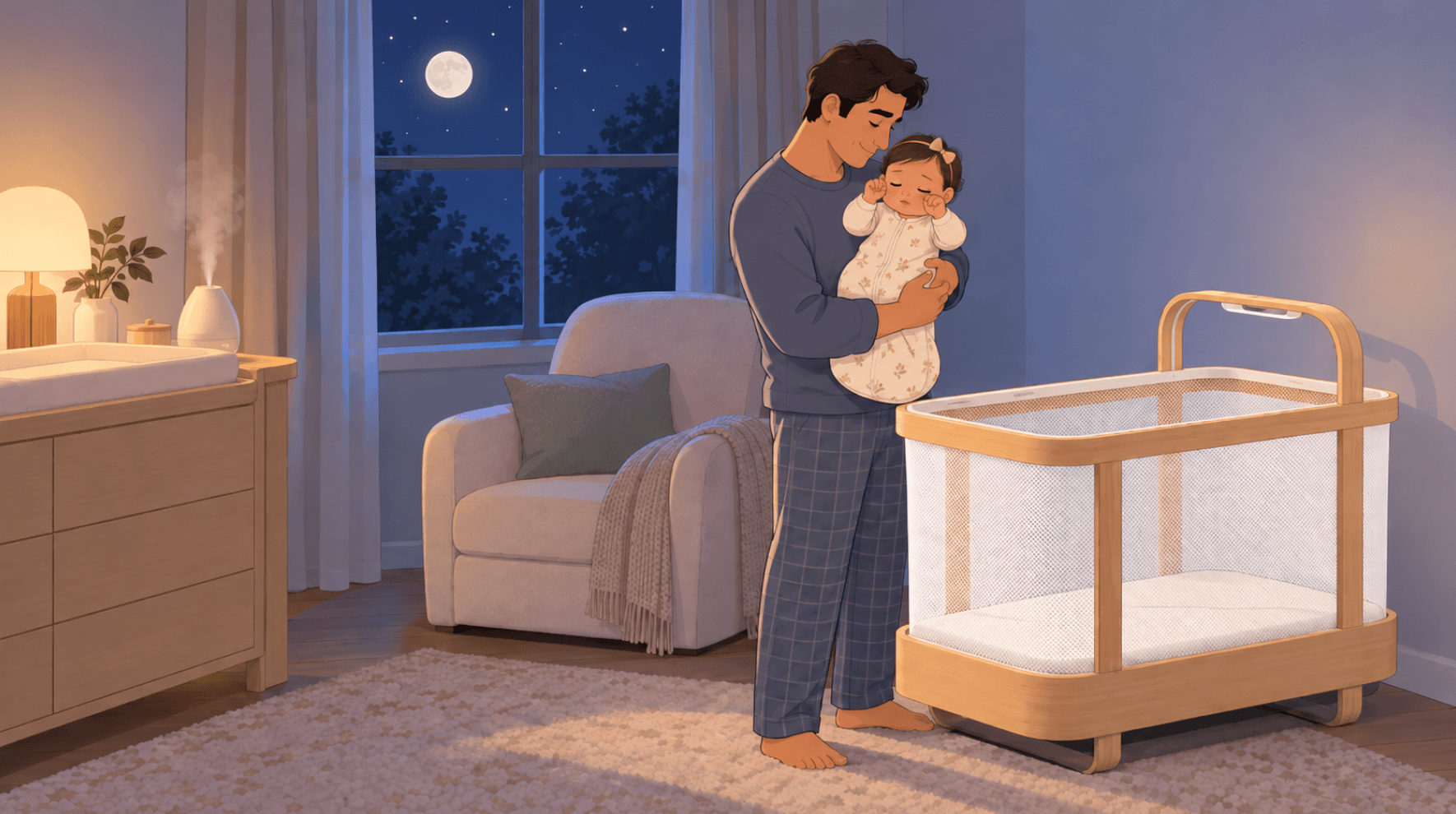
The house is quiet and your child is tucked in, but they are wide awake whispering to their favorite stuffed bunny, with no plan to sleep. Not long ago this was nap time, but now your child remains awake and engaged, making you wonder when do kids stop napping.
Most children stop napping somewhere between ages 3 and 5, while many still nap on some days after that.
This guide covers what the research says about when kids stop napping, how to spot their readiness, and how to drop naps, with advice from Kandra Becerra, Founder and certified Sleep Consultant at Rocky Mountain Sleeping Baby and Badr Chaban, MD, MRCPCH MSc, Medical Director & Consultant Pediatrician at London Paediatric Clinic.
When do kids stop napping?
Most children stop napping between ages 3 and 5. However, some children may stop napping before 2 and some after 5 since every child is different.
At what age do most kids stop napping?
As per the review of 44 studies published by Sleep Medicine Reviews:
- Fewer than 2.5% of children had stopped napping before age 2
- About 33% had stopped by age 3
- 57% had stopped by 36 to 48 months (3-4 years)
- 80% by 48 to 60 months (4-5 years)
- 94% had stopped napping by age 5
Cradlewise Note: Treat these as a range, and not absolute authority as every child progresses differently.
Why some kids stop earlier than others?
According to a study of 5,504 Canadian preschool children in Sleep Epidemiology, children who stopped napping earlier had one of these associations in common:
- They had an older sibling
- They reached more developmental milestones
- They slept longer at night
Cradlewise Note: These are associations rather than causes, and about 9 in 10 children in the study were White, so the results may not fit every family.
How many naps does your child need, and for how long?
CDC recommends 11 to 14 hours of sleep per 24 hours for ages 1 to 2 and 10 to 13 hours for ages 3 to 5, including naps.
When do babies drop to one nap
Most babies drop to one nap between 18 and 24 months, though some might do so as young as nine to 12 months.
Our guide to when babies go to one nap helps you with the transition.
How many naps for 1 year old
One-year-olds take two naps. At 12 months your toddler might still take two naps, but nap time may start to reduce around 18 months.
Our guide to 12-month-old baby sleep schedule covers their sleep, naptimes, activities, and feeding tips.
How many naps for toddlers
Most toddlers between 18 months and 2 years take one nap. If nap resistance shows up near the second birthday, it is more likely a regression than readiness, and our 22- to 24-month sleep guide explains why.
Our guide to how much sleep a 2-year-old needs gives you the complete picture.
How much sleep does a 3-year-old need
A 3-year-old needs 10 to 13 hours of sleep, including naps. Some children at this age are ready to eliminate naps altogether, while others continue to benefit from daytime sleep.
If your 3-year-old child likes to take their afternoon nap, Kandra suggests limiting naps to about 90 minutes, or shortening it, especially if it interferes with night sleep. Shortening a nap is a great first step before eliminating it completely.
How much sleep does a 5-year-old need
A 5-year-old needs to sleep anywhere between 10 and 13 hours. However, 94% of children at age 5 stop napping, according to this study. As naps end, bedtime sleep becomes crucial.
Signs your toddler is ready to stop napping
A toddler who stays up, and is pleasant and engaged through the afternoon, is likely ready to stop napping. A little late-afternoon crankiness is okay because bedtime can be moved earlier to accommodate that.
Sleep Foundation lists these signs:
- They have trouble falling asleep at nap time and play or sing in bed instead.
- They have trouble falling asleep at bedtime.
- They wake early in the morning.
- They show no sleepiness on days without a nap.
Is your child ready to stop napping or just refusing a nap?
Harvard Health suggests a simple test: Keep a daily quiet time, let your child look at books or play quietly, and do not insist on sleep. If they stay awake, they are probably ready. If they fall asleep and then stay up very late, the afternoon nap needs to go.
If your child is irritable, struggles to stay awake after a full night’s sleep, or keeps falling asleep during quiet time, they probably still need a nap.
Sometimes, naps can also make a comeback after they stop. Dr. Chaban explains:
What if your child still naps but bedtime is a battle?
When a child naps and then lies awake at bedtime, the nap may be too long or too late.
Kandra Becerra explains why:
For older toddlers and preschoolers who are moving away from naps, she likes daytime sleep to end by about 2:30 to 3:00 pm, sometimes even earlier. A child who used to fall asleep easily and is suddenly wide awake at bedtime may be getting too much daytime sleep.
You can change naps by:
- Moving the nap earlier or waking your child earlier.
- Shortening the nap before dropping it.
- Bringing bedtime forward gradually.
Cradlewise Tip: For one week, jot down when your child’s nap starts and ends. The patterns should be able to tell you whether the afternoon nap is running too late.
How to drop a nap
Dropping a nap usually works best as a gradual change over a few weeks. The following advice from Harvard Health and Kandra Becerra is useful:
- Swap the nap for quiet time. Keep the same time of day and the same spot, and let your child sleep if they need to.
- Shorten the nap first. Cut it back before you eliminate it.
- Move bedtime earlier. For the first week, move the bedtime earlier to avoid overtiredness.
- Allow nap-optional days. Offer a nap on days your child is really struggling while you work toward a steady no-nap routine.
- Watch out for car and stroller naps. Car rides and stroller walks late in the day can bring on a surprise nap that pushes bedtime later.
Dr. Chaban offers a short summary of the approach:
However, Kandra warns that the first week of transitioning can bring more irritability, emotional outbursts, and a harder late afternoon. Staying patient and flexible help through these episodes.
Quiet time activities
Things to keep in mind during quiet time activities for your toddler:
- Quiet time can include looking at books or reading, playing with quiet toys, or engaging in other calm, independent activities like puzzles and coloring.
- Start with as little as 15 minutes for a child who has never played independently in their room.
- If you are aiming for a no-nap schedule, keep the blinds and door open so quiet time feels different from nap time, and gently wake your child if they fall asleep.
- Keep screens out of quiet time.
When your toddler naps at daycare but not at home
Daycare naps do not have to follow the same plan as home. Kandra Becerra shares one approach:
This lets you see how your child sleeps on nap-free days, including how easily they settle, how well they sleep overnight and when they wake. On those days, she suggests offering quiet time and moving bedtime earlier as needed.
Bedtimes by age
Once your child stops napping, they make up for it during their night sleep. Raising Children Network says toddlers are often ready for bed between 6:30 and 7:30 pm, depending on their morning wake time.
For children who no longer nap, Kandra Becerra offers these starting points for ages 3 to 5:
| Age | Total sleep in 24 hours, naps included | Typical bedtime |
| 1 to 2 years | 11 to 14 hours | Often between 6:30 and 7:30 pm, depending on morning wake time |
| 3 years | 10 to 13 hours | As early as 6:00 pm, right after the nap is dropped |
| 4 years | 10 to 13 hours | Around 6:30 to 7:30 pm, depending on morning wake time |
| 5 years | 10 to 13 hours | Closer to 7:00 to 7:30 pm |
However, Kandra calls these starting points and suggests watching your child’s mood and sleep quality along with their morning wake-up time. Also, a later bedtime doesn’t always mean they need less sleep overall.
When to see a doctor
If you see the following signs in your child, Dr. Chaban recommends discussing with your doctor:
- Excessive daytime sleepiness with indicators of tiredness, such as irritability or poor concentration.
- Falling asleep in quiet situations, including watching TV, reading, etc.
- Snoring or disturbed breathing during sleep.
Conclusion
Nighttime sleep is an important deciding factor. If eliminating the nap has improved bedtime and overnight sleep for your child, it can be a good indication that the transition is appropriate. If nighttime sleep has become more disrupted and your child is consistently irritable and exhausted during the day, they may still need some daytime sleep.
Until then, you can watch for the signs, keep a daily quiet time, and move bedtime earlier when the nap drops. If your child seems unusually sleepy or snores, ask your pediatrician.
FAQs
Q: When do kids stop taking naps?
A: Most kids stop taking naps by age 5.
Q: Do kindergarteners take naps?
A: Most kids give up naps between the ages 3 and 5, and usually stop napping by age 5.
Q: Do three year olds need naps?
A: Yes, some do. While some 3-year-olds are ready to drop naps, others still benefit.
Q: Do four year olds need naps?
A: Yes, some four-year-olds still need naps.
Q: Is it normal for a toddler to nap some days and not others?
A: Yes. Growth spurts, illness and tiredness from excess activity can bring back the need for extra sleep, but this does not mean their sleep has broken down.
Q: How long should a toddler nap?
A: Toddlers between 18 months to 2 years take one nap of about 2 hours. Around age 3, try limiting naps to about 90 minutes if they affect night sleep, with the nap ending by about 2:30 to 3:00 pm.
Q: Does my child need an earlier bedtime after dropping the nap?
A: Usually, yes. Toddlers or preschoolers who no longer nap should have an earlier bedtime paired with afternoon quiet time.
Q: When do toddlers drop to one nap?
A: Most toddlers drop to one nap between 18 to 24 months, though some might do so as young as nine to 12 months.
You may also like:
- How to get your toddler to sleep in their own bed (without bedtime battles).
- Toddler sleep training: Is it different from baby sleep training? Yes, and here’s why.
- Is it a phase or a pattern? Understanding toddler sleep regressions through science.
Sources:
- Drop naps agewise. Sleep Medicine Reviews. 2022. Many naps, one nap, none: A systematic review and meta-analysis of napping patterns in children 0 to 12 years.
- Why some kids stop napping earlier than others. Sleep Epidemiology. 2022. Predictors of Early Nap Cessation: Longitudinal Findings from a Large Study of Young Children.
- No. of hours of sleep. CDC. 2024. About Sleep.
- Signs your toddler is ready to stop napping. Sleep Foundation. 2025. When Should Kids Stop Napping?
- Test to see if your child is ready to stop napping. Harvard Health Publishing. 2021. Naps: Make the most of them and know when to stop them.
- How to drop a nap. Harvard Health Publishing. 2021. Naps: Make the most of them and know when to stop them.
You may also like