Pregnancy
0 min read
Earliest signs of pregnancy: Symptoms that can appear before a missed period

Medically Reviewed Dr. Rachel Miller, Obstetrician and Gynecologist at Atrium Health
Written by Cradlewise Staff
If you’re trying to conceive, you might start paying close attention to every small change in your body. A little fatigue, mild cramping, or sudden nausea can make you wonder if these could be the earliest signs of pregnancy.
The challenge is that many early pregnancy symptoms can feel similar to premenstrual symptoms, which makes them easy to miss or misinterpret. Some people notice changes just days after conception, while others may not feel anything unusual until after a missed period.
In this guide, we’ll walk through the earliest signs of pregnancy, explain why they happen, and help you understand which symptoms may appear before a missed period or pregnancy test turns positive.
To help us unpack what’s really happening during these first subtle signs of pregnancy, we spoke with Dr. Rachel Miller, Obstetrician and Gynecologist at Atrium Health. Dr. Miller shared her insights on what’s happening hormonally behind those early pregnancy symptoms.
What are the earliest signs of pregnancy?
The earliest signs of pregnancy may appear one to two weeks after conception and are usually caused by hormonal changes after implantation. Common early pregnancy symptoms include fatigue, breast tenderness, mild cramping, nausea, increased urination, and light spotting, known as implantation bleeding.
Early signs of pregnancy before missed period
One of the primary signs of a pregnancy is a missed period. But, you don’t always have to wait for a missed period to notice that something’s different. For some people, early pregnancy signs show up sooner, subtle shifts that hint your body is already hard at work.
“ In my experience, some patients swear they ‘just knew’ within days. But biologically, symptoms usually start about a week after ovulation, when the embryo implants. Before that, your body doesn’t yet “know” it’s pregnant. Sometimes it’s intuition, sometimes hormones, but I’ve learned not to doubt a woman’s instincts.”
According to the National Institutes of Health (NIH), here are the earliest signs of pregnancy to watch out for:
1. Light spotting or mild cramping (implantation bleeding)
Light spotting or mild bleeding may occur when the fertilized egg implants into the uterine lining. This is sometimes called implantation bleeding and usually happens about 6 to 12 days after ovulation. You might also feel a bit of cramping as your body begins to release human chorionic gonadotropin (hCG), the hormone that signals pregnancy has begun.
2. Tender or swollen breasts
As soon as implantation happens, your hormone levels, especially estrogen and progesterone, start to rise. These shifts increase blood flow to breast tissue, making your breasts feel fuller, tingly, or sensitive to touch.
3. Fatigue
Feeling unusually tired is one of the earliest signs of pregnancy for many people. That’s because progesterone levels spike in early pregnancy to help maintain your uterine lining and support your developing embryo. At the same time, your body is working hard to build more blood to carry oxygen and nutrients, all of which can leave you feeling drained.
4. Nausea or morning sickness
Nausea can start as early as two weeks after conception for some individuals. Although it’s commonly called morning sickness, it can happen at any time of the day.
5. Food aversions and cravings
If your favorite candle suddenly smells too strong or your favorite burger tastes off, that’s another common early sign. Fluctuating hormone levels can make certain smells or tastes suddenly overwhelming (or strangely irresistible). It’s your body’s protective instinct, helping you avoid anything that might not be great for early development.
6. Mood swings
Your hormones are on a fast rise, particularly estrogen and progesterone, which influence mood-regulating neurotransmitters like serotonin. Hence, you experience emotional ups and downs that can make you teary one moment and giggly the next. These mood changes are very similar to those experienced before a menstrual cycle.
8. Frequent urination
Early in pregnancy, your kidneys start filtering more blood to handle increased fluid volume. Meanwhile, your growing uterus begins pressing on your bladder just a bit, meaning more bathroom trips, even before you’re visibly showing.
9. Headaches
As your body is trying to keep up with the sudden rise of hormones, it may trigger headaches during early pregnancy.

Did you know?
Some people notice pregnancy signs as early as one week after conception, even before a missed period! The catch? They often feel just like PMS, so it can be hard to tell the difference until you take a test. Still, many people say they just knew something felt different even before seeing those two pink lines.
Why early pregnancy symptoms happen
Early pregnancy symptoms are mainly triggered by hormonal changes after implantation. When a fertilized egg attaches to the lining of the uterus, the body begins producing human chorionic gonadotropin (hCG) and increasing levels of progesterone and estrogen.
These hormones support pregnancy but can also cause many of the early physical changes people notice.
Some of the most common hormonal effects include:
- Increased blood flow
- Breast tissue changes
- Slower digestion
- Fatigue due to progesterone
These changes can start even before a pregnancy test detects hCG levels.
How soon can I take a pregnancy test?
When that “maybe I’m pregnant?” feeling hits, most of us reach straight for a home pregnancy test. These tests work by detecting the hormone hCG, which your body starts producing once a fertilized egg implants in the uterus. That usually happens 10–14 days after conception, which is around the time your period would start.
Dr. Miller suggests, “Wait until the first day of your missed period, ideally with first morning urine. Most tests detect hCG at that point. Testing earlier can miss it, even if you are pregnant. I know it’s hard to wait, but the extra day or two spares you a lot of confusion.”
Some tests claim to pick up hCG even before your missed period, but most aren’t accurate that early. Testing too early can sometimes result in a false negative, even if you are pregnant.
To get the most accurate result:
- Wait until the day of your missed period or later.
- Test first thing in the morning when your urine is most concentrated.
- If it’s negative but your period doesn’t arrive, wait a few days and test again.
Did you know?
Only about 1 in 3 people experience implantation bleeding, and it’s often mistaken for an early, light period. <br>
What does pregnancy feel like?
Early pregnancy can feel a lot like PMS, but there are a few subtle differences. Some people describe it as feeling off or just not like themselves.
Dr Miller adds, “after fertilization (usually in the fallopian tube), the embryo travels to the uterus and implants. Hormones, mainly hCG and progesterone, start rising, and they are telling your body to protect and nourish this new life (your baby to be).”
You might notice:
- A sense of fullness or heaviness in your lower abdomen
- Unusual bloating or mild twinges
- Heightened emotions or sensitivity
- Strange cravings (or sudden food aversions)
- A metallic taste in your mouth
- Extra tiredness, like your body is whispering, “nap time, again”
Some people swear they “just knew” even before testing positive, while others don’t feel a thing until weeks later. Both are completely normal.
Early pregnancy symptoms vs PMS symptoms
Many early pregnancy symptoms look similar to premenstrual symptoms. This can make it difficult to tell the difference before taking a pregnancy test.
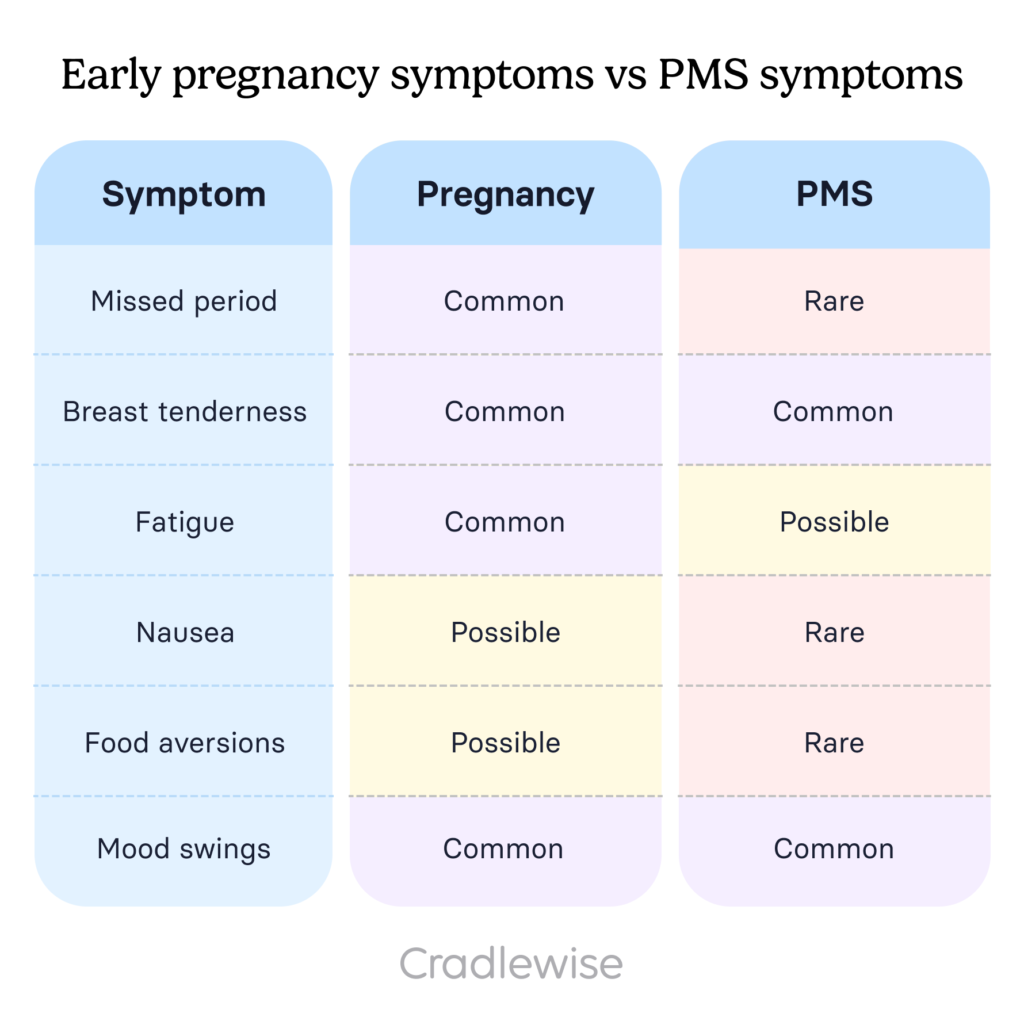
If you’re unsure, trust your gut but also trust the science: take a test when the timing’s right, and if you are still uncertain, talk to your doctor.
Does white discharge mean pregnancy?
Egg white discharge can be an early sign of pregnancy, but it does not confirm pregnancy on its own. Hormonal changes after conception can increase vaginal discharge, known as leukorrhea, which is usually thin, milky white, and mild-smelling. However, similar discharge can also occur during normal menstrual cycles.
When should I call my doctor about a new pregnancy?
You should reach out to your doctor if:
- You’ve had a positive pregnancy test and want to begin prenatal care.
- You experience severe pain, heavy bleeding, or dizziness.
- You have a history of miscarriage, ectopic pregnancy, or other health concerns.
- You’re on medication and want to confirm what’s safe in early pregnancy.
Even if you’re just suspecting pregnancy, your provider can guide you on when to test, which prenatal vitamins to start, and what early lifestyle changes to make.
Conclusion
The earliest signs of pregnancy can sometimes appear even before a missed period or positive pregnancy test, but they vary widely from person to person. While symptoms like fatigue, breast tenderness, or mild nausea can offer early clues, the only reliable way to confirm pregnancy is with a pregnancy test.
If you think you may be pregnant, paying attention to changes in your body can help you recognize early signs. But remember that everyone’s pregnancy journey is different, and not experiencing symptoms right away is completely normal.
FAQs
Q: Is constipation an early sign of pregnancy?
A: Yes, constipation can be an early sign of pregnancy. Rising progesterone levels slow down digestion, which can make bowel movements less frequent during early pregnancy.
Q: Is diarrhea a sign of early pregnancy?
A: Diarrhea is not one of the most common early pregnancy symptoms, but some people experience temporary digestive changes due to hormonal shifts. However, diarrhea can also occur due to diet changes, stress, or illness.
Q: Is heartburn an early sign of pregnancy?
A: Heartburn can sometimes occur in early pregnancy because progesterone relaxes the muscles of the digestive tract. This relaxation can allow stomach acid to move upward, causing a burning sensation in the chest.
Q: Is horniness an early sign of pregnancy?
A: Some people notice an increase in libido during early pregnancy due to hormonal changes and increased blood flow. However, changes in sex drive vary widely and are not considered a reliable sign of pregnancy.
Q: Can itchy breasts be a sign of pregnancy?
A: Yes, itchy breasts can sometimes be an early sign of pregnancy. Hormonal changes and increased blood flow can cause breast tissue to grow and stretch, which may lead to itching or mild skin irritation.
Q: Can I feel pregnant after 1 week?
A: Most people do not feel pregnancy symptoms just one week after conception because hormone levels are still low. Early symptoms usually start after implantation, which typically occurs 6–12 days after ovulation.
Q: How early can a pregnancy test detect pregnancy?
A: Some highly sensitive pregnancy tests can detect pregnancy about 10–12 days after ovulation, but most tests are most accurate when taken after a missed period.
Q: How early can you get pregnancy symptoms?
A: Some people start noticing subtle signs, like fatigue, breast tenderness, or light spotting, as early as one week after conception, though most symptoms appear closer to when your period is due. Everybody is different, so timing can vary from person to person.
You may also like
- How do you prevent yourself from catching the flu while pregnant?
- Perineal massage during pregnancy: what it is, when to start, and does it really help?
- Ask the expert: What are the early signs of preterm labor, and when should you call your doctor?
Sources:
- Pregnancy overview and key facts. Eunice Kennedy Shriver National Institute of Child Health and Human Development. NICHD. Pregnancy: Fact Sheet.
- Early signs and symptoms of pregnancy. Eunice Kennedy Shriver National Institute of Child Health and Human Development. NICHD. What are the signs and symptoms of pregnancy?
- Understanding pregnancy tests and how they work. Office on Women’s Health, U.S. Department of Health and Human Services. Pregnancy tests.
- How to know if you’re pregnant. Office on Women’s Health, U.S. Department of Health and Human Services. Knowing if you are pregnant.
- Recognizing pregnancy signs and confirming conception. American Pregnancy Association. How to Know if You Are Pregnant.
- Frequent urination. PubMed Central. 2023. The Effect of Pregnancy on Urinary Symptoms.
You may also like


