Science of baby sleep
0 min read
9-month sleep regression: Signs, causes, and how to help your baby sleep


Cradlewise Staff
Your baby was finally sleeping for longer stretches, and you were starting to feel a little more human. Then, out of nowhere, bedtime turns into a struggle. Your baby wakes up crying a few hours after going down, wants to be held all night, or treats 5 a.m. like a perfectly reasonable time to start the day.
If this sounds familiar, you may be dealing with the 9-month sleep regression.
Around this age, babies are busy learning new skills and becoming more aware of the world around them. All that development can sometimes show up at bedtime, when your little one would rather practice sitting up in the crib than close their eyes.
The good news? There are ways to make this phase easier for your baby and for you. Let’s look at what’s happening, how long it may last, and what you can do to help your baby settle back into a sleep routine.
What is the 9-month sleep regression?
The 9-month sleep regression is a term parents use to describe a period when a baby who was sleeping fairly well suddenly has trouble falling asleep, wakes more often during the night, or takes shorter naps. Sleep can change as babies develop new motor skills, become more aware of separation from their caregivers, and grow more interested in what’s happening around them.
One night, your baby may settle down without much fuss. The next, they might cry the moment you leave the room. It’s understandable to wonder whether you’ve done something differently.
Sleep changes are common during infancy, but a sleep regression isn’t a formal medical diagnosis. Not every baby goes through a noticeable regression at nine months, and disrupted sleep can also happen because of teething discomfort, illness, hunger, or changes in their daily routine.
What causes the 9-month sleep regression?
Several things may contribute to sleep becoming unsettled around this age.
1. Your baby is learning new skills
Nine-month-olds have a lot going on. Some are learning to crawl, pull themselves up, or move into sitting positions. Others are busy practicing sounds and exploring everything within reach.
These new skills can make it harder to settle at bedtime. Your baby might roll around in the crib, sit up when they’re supposed to be sleeping, or wake during the night ready to practice their latest trick.
Research published in Monographs of the Society for Research in Child Development, has explored how infants’ transition to crawling was linked to changes in their sleep patterns. However, not every baby experiences sleep disruptions when reaching a new milestone.
2. Separation anxiety may be kicking in
Have you noticed your baby protesting the moment you leave the room, even when another familiar caregiver is nearby? Separation anxiety often becomes more noticeable during the second half of the first year. Your baby is becoming more aware of you as a separate person and may get upset when you disappear from view.
This can make bedtime particularly tricky. Your baby might be sleepy but still protest when you put them down or wake during the night looking for you. The American Academy of Pediatrics (AAP) explains how separation anxiety can affect sleep, including why babies may need extra reassurance during this stage.
3. Your baby’s sleep schedule may need adjusting
Your 9-month-old’s sleep schedule may have worked beautifully a month ago, but their needs can change as they grow. Their sleep patterns are still evolving, too. Your little one might start resisting a nap, take longer to fall asleep at night, or seem ready for bed earlier or later than usual.
If daytime naps have become shorter or bedtime has turned into a lengthy battle, look at the overall schedule before making big changes. Your baby may be getting too much or too little daytime sleep, or the gap between the last nap and bedtime may need adjusting.
4. Teething or illness may be disturbing sleep
Sometimes, a sleep regression gets blamed for every difficult night. However, discomfort from teething or an illness can also cause a baby to wake more frequently.
Pay attention to other signs, such as a fever, unusual fussiness, feeding difficulties, or changes in your baby’s behavior. If your baby seems unwell or you’re concerned about their symptoms, contact your pediatrician rather than assuming it’s a developmental phase.
What are the signs of a 9-month sleep regression?
You may notice one or more of these changes:
- More frequent night wakings: Your baby wakes several times when they previously slept for longer stretches.
- Trouble falling asleep: Bedtime takes longer, even when your baby appears tired.
- Shorter naps: Your baby wakes earlier than usual from daytime naps or starts resisting them.
- More crying at bedtime: Your little one becomes upset when you put them down or leave the room.
- Early-morning wake-ups: Your baby starts the day earlier than usual and struggles to settle again.
- Changes in mood: Your baby seems fussier during the day, particularly after a restless night.
These signs can fit a sleep regression, but they aren’t proof of one. Consider what’s changed recently, including your baby’s health, feeding, naps, and bedtime routine.
How long does the 9-month sleep regression last?
A 9-month sleep regression may last a few days to a few weeks, although there’s no scientifically established timeline for this specific phase.
If your baby’s sleep has changed alongside a new developmental milestone or separation anxiety, things may improve as they adjust. Sleep can also remain unsettled when illness, schedule changes, or other sources of discomfort are involved.
If the disruption continues, gets worse, or leaves you concerned about your baby’s sleep or overall well-being, check in with your pediatrician. You don’t need to wait for a supposed regression to end before asking for help.
How to handle the 9-month sleep regression
Night wakings are especially tough when you’ve grown used to getting a longer stretch of sleep yourself. You may not be able to prevent every wake-up, but a few practical changes can help your baby settle.
1. Keep bedtime predictable
A familiar bedtime routine gives your baby a chance to wind down and recognize that sleep is coming.
You could start with a bath or a gentle wipe-down, change into pajamas, feed your baby as appropriate, read a short book, and finish with a cuddle or lullaby. Keep the routine simple enough to follow even when you’re exhausted.
Try to follow roughly the same sequence each evening. If your baby gets upset when you leave, a familiar goodnight phrase can become another reassuring cue.
2. Check your baby’s sleep schedule
Before changing everything about bedtime, look at your baby’s naps and wake-up times. Many 9-month-olds take two daytime naps, although individual schedules vary. If your baby regularly fights the second nap, takes a very late nap, or seems wide awake at bedtime, the timing may need a small adjustment.
Try shifting nap or bedtime by 10 to 15 minutes at a time and watch how your baby responds over several days. Avoid cutting naps simply to make your baby more tired at night; an overtired baby may have an even harder time settling.
3. Offer reassurance when separation feels difficult
If your baby cries as you leave the room, they may need some extra comfort during this stage.
You can speak softly, offer a brief cuddle, or stay nearby for a little while as your baby settles. If you prefer a more independent settling approach, you can also choose a gradual method that involves checking in at planned intervals.
Choose an approach you can follow consistently. If you share nighttime care with a partner or another caregiver, discuss how you’ll respond to wake-ups so you’re not working out a new plan at 2 a.m.
4. Give your baby time to practice new skills during the day
If your baby has recently learned to crawl, sit, or pull up, give them plenty of supervised floor time when they’re awake. Practicing these movements during the day lets your baby explore their new skills when there’s no pressure to sleep. If they pull themselves up in the crib and haven’t learned how to sit back down, practice that movement with them while they’re awake. If your baby is pulling to stand, lower the crib mattress to its lowest safe setting to reduce the risk of climbing or falling out.
Always keep the crib free of pillows, loose blankets, stuffed toys, and other soft objects. Continue following AAP safe-sleep recommendations for every sleep.
5. Keep nighttime interactions calm
When your baby wakes at night, keep the room dim and your voice quiet. Offer comfort or a feed if needed, then help your baby return to sleep without turning the wake-up into playtime.
Some babies still need nighttime feeds at nine months. Whether your baby needs them depends on their individual growth, feeding patterns, and health, so check with your pediatrician before deliberately dropping feeds.
If you’re so tired that you might fall asleep while holding your baby, put them in their safe sleep space before you nod off. Avoid feeding or comforting your baby on a sofa or armchair if you might fall asleep there.
6. Follow safe-sleep practices, even on difficult nights
When your baby wakes repeatedly, it’s tempting to try anything that might help them sleep longer. Keep safety in mind while experimenting with your routine.
Place your baby on their back at the start of every sleep on a firm, flat mattress in a crib or other approved infant sleep space. If your baby can roll independently in both directions, you don’t need to keep turning them back onto their back, but you should always begin sleep by placing them on their back.
Keep the sleep space free of loose bedding and soft objects, and avoid using weighted sleep products. You can find more guidance in the AAP’s safe-sleep recommendations.
Is it a regression, or something else? (Infographic)
A few rough nights can easily get blamed on a sleep regression. But sometimes, there’s a simpler explanation. Before assuming it’s a developmental phase, check whether any of these might be affecting your baby’s sleep.
| Possible cause | What to look for | What may help |
| Teething | Drooling, chewing on objects, tender gums, or fussiness that comes and goes over a few days. | Offer comfort and a chilled (not frozen) teething ring. Avoid teething gels with benzocaine and amber teething necklaces. Check with your pediatrician if symptoms seem unusual. |
| Illness | Sudden sleep changes alongside symptoms such as fever, congestion, reduced appetite, or fewer wet diapers. | Focus on your baby’s comfort and hydration, and contact your pediatrician if you’re concerned. Sleep may improve as your baby recovers. |
| A sleep schedule that needs adjusting | Bedtime battles, short naps, or early-morning waking that develop gradually and keep recurring. | Review nap timing and bedtime. Small schedule adjustments may help; dropping a nap isn’t always necessary at this age. |
| A change at home | Sleep disruptions after moving house, starting daycare, traveling across time zones, moving to a new room, or welcoming a sibling. | Keep familiar bedtime cues where possible and give your baby time to adjust to the change. |
These clues can help you narrow down what’s going on, although they won’t always point to one clear cause. If your baby’s sleep changes persist or come with signs of illness, check with your pediatrician.
How much sleep does a 9-month-old need?
According to the CDC’s sleep recommendations, babies aged 4 to 12 months generally need 12 to 16 hours of sleep in a 24-hour period, including naps.
At nine months, many babies follow a schedule with two naps and a longer stretch of nighttime sleep. However, the amount of sleep your baby gets at night and during the day can vary.
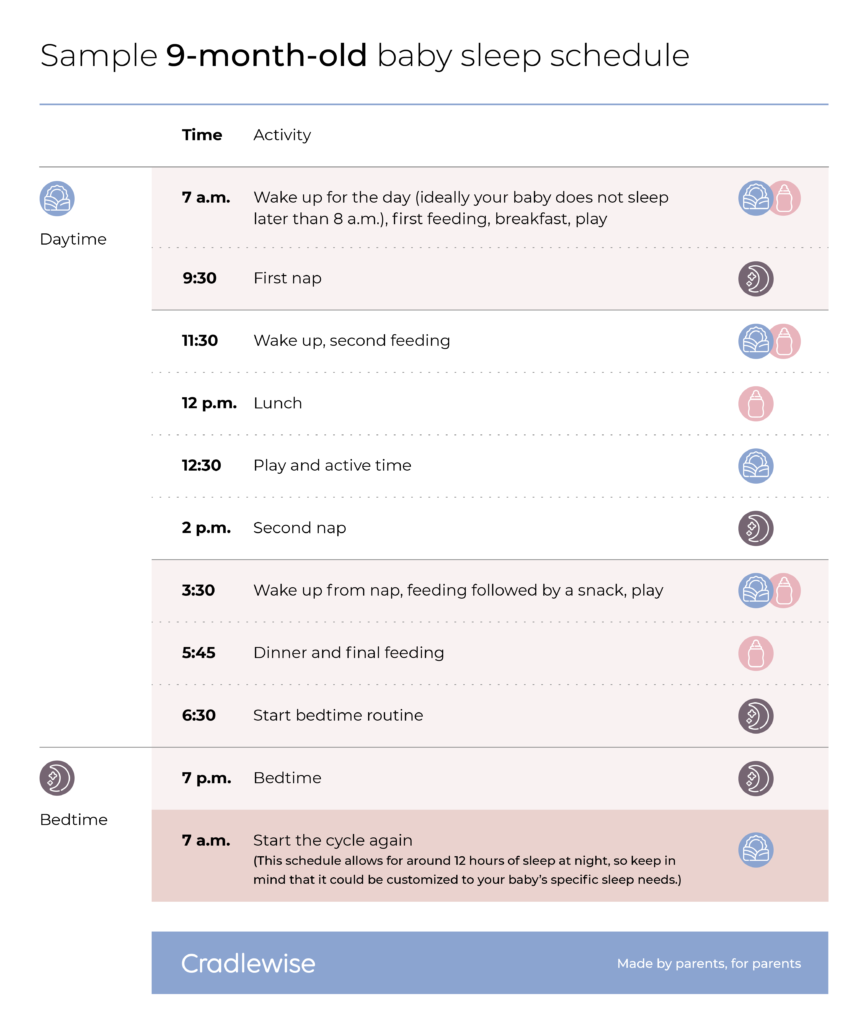
Here’s an example of what a day might look like:This is only an example, not a schedule your baby needs to follow exactly. Adjust the timing to suit your baby’s usual wake-up time, nap lengths, and signs of tiredness. If your baby is consistently struggling to fall asleep, consider whether the schedule needs adjusting.
When should you talk to your pediatrician?
Sleep disruptions are common during infancy, but it’s worth checking with your pediatrician if your baby’s sleep changes come with other symptoms or you aren’t sure what’s causing them.
Reach out if your baby has a fever, seems to be in pain, feeds poorly, has fewer wet diapers than usual, or is unusually sleepy or difficult to wake. Seek urgent medical care for severe breathing difficulties or if your baby is unresponsive.
You can also ask your pediatrician for help if frequent night wakings persist or you’re worried your baby isn’t getting enough sleep. They can help you look at feeding, development, health, and sleep habits together.
Conclusion
The 9-month sleep regression can make nights feel unpredictable just when you thought your baby’s sleep was settling down. Developmental changes and separation anxiety may be contributing, but it’s worth checking for discomfort, illness, or a schedule that’s no longer working.
Keep bedtime familiar, make small adjustments when needed, and respond to night wakings in a way that feels manageable for your family. If sleep remains difficult or something doesn’t seem right, your pediatrician can help you work out what’s going on.
FAQs
FAQs
Q: Is the 9-month sleep regression real?
A: The term describes a common pattern of sleep disruption during infancy, often linked to developmental changes and separation anxiety. It isn’t a formal medical diagnosis, and not every baby experiences it.
Q: How long does the 9-month sleep regression last?
A: There’s no set duration; a 9-month sleep regression may last a few days to several weeks, depending on the baby and what’s disrupting their sleep.
Q: Can teething cause a 9-month sleep regression?
A: Teething discomfort may interrupt your baby’s sleep. If your baby also has a fever, feeding difficulties, or other symptoms, check with your pediatrician rather than assuming teething is the cause.
Q: How many naps should a 9-month-old take?
A: Many 9-month-olds take two naps a day. Nap needs and timing vary, so look at your baby’s overall sleep and how they behave around nap and bedtime.
Q: Should I feed my baby every time they wake up at night?
A: Some 9-month-olds still need nighttime feeds, while others may not. Your baby’s growth, daytime intake, and health matter, so ask your pediatrician before making changes to nighttime feeding.
Sources:
- Research on infant sleep and development. PubMed. 2015. “Article on infant sleep and development”
- Separation anxiety and sleep in babies. American Academy of Pediatrics (HealthyChildren.org). “Separation Anxiety and Sleeping”
- Safe sleep practices for babies. American Academy of Pediatrics (HealthyChildren.org). “A Parent’s Guide to Safe Sleep”
- Recommended sleep duration by age. Centers for Disease Control and Prevention (CDC). “About Sleep”
- 9-month-old baby sleep guide. Cradlewise. 2026. “9-month-old baby sleep guide.
You may also like:
You may also like