Science of baby sleep
0 min read
Newborn sleep guide: How much do newborns sleep and when is it too much?


Cradlewise Staff
Newborn sleep can feel confusing, especially in the early weeks when your baby seems to sleep all the time. You may find yourself wondering: How much do newborns sleep? Is it normal for a newborn to sleep so much or could it be too much?
The truth is, newborn sleep patterns are very different from older babies and adults. In the first few weeks, frequent sleep, irregular schedules, and short wake windows are completely normal. But there are also moments when excessive sleep can signal something that needs attention.
In this guide, we’ll walk you through how much newborns sleep, what a healthy newborn sleep schedule looks like, and when sleeping “too much” might be a concern.We have also included important medical insights from Dr. Nilong Vyas (MD, Pediatrician), founder of Sleepless at NOLA.
How long do newborns sleep
According to the Centers for Disease Control and Prevention (CDC):
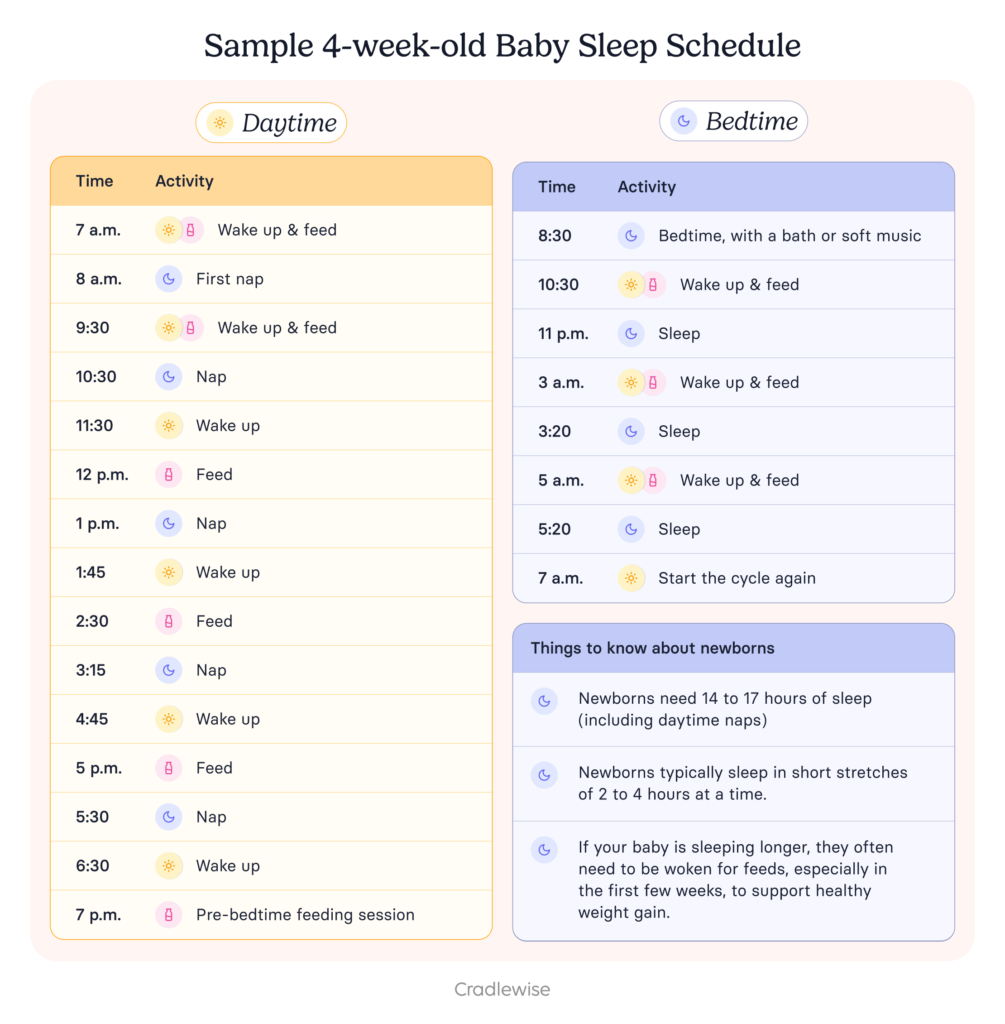
- Newborns need 14 to 17 hours of sleep (including daytime naps).
- Older infants (4 to 12 months old), sleep for about 12 to 16 hours each day.
As they grow older, their sleep cycles will start maturing to become more adult-like. Around three to four months, your little one will begin developing their own circadian rhythm.
Refer to this Sample 4-week-old baby sleep schedule for better understanding of your newborn’s sleep-wake cycles along with feeding times.
How long do newborns sleep at a stretch
In the early weeks, newborns typically sleep in short stretches of 2 to 4 hours at a time. This is because their tiny tummies need frequent feeding, day and night.
Even if your baby seems like they could sleep longer, they often need to be woken for feeds, especially in the first few weeks, to support healthy weight gain.
Why newborn sleep is so irregular
Newborns don’t yet have a developed internal body clock (circadian rhythm), which is why their sleep feels unpredictable. They don’t know the difference between day and night, and their sleep cycles are much shorter than adults.
This irregular pattern is a natural and temporary phase as your baby adjusts to life outside the womb.
Can a newborn sleep too much
Yes, a newborn and an older infant can sleep too much. While newborns need a lot of sleep, they also need to be awake and alert for feeding, bonding, and other essential activities.
It’s okay to let older babies sleep a little longer, since their tummies are slightly bigger, and they can go without feeding for longer periods of time. However, this is not true for newborns since their tummies are much smaller, and they need to feed frequently to regain their birth weight.
Newborns sleeping too much vs normal sleep
The key difference lies in feeding and responsiveness. If your baby wakes for feeds, feeds well, and has regular wet and dirty diapers, their sleep is likely normal.
However, if your newborn is consistently difficult to wake or skips feeds, it may need closer attention.
Do preemie babies sleep a lot?
If you’re worried that your premature infant is sleeping too much, according to Vyas, “as long as they are able to be woken to be fed and they are alert enough to eat, then it is not a concern. Oversleeping would be considered if when woken to feed, a baby is unable to stay alert enough to eat and thus gain weight.”
Why do newborns sleep so much
Newborn babies need so much sleep because their bodies and brains are rapidly developing and growing.
According to NIH, your baby’s brain size will double in the first 12 months of life.
During sleep, the brain releases growth hormones and consolidates new memories and neural connections. Every second your little one is snoozing, their neural connections are forming at a meteoric rate, processing all the information (words, sensations, colors, faces, and everything else) and consolidating them in their long-term memory.
Additionally, sleep helps regulate your baby’s temperature, heart rate, and immune system.

Cradlewise Smart Crib
Smarter Sleep for Your Baby
An award-winning crib—loved by parents, approved by experts.
0 to 24 months of use
Automatic soothing
Built-in video & sound machine
AI-powered sleep insights
Customizable soundtracks
Get 2 extra hours of sleep nightly
Newborn sleep patterns: What’s normal in the early weeks
Newborns spend a lot of time in active sleep, which can look surprisingly restless. You might notice twitching in sleep, stretching, smiling, or even small sounds. This is completely normal and an important part of brain development.
Quiet sleep, on the other hand, is deeper and still. Babies move between these stages frequently.
Day-night confusion in newborns
It’s very common for newborns to have their days and nights mixed up. You may find your baby sleeps longer during the day and is more alert at night.
This happens because their internal clock is still developing. Over time, with exposure to daylight and consistent routines, this naturally begins to shift.
Why your newborn wakes frequently
While it can feel exhausting, these frequent wake-ups play an important role in ensuring your baby is well-fed and safe.
Babies wake to feed. Babies need nutrition (breast milk or formula) for their growth and development.
When your baby is born, their tummy is only the size of a marble! And it can only take in one to two tablespoons of milk at a time. By day 10 of their life, their stomach grows to the size of a ping-pong ball. Now your baby can take about two ounces or four tablespoons of milk at a time.
Babies wake frequently to be comforted or simply because their sleep cycles are short.
Potential causes of newborn sleeping too much
Here are a few potential causes of babies oversleeping:
- Recovery after birth: The birth process can be tiring for babies, so they often sleep more in the early days as they recover and adjust to the outside world.
- Feeding patterns: Some newborns, especially breastfed babies, may tire quickly during feeds and fall asleep more often, leading to increased overall sleep.
- Exhaustion: A consistently overtired baby may sleep more to catch up on sleep.
- Growth spurts or developmental leaps: During growth spurts, your newborn may sleep more as their body uses extra energy to support rapid physical and brain development.
- Dehydration. This can also cause a sunken soft spot on the top of the baby’s head, sunken eyes, and cold and discolored hands and feet.
- Jaundice: Mild jaundice can make newborns feel more sleepy than usual, which may lead to longer or more frequent sleep stretches.
- Medical condition: Excessive sleeping in newborns can be a sign of an underlying health issue such as a respiratory infection or anemia.
- Medical procedures: After certain medical procedures or medications, newborns may feel more drowsy than usual, leading to longer or deeper sleep.
- Underdeveloped sleep-wake cycle: Because a newborn’s internal clock isn’t fully developed yet, they naturally sleep more and at irregular times throughout the day and night.
Signs your newborn may be sleeping too much
These few signs can help you determine if your newborn is sleeping too much:
- Is very difficult to wake for feeds
- Skips multiple feeds
- Is not alert and awake for at least a few hours per day
- Has fewer wet or dirty diapers
- Seems unusually lethargic or weak
- Is not gaining weight as expected
When to call your pediatrician
Dr. Nilong Vyas suggests that if you suspect your baby is sleeping too much, not feeding well, not passing urine and stool, or seems lethargic, bring the baby to the pediatrician and or emergency room right away for an evaluation.
How to support healthy newborn sleep routines:
1. Focus on feeding and responsive care
In the early weeks, the best routine is responding to your baby’s needs. Feed on demand, comfort them when they wake, and allow sleep to happen naturally.
2. Gently help your newborn learn day vs night
You can support this transition by:
- Keeping daytime bright and active
- Keeping nighttime calm, quiet, and dimly lit
Over time, this helps your baby’s internal clock develop.
3. Create a safe sleep environment
A safe sleep environment reduces the risk of sleep-related complications, especially sudden infant death syndrome (SIDS).
- Always place your baby on their back to sleep, on a firm mattress, without loose bedding, pillows, or toys
- Maintain a comfortable room temperature between 68°F and 72°F (20–22°C)
- Avoid overdressing your baby as it can increase overheating risk
- Avoid putting hats on your infant when indoors and during sleep, except in the first hours of life or in the NICU
Conclusion
Newborn sleep can feel unpredictable, but most of what you are seeing is completely normal. In the early weeks, babies sleep a lot because their bodies and brains are growing rapidly, and irregular sleep patterns are simply part of that process.
Over time, your baby’s sleep will become more structured and predictable. Until then, focus on responsive care, safe sleep practices, and following your baby’s cues.
FAQs
Q: What is too much sleep for a newborn?
A: If your baby sleeps more than 18 hours per day and is not waking up to eat, it is important to consult your pediatrician.
Q: How long do newborns sleep?
A: Most newborns sleep between 14 to 17 hours a day, broken into short stretches throughout the day and night.
Q: Should I wake my newborn for feeds?
A: In the first few weeks, yes. If your baby sleeps longer than 3-4 hours, your pediatrician may recommend waking them to ensure adequate feeding.
Q: Can newborns sleep through the night?
A: Not yet. Newborns need frequent feeding, so waking every few hours is completely normal.
Q: Why is my newborn so sleepy and not feeding well?
A: This can happen due to factors like jaundice, feeding difficulties, or general newborn sleepiness. If your baby is hard to wake or not feeding well, it’s best to consult your pediatrician.
Q: Can a newborn sleep on their side?
A: No, newborns should always be placed on their back to sleep. Side sleeping is not considered safe, as it increases the risk of rolling onto the stomach.
Q: Can a newborn sleep with a pacifier?
A: Yes, once feeding is well established, a pacifier can be used during sleep. As per AAP, giving a pacifier to your newborn may even reduce the risk of SIDS. If it falls out during sleep, there’s no need to put it back in.
Check out:
- Benefits of baby sleeping on tummy: what’s safe, what’s not.
- What to do if your baby only sleeps when held.
- Silent reflux in babies: The hidden culprit behind fussiness and poor sleep.
Sources:
- Newborn sleeping hours. CDC. 2024. About Sleep.
- Baby’s brain size. NIH. 2018. Imaging structural and functional brain development in early childhood.
- Can a newborn sleep with a pacifier? AAP. 2026. How to Keep Your Sleeping Baby Safe: AAP Policy Explained.
You may also like


