Pregnancy
0 min read
Foods for baby brain development during pregnancy: Expert guide


Cradlewise Staff
Pregnancy is a time of profound transformation, and every meal you eat becomes a building block for your baby’s future, especially their brain development. The nutrients from the food support your health too during pregnancy, apart from helping build your baby’s brain from the ground up.
If you’re wondering which foods for baby brain development during pregnancy actually matter, and how much of each you really need, this guide breaks it down.
We also spoke with two registered dieticians who work directly with pregnant patients on nutrition and supplementation, and they have shared their knowledge and experience in the blog ahead:
- Chacha Miller, MS, RD, LDN, a Registered Dietitian Nutritionist at The Cardamom Nutrition, and founder of the app The Nourished Start
- Kaslyn Rezac, MS, RD, LMNT, founder of Nutrition With Kaslyn
Top 10 brain foods at a glance
Before we get into daily targets and exact numbers, here’s a quick list of the foods that show up again and again in this guide, worth keeping on your grocery list even before you read about them in detail below.
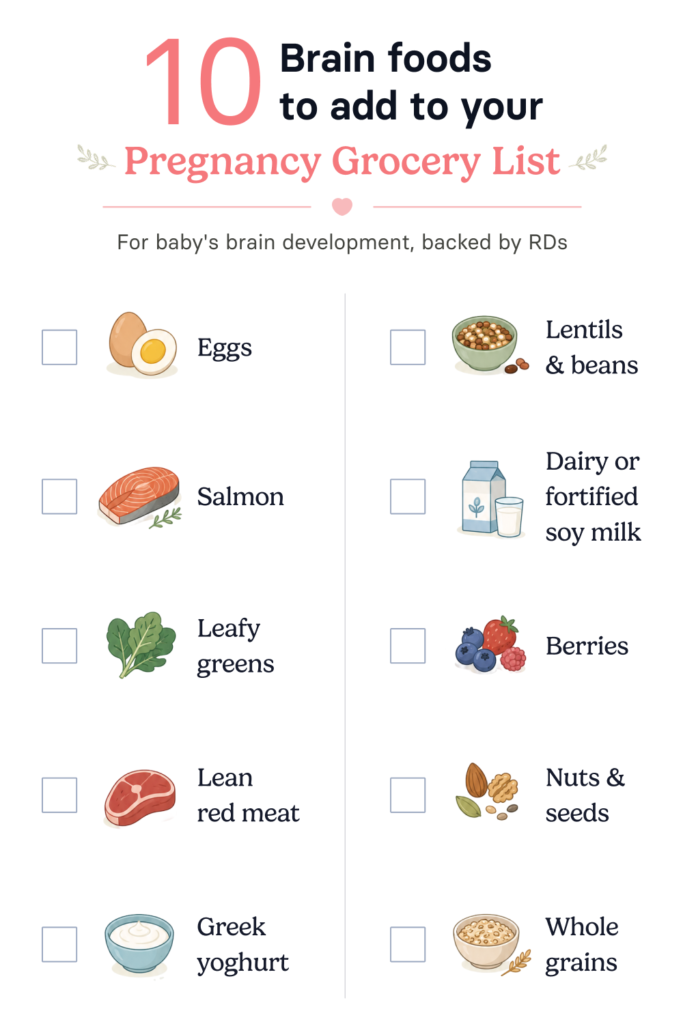
Which foods develop baby’s brain in the womb?
Each nutrient below plays a distinct role in how your baby’s brain forms, and knowing the daily target makes it much easier to check whether what you eat in a day is actually covering the basics.
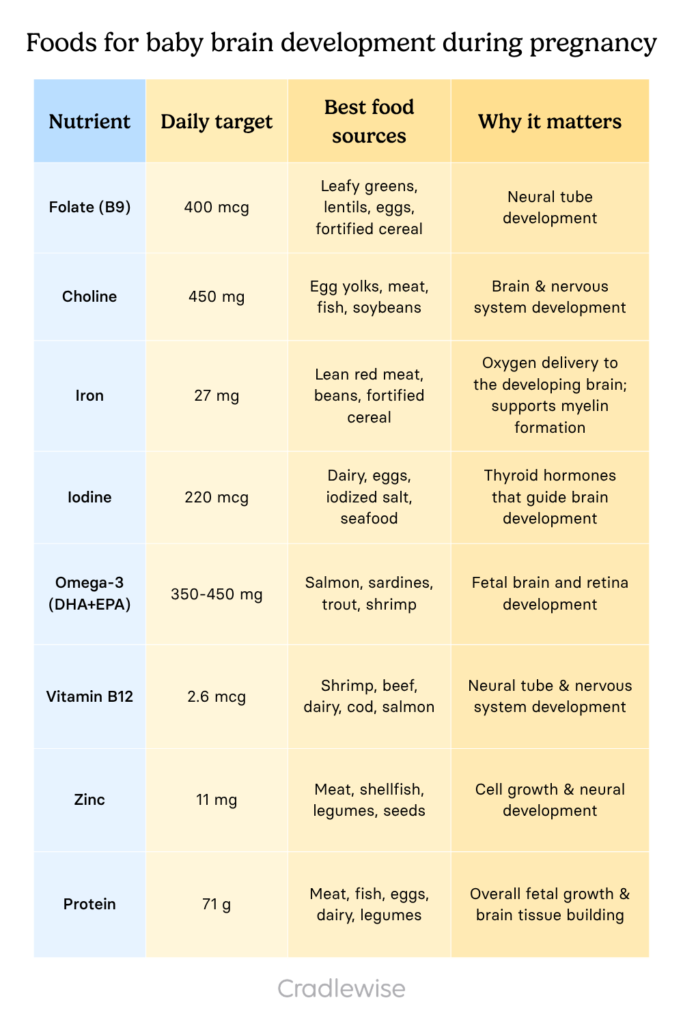
“ The main micronutrients that aid in brain development include folate, choline, iodine, iron, and omega-3 fatty acids. Sometimes, a prenatal vitamin alone does not provide enough nutrients for a baby’s optimal brain development. Women need to focus on including these nutrients from food as well.”
What foods are good for baby brain development during pregnancy?
Here’s a closer look at each nutrient:
Folate (vitamin B9)
Folate helps the neural tube develop, which prevents brain and spine defects. Neural tube defects typically occur three to four weeks after conception, often before a woman knows she’s pregnant, which is why folate matters even before you’re actively trying to conceive.
The CDC recommends 400 micrograms daily.
Good sources: Dark leafy greens like spinach and broccoli, peanuts, fresh fruit, whole grains, liver, eggs, beans, and sunflower seeds.
Omega-3 fatty acids
According to a review in Obstetrics and Gynecology, Omega-3 plays a role in fetal brain and retina development and may help prevent perinatal depression. Additionally, Omega-3 is linked to determining the length of the gestation period.
Two to three weekly servings of lower-mercury seafood, such as salmon, sardines, trout, or shrimp, can help meet this target alongside other important nutrients. If you don’t eat seafood regularly, or follow a vegan or vegetarian diet, talk to your provider about a DHA supplement.
Cradlewise Note: DHA gets a lot of attention, and rightfully so, but it works alongside choline, iron, iodine, and folate as part of a bigger nutritional team supporting your baby’s brain.
Choline
Choline is a water-soluble nutrient, tied to the B-vitamin family, that supports early fetal brain and spinal cord formation, among others. However, our bodies do not naturally produce sufficient quantities of choline. During pregnancy the need for choline rises exponentially, therefore, the best way to get enough of it is through food.
Good sources: Egg yolks (about 125mg per large egg), beef, chicken, pork, salmon, cod, dairy, peanuts, soybeans, Brussels sprouts, broccoli, and quinoa.
Iron
Good sources: Lean red meat, beans, lentils, and fortified cereal. Pairing iron-rich foods with vitamin C, like beans with tomatoes, helps your body absorb it more effectively.
Iodine
Good sources: Dairy, eggs, iodized salt, and seafood.
Vitamin B complex
B vitamins, especially B12, B9, and B6, support fetal brain development and can ease some pregnancy symptoms along the way.
All eight B vitamins can be found in good prenatal vitamins, but remember, prenatal vitamins can support a healthy diet, not replace it. The best way to absorb the vitamin B complex is through food.
Here are some natural sources of vitamin B complex recommended by The American Pregnancy Association (AAP) that help your baby’s brain develop:
- Thiamin / B1 (1.4mg a day): Whole grain pasta, peas, salmon, lentils, pork, cereals
- Niacin / B3 (18mg a day): Chicken breast, wild salmon, turkey, tuna, sunflower seeds, brown rice
- Pyridoxine / B6 (25-50mg a day): Chickpeas, avocados, sweet potatoes, bananas, turkey, chicken
Cobalamin (vitamin B12)
Vitamin B12 supports neural tube and spine development, helping prevent nervous system defects. The recommended intake is 2.6 mcg a day, not mg, a common mix-up worth double-checking on supplement labels.
Good sources: Shrimp, grass-fed beef, yogurt, cottage cheese, milk, cod, soy milk, and wild salmon.
Antioxidants
Antioxidants help protect your baby’s developing brain tissue and cellular membranes from damage, and may help prevent low oxygen levels in utero that can affect memory.
Good sources: Bananas, berries, oranges, kidney beans, chickpeas, peanuts, soybeans, kale, spinach, broccoli, and asparagus.
Which fruit is good for an intelligent baby during pregnancy?
There’s no single “best” fruit that guarantees an intelligent baby. However, berries, bananas, and oranges are known for their antioxidant content, which helps protect developing brain tissue. Also, variety matters more than any one pick.
Cradlewise Note: Some fruits can carry pesticide residues. You may want to check out our guide on the dirty dozen during pregnancy that talks about pesticides in produce and how to wash fruits and vegetables.
How to improve baby brain development during pregnancy?
Nutrition is essential, but it is just part of a whole.
Even a brisk 30-minute walk or mild aerobic activity counts if a full workout feels like too much.
A prenatal vitamin is a helpful supplement, not a substitute for food. As Chacha Miller notes above, many prenatals fall short on choline specifically, so a varied, nutrient-dense diet still matters even alongside a good supplement.
Getting enough rest and avoiding smoking and alcohol are also a few basics that should be followed.
Foods to avoid during pregnancy
It is equally important to know what foods to limit, and what’s actually fine despite the warnings you may have heard.
“ The biggest concerns are alcohol, high-mercury fish and foods with a higher risk of foodborne illness. There is no known safe amount of alcohol during pregnancy, and fish such as shark, swordfish, king mackerel, marlin, orange roughy, bigeye tuna and tilefish from the Gulf of Mexico should be avoided because of their mercury content.”
Chacha adds: This does not mean avoiding seafood altogether. Lower-mercury seafood provides DHA, iodine, protein and other nutrients that support brain development.
A few other guidelines worth following consistently, without becoming fearful of food:
- Avoid raw or undercooked meat, fish, and eggs
- Skip unpasteurized dairy and juices
- Keep caffeine under about 200mg a day
- Be mindful of your pregnancy teas or herbal teas, as everything marked herbal or natural do not automatically mean safe when you’re pregnant
For a fuller breakdown of what to eat and avoid across pregnancy, see our pregnancy diet plan guide.
Nutrient-dense snacks for nausea or low appetite
Some weeks, eating well can feel genuinely hard, and that’s worth planning around.
“ When nausea or low appetite hits, I generally encourage my patients to focus on small, simple food combinations rather than expecting someone to eat a perfect meal. Something simple like an egg with toast or crackers may not seem like much but it provides choline and protein, both valuable nutrients for fetal brain development.”
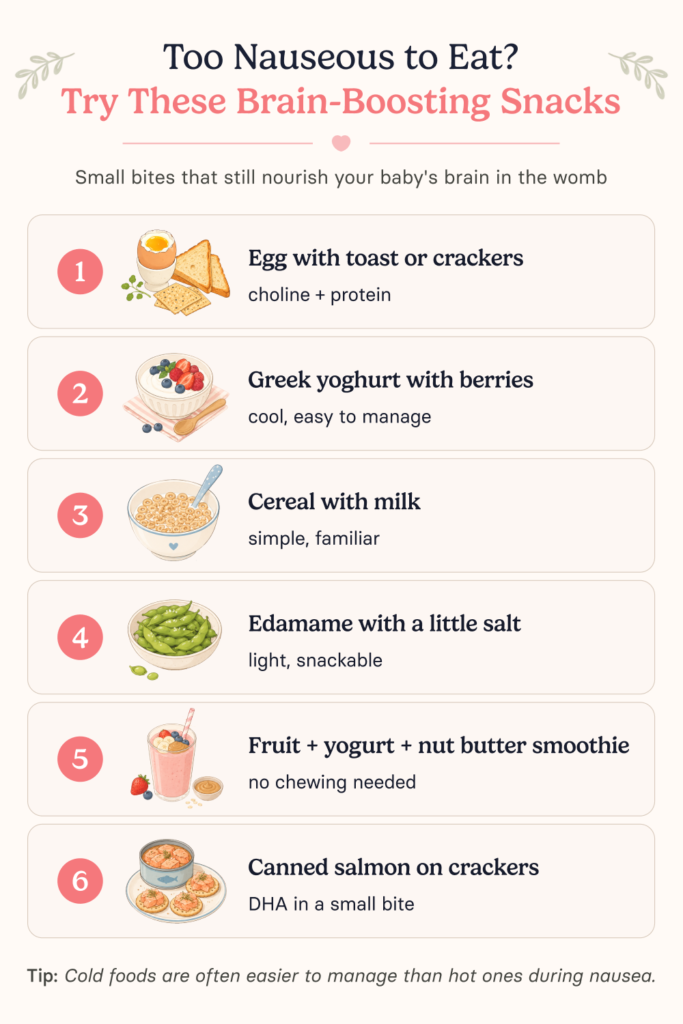
Eating a few bites every couple of hours can feel more doable than sitting down to a full plate. As Chacha Miller puts it, something is always better than nothing during this season, so start with what feels tolerable and build from there.

Did you know?
Cold foods are often easier to manage during nausea, since they carry less aroma than hot meals.
Conclusion
Nourishing your baby’s brain requires consistent, nutrient-dense choices alongside a good prenatal vitamin. Focus on folate, choline, iron, iodine, and omega-3s where you can and don’t let nausea or a difficult week discourage you. Every small, doable meal still counts.
Although nutrition is an indispensable part of your baby’s brain development, it’s equally important to stay physically active when you’re able to.
FAQs
Q: Can I take supplements instead of eating nutrient-rich foods?
A: A prenatal vitamin though valuable during pregnancy, shouldn’t be your entire nutrition plan. Many prenatals contain little or no choline, an important nutrient for early brain development, so whole foods still play an essential role even with a good supplement.
Q: Are there any foods I must avoid during the third trimester?
A: The same guidance applies throughout pregnancy: avoid alcohol, high-mercury fish like shark, swordfish, and king mackerel, and raw or undercooked animal foods. Lower-mercury seafood, like salmon and shrimp, remains safe and beneficial.
Q: How much DHA should I consume daily during pregnancy?
A: Aim for roughly 250mg of combined DHA and EPA per day pre-pregnancy, plus an additional 100-200mg of DHA during pregnancy. Two to three weekly servings of lower-mercury seafood, like salmon, sardines, and trout can help you reach your recommended daily intake.
Q: What are the best snacks for brain development during pregnancy?
A: Simple combinations work well: an egg with toast, Greek yogurt with berries, edamame, or a smoothie with fruit and nut butter. These deliver choline, protein, and other key nutrients even in small portions.
Q: Which fruits support brain development during pregnancy?
A: Berries, bananas, and oranges are especially rich in antioxidants, which help protect your baby’s developing brain tissue. Variety matters more than any single fruit.
Q: Which is the best vegetarian food for baby brain development during pregnancy?
A: Focus on nutrient-dense, vegetarian foods like spinach, kale, lentils, chickpeas, kidney beans, chia seeds, walnuts, cashews, tofu, fortified grains, whole milk, and yogurt.
Q: Can babies taste food in the womb?
A: At 21 weeks of pregnancy, your baby starts swallowing the amniotic fluid, and through it, your little one tastes and smells the food you’re consuming. Another reason to sample as many foods as possible is so that your baby gets maximum exposure to different flavors.
Posts you may like:
- Pregnancy 101: Can you take magnesium when pregnant?
- When do babies start kicking? Your guide to baby’s first movements.
- 15 Weird signs labor is near.
Sources:
- Folate (vitamin B9). CDC. 2026. About Folic Acid.
- Omega-3 fatty acids. Obstetrics and Gynecology. 2023. Omega-3 Fatty Acids and Pregnancy.
- Choline. Cureus. 2023. Choline Supplementation in Pregnancy: Current Evidence and Implications.
- Vitamin B complex. The American Pregnancy Association. Roles of Vitamin B in Pregnancy.
- Cobalamin (vitamin B12). NIH. 2023. Vitamin B12.
- Cold foods. Medical News Today. 2026. Foods to relieve nausea and other tips to try.
You may also like


