Parenting
0 min read
How to relieve a clogged milk duct, and when to call a doctor

Medically Reviewed Dr. Dawn Ericsson, OB/GYN, FACOG, Chief Medical Director at AgeRejuvenation
Written by Cradlewise Staff
You enjoy the quiet, bonding time with your little one while nursing. However, sometimes your smooth breastfeeding sessions can turn into painful experiences. The reason being – a sore, hard lump in your breast.
If you’re breastfeeding or pumping, there’s a good chance what you’re feeling is a clogged milk duct, one of the most common breastfeeding hiccups, and thankfully, one of the most treatable.
We spoke with an OB/GYN, Dr. Dawn Ericsson, MD, FACOG, Chief Medical Director, AgeRejuvenation and a lactation consultant, Joanna Kreyling, CPNP-PC, IBCLC, 1 Natural Way to understand what’s actually happening inside a clogged duct, what helps, and how to tell the difference between something that will resolve on its own and something that needs medical attention.
What is a clogged milk duct?
A clogged milk duct happens when milk isn’t flowing freely through one of the many tiny ducts that carry milk from your breast to your nipple. This creates a localized area of inflammation, often felt as a firm, tender lump.
Dr. Dawn has an interesting way to explain this phenomenon:
“ One of the easiest ways I explain it to my patients is to imagine a traffic jam. The breast contains a network of tiny milk ducts that transport milk from the milk-producing glands to the nipple. When one of those ducts becomes compressed or inflamed, milk can’t flow freely and begins to back up behind the blockage. That creates pressure, tenderness, and often a firm lump.”
Dr. Dawn, however, assures, “The important thing to understand is that a clogged duct is usually an inflammatory process, not necessarily an infection. If we can reduce that inflammation and restore normal milk flow early, we can often prevent it from progressing into mastitis.”
What does a clogged milk duct look like?
A clogged duct usually shows up as a firm, tender area in one part of the breast, sometimes with mild redness over the spot. Occasionally, you’ll notice a milk bleb, a tiny white or yellow dot on your nipple. This is the visible surface of the blockage right where the duct opens. Blebs can be tender and may make feeding uncomfortable on that side, but they usually resolve along with the clog.
Clogged milk duct symptoms
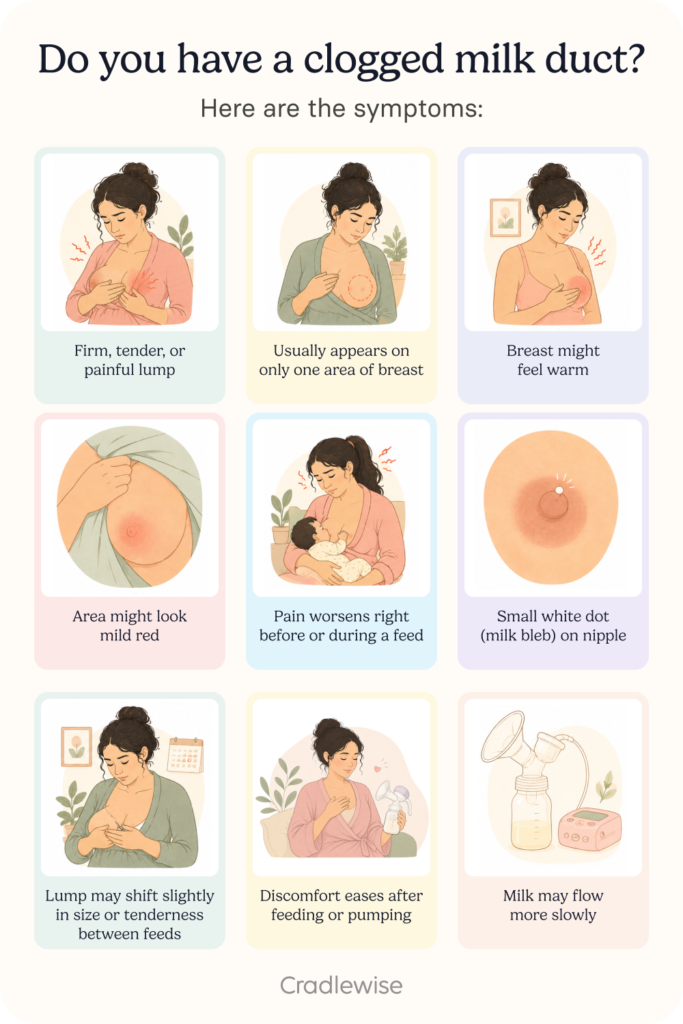
How do I know when a milk duct is unclogged?
When your lump softens, tenderness fades, and feeding on that side stops hurting and feels smoother, you will know your milk duct has unclogged. You will feel your milk flow is more even once the blockage clears, and any visible milk bleb will disappear as well.
What causes clogged milk ducts?
Joanna Kreyling attributes the clogged milk ducts to many factors, such as:
- Making more milk than your baby is consuming (oversupply)
- Not fully emptying the breast at feeds or pumping sessions
- Going too long between feeds or pumps
- A shallow latch or breastfeeding positions that doesn’t drain all areas of the breast evenly
- Pressure on the breast from a tight bra, underwire, or sleeping position
- Sudden changes in feeding routine, like weaning or a missed session
When does a clogged duct become something more serious?
Most clogged ducts stay localized and resolve with simple home care. However, occasionally, the same blockage and inflammation can progress into mastitis, or be confused with thrush, a separate condition affecting the nipple and milk ducts. Knowing the difference can help you seek timely care.
Signs it may be mastitis
Mastitis is different because the inflammation has progressed and may involve an infection within the breast tissue. In addition to breast pain, redness, warmth, and swelling, you may develop flu-like symptoms.
- Fever above 100.4°F
- Chills or flu-like body aches
- Redness, warmth, and swelling that’s spreading, not localized
- Feeling generally unwell, not just sore in one spot
Clogged milk duct vs. mastitis vs. thrush
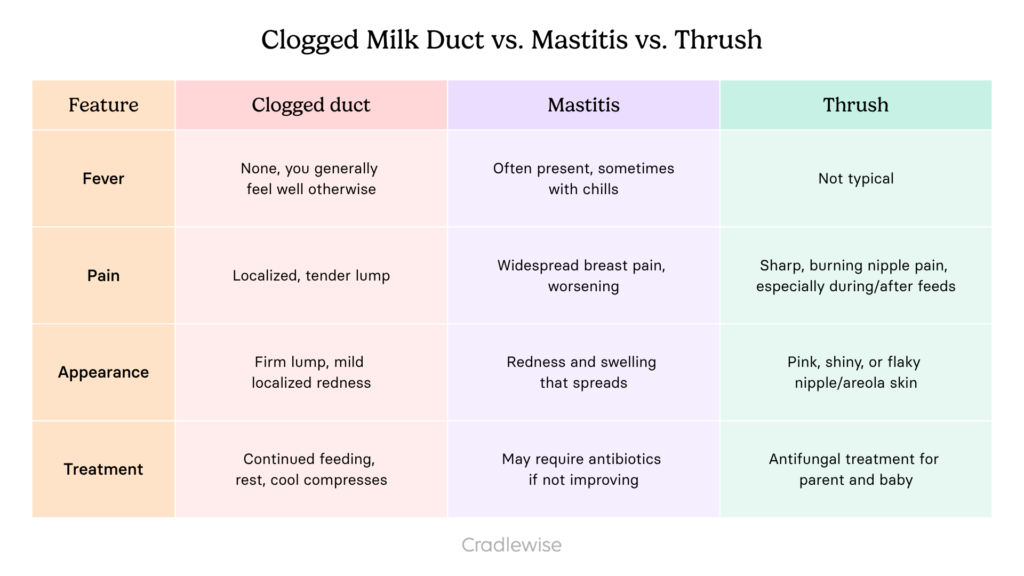
Thrush and clogged ducts can be mistaken for each other because both cause breast discomfort, but they have different causes and different treatments. If nipple pain feels sharp or burning rather than a dull, localized ache, it could be thrush and warrants a visit to your provider.
How to treat clogged milk duct at home
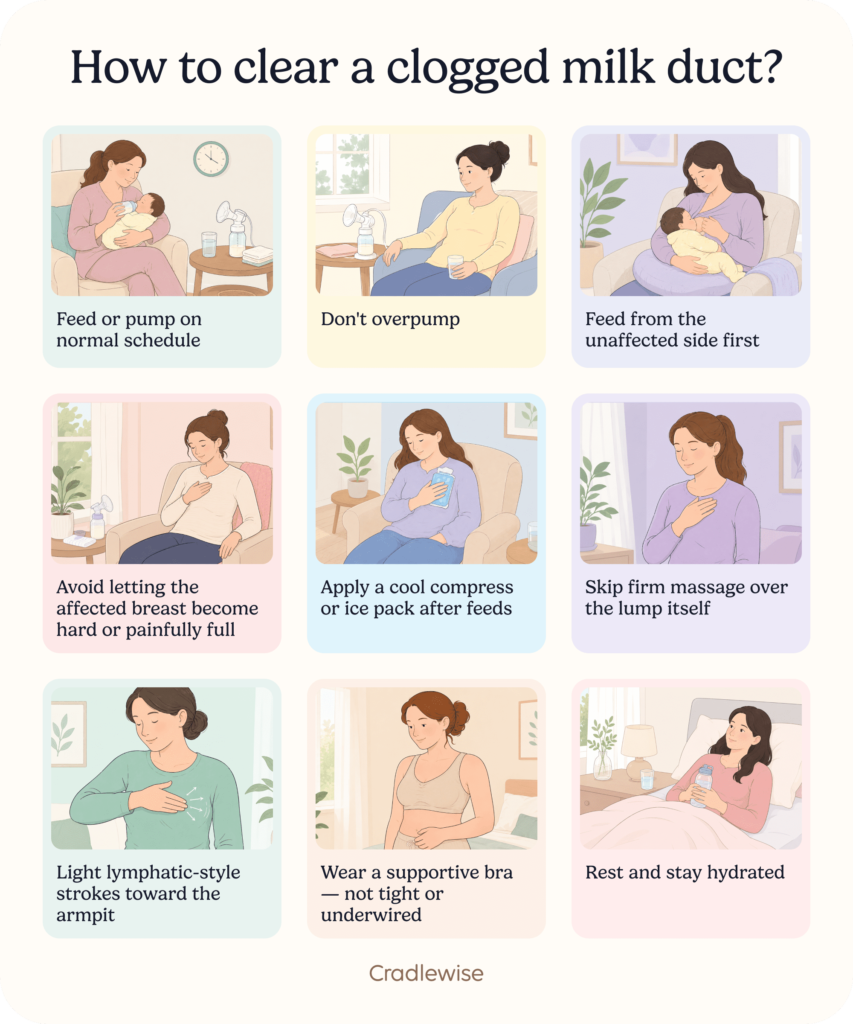
Most clogged ducts respond well to conservative, gentle care. It’s worth noting that medical guidance has shifted in recent years from leaning heavily on massage and frequent heat to gentler treatments.
How to clear a clogged milk duct
Should I keep breastfeeding or pumping if I have a clogged milk duct?
Yes. You can continue to feed or pump from the affected breast on your normal schedule. It is safe for your baby and typically speeds up recovery by relieving pressure and restoring milk flow. It’s safe to breastfeed even if mastitis develops.
What medicine can I take to clear a clogged milk duct?
Dr. Dawn recommends a few OTC medicines to clear a clogged milk duct.
Ibuprofen helps relieve discomfort while also addressing the inflammation that is contributing to the blockage. Acetaminophen is another option if ibuprofen isn’t right for you. Both medicines are generally considered compatible with breastfeeding when taken as directed, but medication works best alongside continued feeding, rest, and hydration, not as a stand-alone fix.
Cradlewise Note: It is always advisable to consult your medical provider before taking any medicines, especially as you are breastfeeding or pumping.
What about vibration tools or sunflower lecithin?
“ Research has not shown that vibrating toothbrushes are as effective as therapeutic ultrasounds in reducing breast inflammation. Often these tools include heat which can make inflammation worse. Research on sunflower or soy lecithin demonstrates they are helpful. I typically recommend its use when an area of inflammation does not quickly resolve or is recurrent.”
How can I prevent getting clogged milk ducts?
These few measures will help the prevention of getting your milk ducts clogged:
- Feed or pump on a consistent schedule, avoiding long gaps
- Fully drain each breast at feeds when possible
- Vary feeding positions to help empty different areas of the breast
- Avoid tight bras, underwire, or anything that presses on the breast for long periods
- Address oversupply with an IBCLC if clogs keep recurring
- Watch for early tenderness and respond quickly with rest and gentle care
When to call a doctor
Most clogged ducts start improving within 24 to 48 hours. Call your provider if the pain, swelling, or redness aren’t easing in that window, or sooner if you develop a fever above 100.4°F, chills, or flu-like body aches, as these can be early signs of mastitis.
“ After caring for women for more than two decades, I’ve found that early intervention almost always leads to a faster recovery and fewer complications. I always encourage patients to trust their instincts. If something feels like it’s getting worse rather than better, it’s worth reaching out to your physician.”
Cradlewise Tip: If clogs keep recurring in the same spot, that’s worth mentioning to an IBCLC directly. Recurring clogs often point to a root cause, like a latch issue or oversupply, that’s easier to resolve with hands-on support.
Conclusion
A clogged milk duct is uncomfortable, but it’s one of the more manageable breastfeeding hurdles, and most resolve within a couple of days with gentle, consistent care. Keep feeding, rest where you can, and don’t hesitate to reach out to your provider or an IBCLC if something doesn’t feel right. You know your body best.
FAQs
Q: Can you get clogged milk ducts if you're not lactating?
A: Yes. A condition called ductal ectasia can cause duct blockage and inflammation even outside of breastfeeding. It’s less common but worth mentioning to your doctor if you notice similar symptoms while not nursing or pumping.
Q: Will a clogged duct go away by itself?
A: Sometimes, yes, especially with continued feeding and rest. But if it hasn’t improved within 48 to 72 hours, or symptoms are getting worse, it’s time to call your provider rather than wait it out further.
Q: Is it safe to keep breastfeeding with a clogged duct?
A: Yes. Continuing to breastfeed or pump from the affected side is safe for your baby and helps relieve the blockage. Avoid over-pumping, which can prolong the problem by increasing milk production.
Q: Can thrush cause clogged milk ducts?
A: Not directly; they’re different conditions. But nipple damage from thrush can occasionally contribute to blocked ducts over time, so it’s worth treating both if you suspect you have developed thrush.
Q: How long does it take to clear a clogged milk duct?
A: Most clogged ducts improve within 24 to 48 hours with consistent home care. If it hasn’t resolved in a day or two, or you develop fever or flu-like symptoms, reach out to your provider.
You may also like:
You may also like