Parenting
0 min read
Summer allergies in babies and toddlers: Is it allergies, a cold, or something else?

Medically Reviewed Dr. Susan Schuval, Chief of the Division of Pediatric Allergy/Immunology, Stony Brook Children's Hospital, New York
Written by Cradlewise Staff
It’s summer, and you’re ready to spend more time outdoors. But your baby has been irritable for days. Her nose won’t stop running, she’s sneezing more than usual, and those little hands keep making their way to her watery eyes. You assume it’s a summer cold, something that will pass in a few days. But then another week goes by. The sneezing continues after trips to the park, and congestion starts interrupting naps.
Seasonal allergies can be easy to miss in babies and toddlers because they often resemble common childhood illnesses. While hay fever is more common in older children, little ones can still react to grass, pollen, mold, and other environmental triggers. And because babies can’t tell us that their eyes are itchy or their throat feels scratchy, we’re left piecing together clues from runny noses, disrupted sleep, and a child who suddenly wants extra cuddles.
As temperatures rise and families spend more time outdoors, many parents find themselves asking the same question: Is it allergies, a cold, or something else? To help separate fact from fiction, we spoke with Dr. Susan Schuval, Chief of the Division of Pediatric Allergy/Immunology at Stony Brook Children’s Hospital in New York, on how to tell the difference.
Can babies get seasonal allergies?
Yes, babies can get seasonal allergies, but age plays an important role in how likely they are to develop them. Seasonal allergies (also called allergic rhinitis or hay fever) happen when the immune system reacts to things like pollen, grass, or mold spores. According to the American Academy of Pediatrics (AAP), seasonal allergies are less common in babies under age 2 because they typically require repeated exposure over more than one season to develop.
That means if your 4-month-old has congestion in July, allergies are possible, but a virus is still more likely. Toddlers and preschoolers, on the other hand, may begin showing clearer signs of seasonal allergies, especially if there is a family history of asthma, eczema, or allergies.
“ Seasonal (pollen) allergies do not generally occur in young children below 2 years of age because it takes a few years for an individual to become sensitized to the pollens. However, seasonal allergies may be seen in young children with strong family histories of atopy (hay fever, asthma, or eczema in parents).”
Why do symptoms seem worse in summer?
Spring tends to get most of the attention, but summer has its own triggers. Summer can be particularly tough on little noses. Longer days mean more time spent at the playground, on walks around the neighborhood, or splashing around in the backyard. Windows stay open to let in the breeze, and pollen has a habit of hitching a ride home on clothes, stroller canopies, picnic blankets, and even the family dog.
Depending on where you live, common summer allergens include:
- Grass pollen
- Mold growing in damp areas
- Weed pollen (which often starts increasing toward late summer)
- Outdoor molds after rain or high humidity
- Air pollution and wildfire smoke in some regions
According to Dr. Schuval, “Summertime allergens here in NY include weed and ragweed pollen and mold spores. Weed pollen allergy generally is seen in the summer months. Ragweed season starts here every year on August 15, and mold spores occur in late summer and early fall.”
And it’s not just parents imagining that allergy season seems to last longer these days. A study has found that climate change is contributing to longer and more intense pollen seasons across many parts of the United States, leaving children exposed to allergens for more weeks each year than previous generations experienced.
Summer allergies vs. a cold: What should parents look for?
Parents often tell pediatricians the same thing: “It started with a runny nose, and then I couldn’t tell what was happening.” Dr. Schuval explains, “Although upper respiratory infections and allergic rhinitis may both cause nasal congestion and runny nose, nasal and ocular itch are seen only in allergic disorders. Low-grade fever may be seen with URIs but does not occur with allergies. Green or yellow nasal mucus may indicate URI or sinus infection.”
Here are a few clues that can help you tell the difference. The American Academy of Pediatrics (AAP) notes that while colds and seasonal allergies can look remarkably similar at first, paying attention to symptom patterns and how long they last can offer important hints. Use the guide below to compare common signs and symptoms and their typical durations.
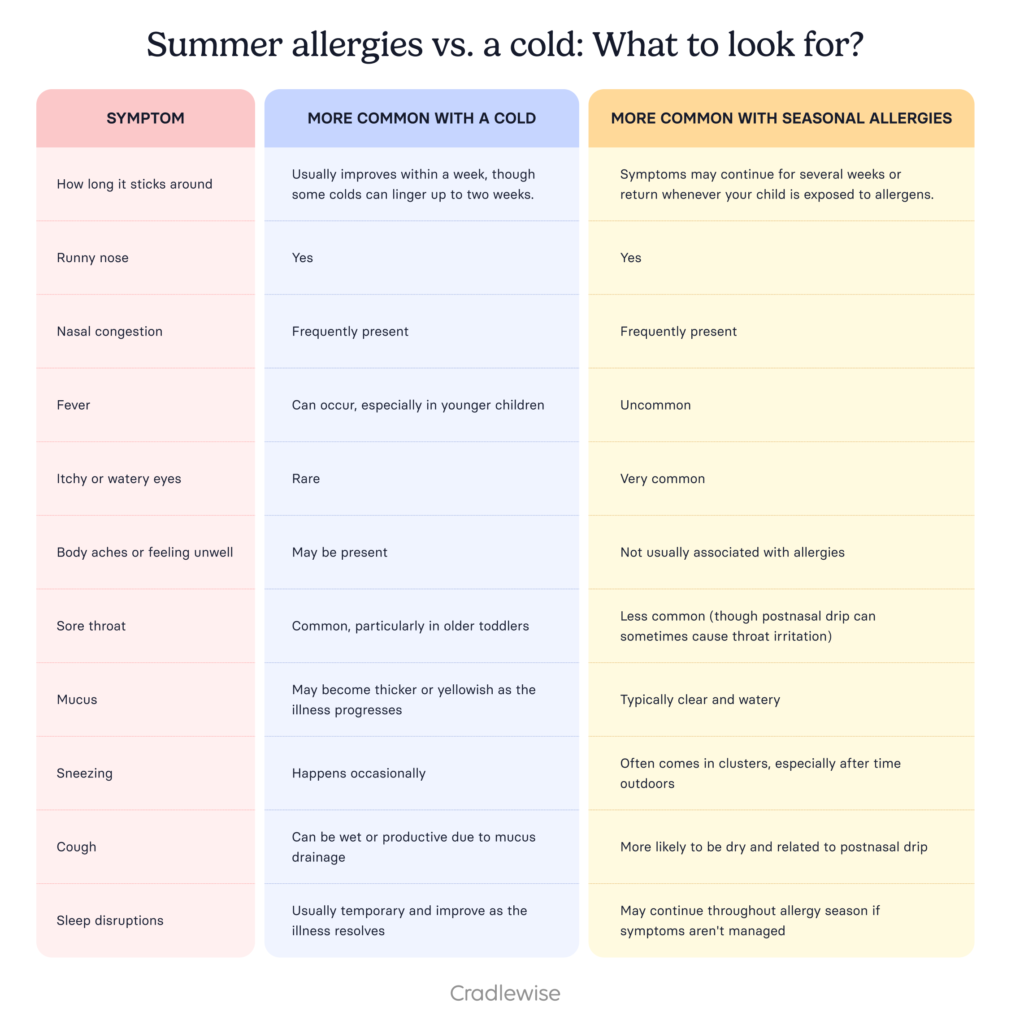
Most pediatricians often ask about timing. If your baby is congested every Saturday after a walk in the park but seems better indoors, allergies move higher on the list.
According to the CDC, most common colds in children resolve within about a week to ten days, while allergy symptoms may persist as long as exposure continues.
Can my baby catch a virus at daycare?
Sometimes, it’s neither. Children in daycare can pick up several viral infections each year. Research published in the Italian Journal of Pediatrics estimates that young children may experience six to eight respiratory infections annually, with some children having even more during their first years in group care.
Viruses such as RSV, adenovirus, and enteroviruses continue circulating during summer months.
A few signs that suggest a virus instead of allergies include:
- Fever
- Sudden onset of symptoms
- Vomiting or diarrhea
- A child who seems significantly less active than usual
- Symptoms spreading to siblings or other family members
If your child develops difficulty breathing, appears dehydrated, or is unusually sleepy, it’s worth contacting your pediatrician sooner rather than later.

Did you know?
Pollen seasons in parts of the United States are starting earlier and lasting longer than they did 30 years ago. Researchers have linked rising temperatures and increased carbon dioxide levels to higher pollen counts, which may contribute to more allergy symptoms in children today than previous generations experienced.
Why does my baby have a runny nose if it isn’t allergies?
Not every sniffle falls neatly into one category. Your pediatrician may also consider:
Irritants: Smoke, perfumes, cleaning products, and poor air quality can irritate sensitive airways without causing a true allergic response.
Teething: Teething does not cause fevers or prolonged congestion, but extra drool can occasionally lead to mild coughing, especially when lying down.
Sinus infections: Persistent symptoms lasting more than 10 days that suddenly worsen may need further evaluation.
COVID-19: COVID-19 can still overlap with symptoms of colds and allergies. Testing recommendations may vary depending on current public health guidance and your child’s exposure history.
How are seasonal allergies diagnosed in children?
For older toddlers and children with recurring symptoms, pediatricians may recommend allergy testing. The American College of Allergy, Asthma & Immunology ACAAI also notes that allergy testing is generally more useful once children are old enough to have established patterns of symptoms.
These tests can include:
- Skin prick testing
- Blood tests that measure allergy antibodies
- Keeping a symptom diary to identify patterns
If symptoms return every summer or appear after spending time in specific environments, documenting those details can help narrow down possible triggers.
“ Pediatricians can sometimes diagnose seasonal allergies clinically in children with nasal and ocular symptoms at times of high pollen counts (such as early spring), but allergist referral and testing are needed for definitive diagnosis of possible allergic triggers. Allergy testing by an allergist may include prick skin testing or laboratory (IMMUNOCAP) testing.”
Helping your child feel more comfortable
If your pediatrician suspects seasonal allergies, they may recommend age-appropriate treatment options.
Some practical steps suggested by the AAP at home include:
- Changing clothes after outdoor play.
- Bathing before bedtime to remove pollen from skin and hair.
- Keeping windows closed on high-pollen days.
- Washing bedding regularly.
- Using air conditioning when possible.
- Checking local pollen forecasts.
Sleep can become harder when congestion enters the picture. Babies may wake more often because they struggle to breathe comfortably while lying flat, and toddlers may have difficulty settling at bedtime after a day outdoors. Dr. Schuval, further explains, “Nasal congestion and postnasal drip at night may disrupt sleep. Use of the bulb syringe and humidifier may be helpful. Nasal saline administration may also help clear mucus from the nose.”
Keeping bedrooms cool, minimizing allergens in sleep spaces, and maintaining a consistent bedtime routine can make nights more manageable during allergy season.
When should you call the pediatrician?
Reach out to your child’s healthcare provider if:
- Symptoms last longer than two weeks.
- Your child develops wheezing or trouble breathing.
- Congestion interferes with eating or sleeping.
- Fever accompanies symptoms.
- Your child seems uncomfortable most days.
- You suspect asthma alongside allergy symptoms.
Children with allergies are also more likely to develop asthma, eczema, or other allergic conditions, particularly when there is a family history. Dr. Schuval also adds, “Respiratory distress is an emergency. Parents may notice that the child is struggling to breathe, coughing incessantly, turning blue, or wheezing. If any of those symptoms are seen, parents are advised to call ‘911’ for EMS transport to the closest hospital Emergency Department.”
Conclusion
A runny nose in July can mean several different things. Sometimes it’s a summer cold making its rounds at daycare. Sometimes it’s grass pollen after an afternoon at the park. Occasionally, it’s a combination of both.
Paying attention to patterns, when symptoms appear, how long they last, and whether they improve indoors, can offer useful clues. If you’re seeing the same symptoms return each summer, it’s a good conversation to have at your child’s next pediatric visit.
FAQs
Q: Can babies get seasonal allergies during the summer?
A: Yes, although true seasonal allergies are more commonly diagnosed after age 2. Babies and toddlers can still develop symptoms related to pollen, grass, mold, and other environmental triggers.
Q: How can I tell if my child has allergies or just a cold?
A: Colds usually improve within 7–10 days and may come with a fever, while allergies tend to last longer and often cause itchy eyes, sneezing, and symptoms that worsen after outdoor exposure.
Q: What are the most common summer allergens for babies and toddlers?
A: Grass pollen, mold spores, weed pollen, and air pollution are among the biggest summer allergy triggers. These allergens can easily make their way indoors on clothes, shoes, pets, and strollers.
Q: When should I call the pediatrician about my child's allergy symptoms?
A: Reach out to your pediatrician if symptoms persist for more than two weeks, interfere with sleep or eating, or are accompanied by wheezing, trouble breathing, or a fever.
Q: Can seasonal allergies affect my baby's sleep?
A: Yes. Congestion, postnasal drip, and itchy eyes can make it harder for babies and toddlers to settle down and stay asleep, especially during peak allergy season.
Sources:
- Seasonal allergies (allergic rhinitis) in children: symptoms, causes, and treatment. HealthyChildren.org. 2025. “Allergic Rhinitis.”
- Practical allergy prevention and management tips for families. HealthyChildren.org. 2025. “AAP Allergy Tips.”
- Global review of childhood allergic rhinitis prevalence and risk factors. Jornal de pediatria. “Childhood Allergic Rhinitis: Positive Trends in Adverse Time Trends and Quality of Life.”
- How to distinguish allergy symptoms from the common cold in children. HealthyChildren.org. 2024. “Is It Allergies or a Cold? How to Tell the Difference.”
- An overview of the common cold, including symptoms and prevention. Centers for Disease Control and Prevention (CDC). 2025. “About Common Cold.”
- Recent research examining allergic rhinitis and associated health outcomes in children. Italian journal of pediatrics, 50. “The Burden of Allergic Rhinitis in Children: Current Insights and Emerging Perspectives.”
- Guidance on recognizing and managing RSV in infants and young children. HealthyChildren.org. 2025. “RSV: When It’s More Than Just a Cold.”
- When and how allergy testing is recommended for children and infants. American College of Allergy, Asthma & Immunology (ACAAI). 2025. “For Children and Infants.”
- An overview of seasonal allergies in children, including triggers and treatment options. HealthyChildren.org.2025. “Seasonal Allergies in Children.”
You may also like:
You may also like