Pregnancy
0 min read
Pregnant and dealing with a head cold? What’s safe, what works, and what to avoid


Cradlewise Staff
Pregnancy is known to naturally suppress your immune system, so even small illnesses like a common cold might affect you adversely and make you more vulnerable to symptoms like a runny or stuffed up nose, congestion, sneezing, and a head cold while pregnant.
In this post, we will walk you through the causes and symptoms of a cold during pregnancy, how to deal with a head cold, stuffy nose and congestion through safe and recommended practices, and when to see a doctor. You will also find helpful insights from Dr. Maria Knöbel, Medical Director and Co-founder of Medical Cert UK and Christine Greves, MD, Obstetrician and Gynecologist at Winnie Palmer Hospital for Women & Babies Orlando.
What causes a head cold in pregnancy?
A head cold is usually caused by common respiratory viruses like rhinoviruses or seasonal coronaviruses, according to the Centers for Disease Control and Prevention (CDC).
During pregnancy, your immune system naturally shifts to support your growing baby, and that change can make you more likely to catch everyday infections like colds.
Hormonal fluctuations can also play a role, sometimes making your nasal passages more sensitive or congested even without an infection. Add in dry air, sudden weather changes, or exposure to allergens, and it’s easy for cold-like symptoms to show up more often during pregnancy.
What are the cold symptoms during pregnancy?
Cold symptoms during pregnancy are usually mild and tend to come on gradually rather than all at once.
You might first notice nasal symptoms like a runny or stuffy nose and frequent sneezing. As the cold progresses, throat and chest discomfort can follow. Sore throat or a mild cough in pregnancy can appear too.
Some people also experience general “under the weather” feelings, including mild fatigue, a headache, or a low-grade fever (typically under 100°F).
Most colds follow a predictable pattern. They often begin with a sore throat and clear, watery nasal discharge. Within a few days, nasal congestion can become more noticeable, and the mucus may thicken and darken.
By days three to four, congestion usually peaks, then gradually eases by around day five, sometimes leaving behind a lingering cough that takes a little longer to fully clear.
How long does a cold last while pregnant?
A cold during pregnancy typically lasts about a week to 10 days, but symptoms can sometimes linger for up to 2 weeks. You can even catch multiple colds back-to-back, making it feel like you are always sick while pregnant.
Does having a cold while pregnant affect the baby?
In most cases, having a common cold during pregnancy does not directly affect your baby. That’s because the viruses responsible for colds usually remain limited to the upper respiratory tract and do not cross the placenta. Your placenta acts as a protective barrier that shields your developing baby from many everyday infections.
Even Dr. Maria confirms that “getting a common cold does not typically pose a serious risk to your pregnancy, miscarriage, or giving birth too early.”
Research supports this reassurance. Studies examining the common cold or flu during pregnancy have found no adverse effects on pregnancy outcomes. What does matter, however, is how your symptoms are managed, particularly fever. A sustained high fever can increase inflammation in your body, which is why healthcare providers recommend monitoring temperature closely and treating symptoms safely during pregnancy.
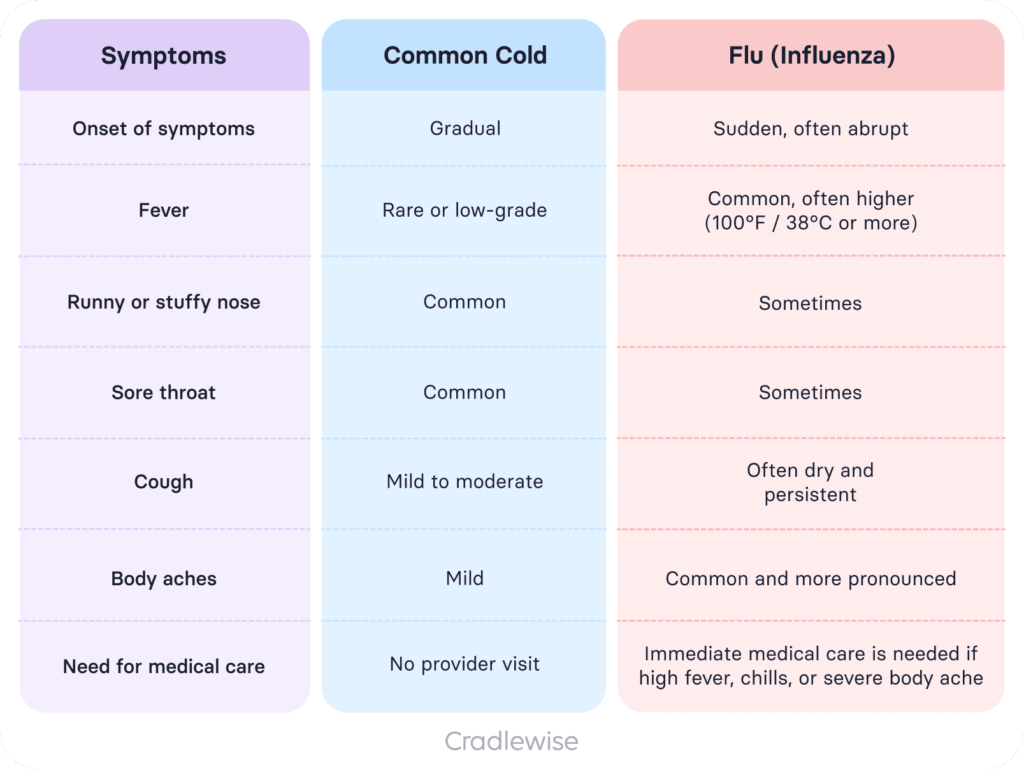
Common Cold vs. Flu: What’s the Difference?

Did you know?
While seasonal flu viruses are active around the year, the fall and winter months are known as the flu season, and flu activity peaks between December and February, as per the CDC.
Common cold and flu symptoms can sometimes overlap, making it tough to tell the difference just by symptoms, and pregnancy can make even mild illnesses feel more intense. However, the symptoms of the common cold are milder than the flu (influenza).
A doctor can perform tests to confirm if it’s the flu, which can have serious complications, unlike a common cold.
When to see a doctor?
If you are feeling well apart from the general discomfort, you can treat the cold at home and don’t need to see a doctor. However, Dr. Maria insists, “If you have cold symptoms and they get worse, especially if you have a high fever or trouble breathing, it would be a good idea to contact your doctor.”
Also, if your symptoms affect your daily activities, it is advisable to see your doctor.
Symptoms to note:
- A fever of 100.4°F (38°C) or higher
- Shortness of breath, chest pain, or difficulty breathing
- Persistent vomiting or diarrhea, especially if you are unable to keep fluids down
- Signs of dehydration, like dark urine or dizziness
- Severe sore throat, ear pain, or sinus pain that worsens
- Symptoms that linger after 2 weeks or suddenly get worse
- Any symptoms that feel concerning or unusual to you
How to prevent a cold during pregnancy?
The most effective ways to prevent a cold during pregnancy are:
- Washing your hands often with soap and water or alcohol hand rub
- Avoiding close contact with people who are sick
- Avoiding touching your eyes, nose, or mouth with unwashed hands
- Avoiding smoking and secondhand smoke
Dr. Maria reiterates that these healthy behaviors can also help prevent the flu from occurring. She also adds, “drinking plenty of water to keep yourself hydrated” helps.
A strong immune system can help you prevent falling sick while pregnant.
Does a flu shot help with the common cold during pregnancy?
Taking a flu vaccination can help you prevent getting infected with the various strains of the influenza virus; however, a flu vaccination might not help you prevent the common cold during pregnancy.
Having said that, it doesn’t undermine the need for the flu vaccination either. In fact, influenza is a potentially serious disease, and as per the World Health Organization, people whose immune systems are vulnerable, including women during pregnancy, can get it.
Dr. Maria reiterates, “Getting a flu vaccine is a safe and recommended practice for pregnant women because it will help protect you from the different strains of the flu virus that could potentially cause more damage while you are pregnant.”
As per the CDC, If you are pregnant and in your 1st or 2nd trimester in July or August, you should avoid getting flu vaccine as its protection may decrease over time, however if you are in your third trimester of pregnancy, you can take vaccination during July and August as it can help protect your newborn for the first few months after birth, when they are too young to be vaccinated.
Pregnant with congestion: How to manage cold symptoms safely during pregnancy
Managing a cold during pregnancy focuses on easing symptoms while avoiding remedies that may not be pregnancy-safe. Rest, hydration, and gentle symptom relief are usually enough for most mild colds.
Congestion
For nasal congestion, non-medicated options work best. Saline nasal sprays, steam inhalation, humidifiers, or a Neti pot can help clear nasal passages and reduce stuffiness without medication.
Fever and pain
Can I take Tylenol for congestion and a head cold while pregnant? Yes. If fever or mild aches develop, you can take acetaminophen (Tylenol) while pregnant. Always check with your healthcare provider to confirm what’s safe for you and the recommended dose.
Cough
A lingering cough in pregnancy may last even after other symptoms improve. Throat lozenges and warm fluids like herbal tea with honey can help soothe irritation. Menthol cough drops may be used in moderation, as guidance on their use during pregnancy is limited. If nothing works, guaifenesin can be taken as per the recommendation of Dr. Christine, but it is always advisable to check with your healthcare provider first.
Tip: Wearing pads can be useful during bouts of excessive coughing for those accidental leaks.
What to avoid
Avoid decongestants containing pseudoephedrine, especially in early pregnancy. It’s also best to avoid strenuous exercise, overheating (such as hot tubs), smoking, and secondhand smoke. If symptoms worsen, include a high fever, or interfere with daily life, contact your OB/GYN.
Conclusion
When pregnant with a head cold, take plenty of rest, hydrate adequately with warm liquids, and keep to non-medicinal remedies like saline sprays, neti pot to irrigate nasal passages and humidifiers. It is also advisable to avoid OTC medications and consult your doctor for safer options if you develop a high fever, chills or flu-like symptoms. Most importantly, take plenty of rest and let your body heal.
FAQs
Q: What can I take for a cold while pregnant?
A: Apart from taking Tylenol (consult your doctor to confirm the correct dosage), you can take saline nasal sprays for relief from congestion and drink warm liquids like herbal tea with honey and take lozenges (in moderation) for sore throat.
Q: What cold medicine can I take while pregnant?
A: Tylenol is the safest cold medicine that can be taken during pregnancy. However, consult your doctor to confirm the correct dosage.
Q: Does the flu shot help with common cold during pregnancy?
A: No, they are different viruses. A flu vaccination, though recommended, might not help you prevent the common cold during pregnancy.
Q: Are menthol cough drops ok during pregnancy?
A: Due to limited knowledge regarding the effects of menthol cough drops on pregnancy, Dr. Christine recommends taking them in moderation and only if you want to feel soothed.
Q: What are the red bumps at the back of the throat and how to treat them?
A: Those red bumps at the back of your throat may be caused by minor irritation to your throat or the swelling of lymph nodes. Gargle with salt water several times a day or drink warm liquids to help relieve the discomfort. However, contact your physician if the discomfort persists or causes a great deal of pain.
You may also like:
- Pregnant and fighting a stomach bug? Here’s how you can feel better.
- H5N1 bird flu: What pregnant moms and new parents need to know
- Hand, foot, and mouth disease during pregnancy: What expectant moms need to know
Sources:
- Flu Season. CDC. 2025. “Flu season in the United States.”
- Timeline for when people should get vaccinated. CDC. 2025. “Key facts about seasonal flu vaccine.”
- Maternal report of cold or flu with fever. PubMed NIH. 2019. “Maternal report of fever from cold or flu during early pregnancy and the risk for noncardiac birth defects, National Birth Defects Prevention Study, 1997–2011.”
- Annual influenza vaccine in prepregnant, pregnant, postpartum, and lactating individuals. American College of Obstetricians and Gynecologists. Clinical. 2025. “Influenza in Pregnancy: Prevention and Treatment.”
You may also like


