Science of baby sleep
0 min read
Safe sleep for babies: AAP guidelines and SIDS explained

Cradlewise Staff
As parents, we know that there’s nothing more important to you than your baby’s safety and well-being. Because newborns sleep 16 to 18 hours a day, creating a safe sleep environment is one of the most important protective steps you can take as parents.
In 2022, major sleep safety updates reshaped how parents should approach infant sleep, including revised AAP guidelines for safe sleep and the Safe Sleep for Babies Act banning crib bumpers and inclined sleepers.
This updated guide breaks down the 2022 safe sleep updates, explains what they mean for your family, and provides clear, evidence-based steps to reduce the risk of SIDS and other sleep-related dangers for your newborn.
AAP guidelines for safe sleep: what every parent should know
In 2022, for the first time since 2016, the AAP revised its sleep safety guidelines for children up to one year old. The revisions are based on 159 scientific studies and aim to promote safe sleep for babies.
According to the CDC, there are 3,700 sleep-related deaths among U.S. babies each year, including sudden infant death syndrome (SIDS), accidental suffocation, and other unknown causes.
Most of these deaths can be prevented by taking certain precautions that AAP has outlined in its guidelines. Here’s a brief rundown of the most important points:
Top 12 takeaways:
You can go through the new safe sleep guidelines for babies published by AAP in detail. However, we have picked the most important safe sleep practices for your baby and simplified them for you below:
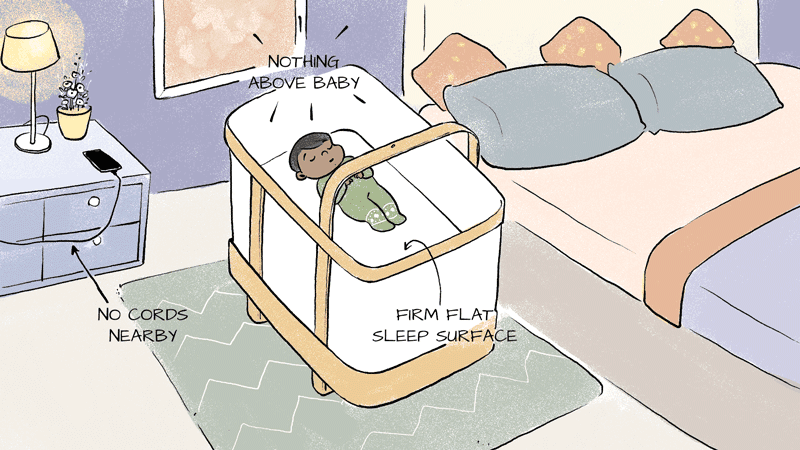
- Babies should sleep on a firm, flat sleep surface. Sleep surfaces with inclines of greater than 10 degrees are unsafe for infant sleep. “Excessive time” in car seats should be avoided, and babies should never be left unattended in them.
- Avoid swaddling after your baby shows signs of being able to roll over, which often occurs at three or four months but can also happen earlier.
- Avoid placing weighted blankets, sleepers, swaddles, or other weighted objects on or near your little one when they’re sleeping. Put them in sleep sacks instead.
- Avoid putting hats on your infant when indoors and during sleep, except in the first hours of life or in the NICU.
- Room-sharing (but not bed-sharing) is encouraged, ideally for at least six months.
- Keep your baby’s sleep area clear of soft objects (like stuffed animals) and loose bedding. Steer clear of using crib bumpers.
- Avoid overdressing your baby as it can increase overheating risk.
- Breastfeeding guidelines have been extended from six months to 12 months.
- A pacifier at nap time and bedtime is recommended to reduce the risk of SIDS.
- Tummy time while the baby is awake and supervised is encouraged.
- Avoid trusting home cardiorespiratory monitors and other devices as a strategy to reduce the risk of SIDS.
- Maintain a comfortable room temperature between 68°F and 72°F (20–22°C)
The Safe Sleep for Babies Act explained
President Biden signed the Safe Sleep for Babies Act into law in 2021, which bans products such as inclined sleepers and crib bumpers for infants. It’s illegal to make or sell these products beyond November 12, 2022, irrespective of their manufacture date.
Why are padded crib bumpers and inclined sleepers (also called baby pods, docks, loungers, or nests) dangerous?
- They increase the risk of suffocation for infants.
- There’s no evidence that crib bumpers prevent injury for young babies, especially because there are now safety regulations for the amount of space between crib slats.
- As your baby gets older and starts pulling up on their own, they could climb onto the bumpers and fall back down on the bed, increasing the chances of getting injured. AAP states that there’s a potential risk of “suffocation, strangulation, or entrapment” with crib bumpers if the baby’s face is pressed against the bumper.
- Inclined sleepers allow infants to doze off at a 30-degree angle. However, according to the Consumer Product Safety Commission (CPSC), infants should only be inclined to an angle of 10 degrees or less because they may fall asleep in positions that restrict their airways or roll out of the devices and become trapped underneath.
Learn more about the Safe Sleep for Babies Act.
What the latest SIDS research means for new parents
A May 2022 study in eBioMedicine identified a biochemical marker in babies’ blood that can help determine SIDS risk. The study found that those who passed away from SIDS had lower levels of butyrylcholinesterase (BChE) than those who died from other causes.
Pediatrician Molly O’Shea, MD, founder of Birmingham Pediatrics in Bloomfield Hills, Michigan, adds that the study is a solid starting point for future research. “It doesn’t show a cause-effect relationship, nor does it indicate with certainty that low levels of the cholinergic biomarker always mean that SIDS will happen. The flip side is also true, normal levels were not always protective. It does, however, open up a new research question and opportunity for studies of infants going forward,” she says.
While this study is definitely a way forward, it’s too early to jump to any conclusions about the cause of SIDS. What is certain is that parents should continue practicing the safe sleep practices recommended by the AAP.
Conclusion
The 2022 safe sleep updates reinforce a simple but powerful message: safe sleep for babies is about creating a flat, firm, and clutter-free sleep environment every time your baby sleeps.
While research into what is SIDS continues including promising studies on biological markers, prevention still relies on following AAP guidelines for safe sleep. Room sharing without bed sharing, avoiding crib bumpers and inclined sleepers, and keeping the sleep area clear remain the most effective ways to reduce risk.
FAQs
Q: What is SIDS?
A: SIDS, or sudden infant death syndrome, is the unexplained death of a seemingly healthy baby under one year of age, usually during sleep. While the exact cause is unknown, following AAP guidelines for safe sleep for babies significantly reduces the risk.
Q: What changed in the 2022 safe sleep guidelines?
A: The 2022 safe sleep updates reinforced back-sleeping, firm flat surfaces, and room sharing. They also recommended against inclined sleepers, crib bumpers, weighted products, and sleep positioners.
Q: Are crib bumpers safe?
A: No. Crib bumpers are not safe and are now banned under the Safe Sleep for Babies Act. They increase the risk of suffocation, strangulation, and entrapment and provide no proven safety benefit.
Q: Why are inclined sleepers dangerous?
A: Inclined sleepers position babies at an angle greater than 10 degrees, which can restrict airflow and increase the risk of suffocation. Infants may also roll into unsafe positions or become trapped.
Q: Does room sharing reduce the risk of SIDS?
A: Yes. Room sharing without bed sharing can reduce the risk of SIDS by up to 50 percent. Babies should sleep in the same room as parents but on a separate, safe sleep surface.
Q: Are weighted blankets or swaddles safe for babies?
A: No. Weighted blankets and weighted swaddles are not recommended for infant sleep because they may reduce oxygen levels and increase suffocation risk.
Q: Do home breathing monitors prevent SIDS?
A: No. Home cardiorespiratory monitors and wearable tracking devices have not been shown to prevent SIDS and should not replace safe sleep practices.
You may also like:
- Infant botulism explained: Early signs parents should know and how to prevent it
- How to get rid of baby hiccups and prevent them?
- What does spring cleaning look like when you’re a new parent
Sources:
- SIDS. AAP Publications. 2022. Sleep-Related Infant Deaths: Updated 2022 Recommendations for Reducing Infant Deaths in the Sleep Environment.
- SIDS and sleep-related infant deaths. CDC Reproductive Health. 2024. Helping Babies Sleep Safely.
- Room sharing reduces the risk of SIDS. American Academy of Pediatrics. 2026. How to Keep Your Sleeping Baby Safe: AAP Policy Explained
- Protective effect of pacifiers on the incidence of SIDS. National Library of Medicine. 2004. Do pacifiers reduce the risk of sudden infant death syndrome? A meta-analysis.
- CPSC standards when purchasing a crib or mattress. Consumer Product Safety Commission. 2011. “Retailers required to sell only cribs that meet CPSC’s new crib standards.”
- Chapter 19 A United States Perspective. National Library of Medicine. 2018. SIDS Sudden Infant and Early Childhood Death: The Past, the Present and the Future.
- CPSC’s latest data show that between 2019 and 2021. CPSC. 2024. New CPSC Report Shows Unsafe Sleep Environments Are Leading Cause of Injuries and Deaths with Nursery Products.
You may also like


