Pregnancy
0 min read
Is my pregnancy tea safe: What to enjoy and what to avoid

Medically Reviewed Chacha Miller, MS, RD, LDN, a Registered Dietitian Nutritionist at The Cardamom Nutrition
Written by Cradlewise Staff
Pregnancy has a way of making even the most ordinary rituals feel significant. A quiet cup of tea in the morning, or something warm and calming before bed, can be one of the small pleasures in your life through all the changes. If you are someone who enjoys their green and black teas, matcha, or tisanes, it is most probable you have asked yourself this question: what pregnancy teas are actually safe to drink?
The answer is more nuanced than a simple yes or no. Pregnancy teas are herbal teas and contain no caffeine because they are not made from tea leaves, but from the roots, seeds, leaves, flowers, and berries of herbal plants. Some teas help with common pregnancy symptoms like nausea and digestive discomfort. However, not all herbal teas are safe because the herbs and quantities used matter.
This guide covers all of it: safe teas, teas to use with caution, ones to skip, caffeine guidance for green and black tea, and what the research actually says about red raspberry leaf and labor.
We spoke with Chacha Miller, MS, RD, LDN, a Registered Dietitian Nutritionist at The Cardamom Nutrition, and founder of the app The Nourished Start, who counsels pregnant patients on nutrition and supplementation, who has shared her knowledge and experience in the blog ahead.
Before you sip: Always check with your OB, midwife, or dietitian before adding any herbal tea to your routine during pregnancy, including teas marketed specifically as ‘pregnancy tea.’
Is pregnancy tea safe?
It depends entirely on what’s in the cup. Pregnancy tea is not a regulated category, hence any brand can put those words on a label without clinical testing. Many blends are perfectly fine; others contain herbs that haven’t been studied in pregnant people, or that carry real risks.
Chacha adds: I generally prefer single-ingredient teas or blends with a short, easy-to-understand ingredient list. The fewer ingredients there are, the easier it is to evaluate each one and make sure you are not unknowingly consuming an herb that has not been well studied during pregnancy.
Cradlewise Tip: When evaluating any tea during pregnancy, look for a short ingredient list from a reputable brand, and bring the label to your provider or dietitian if you’re unsure about anything on it.
Pregnancy tea safety: A guide to common teas
Here is a breakdown of common teas, their trimester guidance, and key cautions. This is not a substitute for your provider.
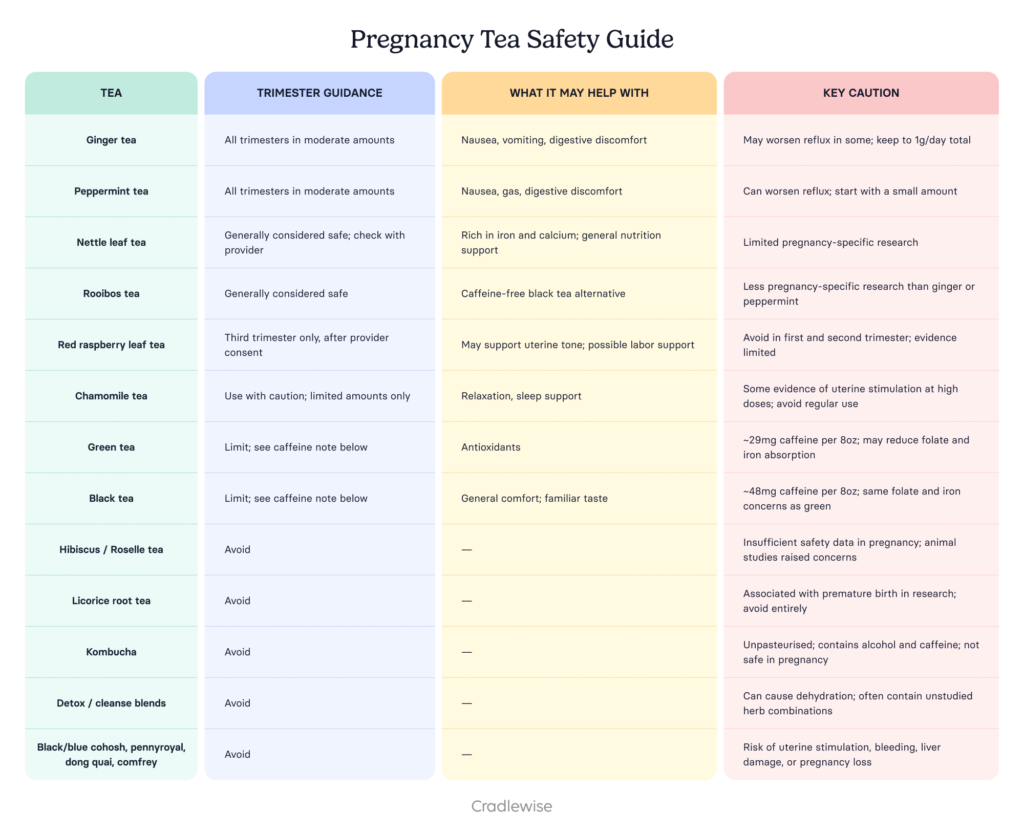
Sources: American Pregnancy Association; Medeniyet Medical Journal; Chacha Miller (MS, RD, LDN)
Caffeine in tea during pregnancy: Green, black, and matcha
Your black tea including Oolong and Darjeeling, and even green tea contain caffeine.
Doctors usually advise to cut down on or eliminate caffeine during pregnancy. Babies cannot metabolize caffeine when it passes to them through the placenta, but the effects are not fully understood, therefore, reduced consumption is preferred.
“ During pregnancy, the general recommendation is to keep caffeine intake below 200 milligrams per day. This recommendation includes all sources of caffeine, including tea, matcha, soda, energy drinks, chocolate, and even some medications. For reference, an 8-ounce cup of green tea typically contains around 29 milligrams of caffeine, while the same amount of black tea contains about 48 milligrams.”
Green and black tea can both be part of a healthy pregnancy diet, as long as your total daily caffeine stays at or below 200mg. That said, there are two things worth knowing about tea and pregnancy nutrition:
- Tea can reduce iron absorption. Drinking tea alongside iron-rich meals or iron supplements can significantly reduce how much iron your body absorbs, and iron needs are higher during pregnancy. Leave a gap of at least an hour between a cup of tea and your iron supplement or an iron-rich meal.
- Large amounts of green tea may affect folate. Folate is critical in early pregnancy. Very high green tea consumption may interfere with how the body uses folate, so moderation is especially important in the first trimester.

Did you know?
Even decaffeinated teas may contain small traces of caffeine. Look for water-processed or CO2-processed decaf if you’re concerned about chemical residues from the decaffeination process.
What teas are safe for pregnancy?
The following herbs have been clinically studied and marked safe for both you and your unborn baby.
Ginger tea: Is drinking ginger tea in pregnancy safe?
A Cochrane review found that ginger may be effective for reducing nausea in early pregnancy, but the evidence of effectiveness was limited. However, keep total ginger intake to approximately 1g per day across all forms (tea, food, and supplements).
Peppermint tea: Is peppermint tea safe during pregnancy?
Yes, peppermint tea is a caffeine-free option that’s been used widely in pregnancy for digestive support.
Nettle leaf tea: Is nettle leaf tea safe during pregnancy?
Nettle leaf is often listed as a pregnancy-friendly tea for its naturally high iron and calcium content.
Did you know?
Nettle leaf contains both iron and calcium, making it one of the more nutritionally useful herbal teas during pregnancy.
Cradlewise Note: Like most herbal teas, pregnancy-specific research on nettle leaf is limited. Use it as a supplement to a balanced diet, not a substitute for prenatal vitamins.
Rooibos tea: Is rooibos tea safe during pregnancy?
Rooibos is naturally caffeine-free and kinder to sleep. It can be a good alternative for people who miss the taste of black tea. However, start mild, notice how you feel before adjusting the dose.
Is red raspberry leaf tea safe in pregnancy?
Red raspberry leaf is the herb most commonly associated with pregnancy tea and labor preparation.
A study found that red raspberry leaf tablets shortened the second stage by an average of 9.59 minutes and were associated with fewer forceps deliveries. An earlier study found it shortened the first stage of labor and was associated with fewer cesarean sections and interventions. In short, both studies concluded drinking red raspberry leaf is safe during pregnancy.
However, it is advisable to be cautious with it.
“ Red raspberry leaf tea has been used for generations, and plenty of people swear that it helped them have a smoother or shorter labor. The research, however, is still pretty limited, so we cannot confidently say that it prepares the body for labor, shortens labor, or reduces the need for medical interventions.”
However, Chacha adds, “If you enjoy it and your obstetric provider gives you the okay, drinking a moderate amount toward the end of an uncomplicated pregnancy may be reasonable. I just would not think of it as a guaranteed way to prepare for labor.”
The recommended approach: Wait until the end of the third trimester, get your provider’s explicit approval, and stick to one to three cups per day as the generally cited dose.
How much tea is safe in pregnancy?
There is no universal FDA dosage for herbal teas during pregnancy, since herbs are not regulated as medicines in the US. However, several health authorities offer practical guidance:
- 4 cups of herbal tea per day: As per NHS, avoid drinking more than 4 cups of herbal tea per day in total during pregnancy. This is a general upper limit, not a recommendation to drink four cups of any single herb.
- Red raspberry leaf tea specifically: The UK Committee on Toxicity suggests one to three cups per day in the third trimester only, and only with provider approval.
- Ginger: No more than 1g total per day across all forms, including tea, food, supplements, and ginger-containing products combined.
The most common side effect of herbal pregnancy teas is a mild laxative effect, particularly with red raspberry leaf consumed in excess. If you notice looser stools, reduce the amount you’re drinking.
Which teas are good for lactation?
Once your baby arrives and you move into the postpartum period, many teas that were off the table during pregnancy may now become genuinely supportive tools.
Galactagogue herbs, those associated with supporting milk supply, include fennel, fenugreek, and blessed thistle. These are widely used by breastfeeding parents and generally considered safe in the postpartum period.
They should be avoided during pregnancy, however: fennel has estrogen-like properties that can disrupt the delicate hormonal balance of pregnancy, and fenugreek has uterine-stimulant activity. Both are safe once the baby is born, but not before.
Other teas that are helpful in the postpartum period:
- Chamomile tea: Safe for occasional use postpartum for relaxation and sleep support. Small amounts pass into breast milk; most breastfeeding references consider it safe in moderation.
- Ginger and peppermint teas: Both continue to be safe postpartum and can help with digestive recovery after birth.
- Red raspberry leaf teas: Traditionally used postpartum to help the uterus return to its pre-pregnancy state and to support milk supply. Considered safe after birth.
If you want to learn about the balanced diet for breastfeeding moms along with snacks, this is the blog for you.
Cradlewise Note: If you’re breastfeeding, check with your lactation consultant before adding any new herbal tea to your routine, particularly high-dose blends marketed for milk supply. What passes into breast milk varies by herb and concentration.
A warm cup of tea, chosen carefully
Tea can be a genuinely comforting and sometimes helpful part of pregnancy and postpartum recovery. The key is choosing carefully: simple ingredient lists, trusted brands, and a conversation with your provider before adding anything new, especially in the first trimester.
When in doubt, ginger for nausea, peppermint for digestion, rooibos as a caffeine-free everyday drink are the safest places to start. And if you’re hoping red raspberry leaf will be your shortcut to an easier labour, it might just be, but talk to your midwife or OB first.
FAQs
Q: Is pregnancy tea safe?
A: It depends on the ingredients. Many herbal teas are safe in moderate amounts during pregnancy, while others carry real risks. As per American Pregnancy Association, ‘pregnancy tea’ is not a regulated label, so always check the ingredient list and confirm with your provider before drinking any herbal blend regularly.
Q: Which teas should I avoid during pregnancy?
A: Avoid teas marketed for detoxing, cleansing, weight loss, or laxative effects during pregnancy. It is also advisable to avoid teas containing black cohosh, blue cohosh, pennyroyal, dong quai, comfrey, or large amounts of licorice root. Hibiscus and roselle teas and kombucha should also be avoided.
Q: Is hibiscus tea safe during pregnancy?
A: Not really. Due to lack of research of hibiscus tea in pregnant people, Chacha Miller, MS, RD, LDN, recommends avoiding hibiscus tea during pregnancy, especially drinking it regularly or using concentrated extracts. However, if you drank a cup before realizing it contained hibiscus, there is no need to panic.
Q: Does red raspberry leaf tea help with labor?
A: While two published studies suggest it may shorten certain stages of labor and reduce some interventions, it is not a reliable or guaranteed labor preparation method. Wait until the third trimester, get your provider’s approval, and don’t exceed one to three cups per day.
Q: Is green tea safe during pregnancy?
A: Yes, in moderation. Green tea contains roughly 29mg of caffeine per 8oz cup, which counts toward the 200mg daily limit recommended by ACOG. Avoid drinking it alongside meals or iron supplements, as it can reduce iron and folate absorption.
Q: Are commercial pregnancy tea blends safe?
A: The ‘pregnancy tea’ label does not guarantee safety or clinical testing. Chacha Miller recommends to choose one from a reputable brand that clearly lists every ingredient, and bring the label to your dietitian, pharmacist, midwife, or obstetric provider if you are unsure about anything it contains.
Q: Is chamomile tea safe during pregnancy?
A: Chamomile is generally considered low-risk in small amounts and acceptable during pregnancy. But, it may act as a uterine stimulant at high doses. Limit chamomile to one cup per day and only occasionally during pregnancy.
You may also like:
- Can sleeping positions really turn a breech baby?
- Pregnancy 101: Can you get pregnant while breastfeeding? Myth or fact.
- The Dirty Dozen during pregnancy: How to think about produce, pesticides, and what to wash.
Sources:
- Your total daily caffeine stays at or below 200mg. ACOG. 2010. Moderate Caffeine Consumption During Pregnancy.
- Large amounts of green tea may affect folate. Biopharm Drug Dispos. 2008. Influence of green and black tea on folic acid pharmacokinetics in healthy volunteers: potential risk of diminished folic acid bioavailability.
- Even decaffeinated teas may contain small traces of caffeine. J Anal. Toxicol. 2026. Caffeine content of decaffeinated coffee.
- Ginger Tea. Cochrane Library. 2015. Interventions for nausea and vomiting in early pregnancy.
- Red raspberry leaf tea. J. Midwifery Women’s Journal. 2001. Raspberry leaf in pregnancy: its safety and efficacy in labor.
- Red raspberry leaf tea. Aust Coll Midwives Inc J. 1999. Raspberry leaf and its effect on labour: safety and efficacy.
- 4 cups of herbal tea per day. NHS UK. 2026. Foods to avoid in pregnancy.
- Red raspberry leaf tea. UK Committee on Toxicity. Potential health effects of raspberry leaf tea in the maternal diet.
You may also like


