Science of baby sleep
0 min read
Why is my baby grunting in sleep? What’s normal and when to worry


Cradlewise Staff
The quiet of the nursery is often interrupted by a surprising variety of sounds: squeaks, whistles, and the most common of all: grunting. If you’re a new parent, hearing your baby grunting in sleep can be sometimes worrying. Those little noises, snorts, and strained sounds often make parents wonder: Is this normal, or is something wrong?
However, in most cases, these noises are a perfectly normal part of your baby’s development as they learn to navigate life outside the womb (and their own digestive systems).
Let’s decode those sleep sounds, manage “Grunting Baby Syndrome,” and identify when it’s completely normal and when to call the pediatrician.
We talked to Dr. Jonathan Jassey, DO, a board-certified Pediatrician and Co-author of “The Newborn Sleep Book,” and Amanda Thomas, MD, a board certified Pediatrician with Bluebird Kids, who have shared some valuable insights on the subject.
Why do babies grunt in their sleep?
The short answer is that their little bodies are still figuring things out, especially when it comes to digestion and breathing.
Babies make a lot of noises while sleeping, and most of these sleep noises are completely harmless. Here’s what’s going on:
1. Immature digestive system
Your baby’s digestive tract is still developing, especially in the newborn stage (0–3 months). Your newborn’s body is learning how to coordinate muscle movement and break down breastmilk or formula. This activity results in your baby grunting, gurgling, or making other noises while they sleep.
2. Bowel movement
Grunting can be a sign they’re trying to pass gas or poop, even while they’re asleep. It’s often part of something called Grunting Baby Syndrome (GBS). Though this may sound long and ominous, we assure you it’s not. Grunting Baby Syndrome isn’t painful, it’s just your baby learning how to poop effectively while lying on their back.
3. Learning to breathe
Newborns are primarily nose breathers, which means they naturally breathe through their noses, even while sleeping. Since their nasal passages are super tiny, even a little bit of mucus or congestion can make their breathing sound like snorts, wheezes, or grunts.
As long as your baby seems otherwise content and is breathing regularly (even if it’s a little noisy), this is usually nothing to worry about.
4. Active sleep stage
Studies published by the National Library of Medicine suggest during REM (rapid eye movement), babies may squirm, smile, make sucking motions, and yes, grunt.
Dr. Amanda Thomas says, “You may notice grunting during the lighter, more active stages of sleep.” This is all part of their normal sleep development and often means your baby is adjusting to the rhythms of sleep and wake cycles.

Did you know?
Babies spend 50% of their sleeping time a lot of time in REM sleep (aka the active sleep stage), especially in the early months.
5. Babies are hungry a lot
All new parents know that babies get hungry frequently, as their tiny tummies can only take small feeds at a time. When babies get hungry, they exhibit specific behaviors. You may hear your little one making noises like lip-smacking, suckling, and grunting; sure signs that they are hungry and may wake up soon to feed.
What is Grunting Baby Syndrome (Infant Dyschezia)?
“Grunting baby syndrome, medically known as infant dyschezia, is when a baby strains, turns red, and cries before passing gas or stool because they haven’t yet learned how to coordinate tightening their abdominal muscles while relaxing the pelvic floor,” says Dr. Jonathan Jassey.
To have a bowel movement, a baby must relax their pelvic floor while simultaneously using abdominal pressure to push. Newborns often do the opposite – they push while keeping the pelvic floor closed. This lack of coordination leads to temporary straining, turning red, and loud grunting for 5-10 minutes.
New parents must note that it is not constipation. As long as the eventual stool is soft, your baby isn’t constipated; they are simply “practicing” the mechanics of going to the bathroom.
How long does Grunting Baby Syndrome last?
And, most babies outgrow Infant dyschezia by 3-4 months of age as their muscle coordination improves.
What’s normal (and what’s not) when it comes to baby grunting?
Here’s a quick cheat sheet to help you figure out whether your baby’s sleepy grunts are NBD or worth a call to your pediatrician.
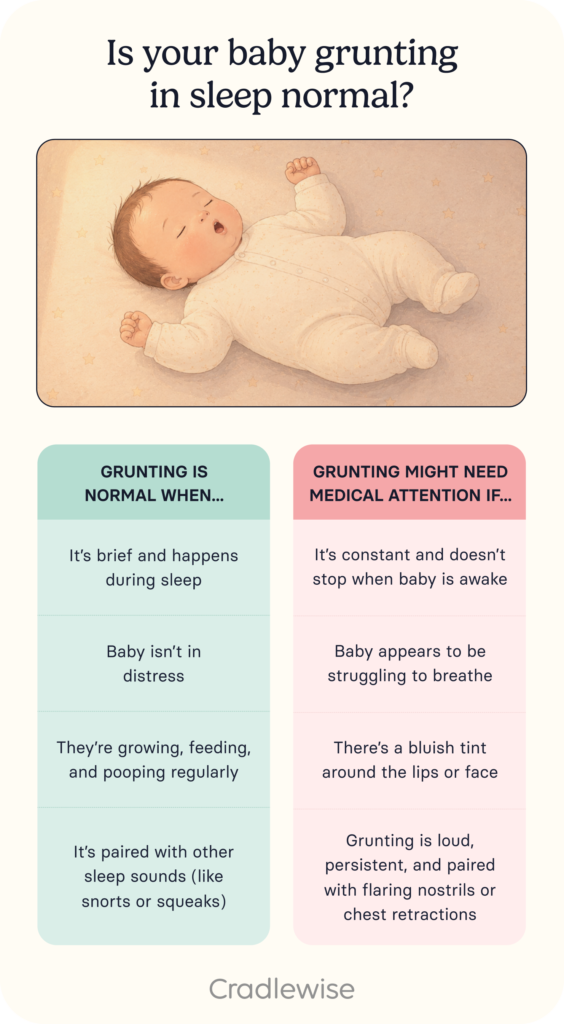
If you’re ever unsure, trust your gut and check in with your pediatrician. It’s always better to get peace of mind than to worry alone.
When to call your pediatrician
It’s time to reach out to your doctor if:
- Your baby is grunting after every breath, even when awake
- Their grunting seems labored or is accompanied by wheezing or rapid breathing
- Your baby’s nostrils widen significantly with each breath
- Their skin pulls in deeply around the ribs, collarbone, or “V” of the neck (concave chest) while breathing
- The grunting is paired with a temperature over 100.4°F or a baby who is difficult to wake
- You notice blue coloring on their face and lips, tongue
- Your baby is not feeding well and is not gaining weight
These signs could indicate an underlying issue, like reflux, sleep apnea, or respiratory distress.
When do babies stop grunting in sleep?
Most babies outgrow grunting by 3 to 6 months of age.
As your baby develops:
- Their digestive system matures
- Muscle coordination improves
- Sleep cycles become more stable
This naturally reduces nighttime noises.
How to reduce baby grunting in sleep?
You don’t need to do anything if your baby’s grunting is part of their normal sleep soundtrack. But if you’d like to minimize the noise (so you can sleep better), here are a few gentle tips:
- Make tummy time part of your daily routine: Give your baby tummy time during the day (not right after feeding) to strengthen muscles and aid digestion.
- Keep your baby upright during feeds: Dr. Amanda Thomas recommends keeping your baby slightly upright during and after feeds to reduce air intake.
- Burp thoroughly: Pause during and after feeding to burp your baby and release trapped gas and ease reflux.
- Use a humidifier: If your baby sounds congested, a humidifier can help keep nasal passages clear.
- Check the crib environment: Make sure the baby’s mattress is firm and flat, and avoid extra pillows or soft bedding that could interfere with breathing. And always place your baby on their back.
- Avoid overfeeding: Dr. Jonathan Jassey advises parents to not overfeed their babies. Overfeeding can lead to discomfort, gas buildup, or a hardened belly, causing the baby to make more and extreme grunting sounds as they struggle to digest excess food.
- Try contact naps or motion naps during the day: Sometimes motion, like from a smart crib or contact nap with you, can help work out trapped gas and lead to deeper rest later. Use white noise to soothe your baby.
Conclusion
While the sounds of your baby grunting in sleep can make for a restless night for you, it is usually a sign that your little one is growing exactly as they should. Whether they are learning to breathe through their tiny nose or mastering the art of a bowel movement, these noises are temporary milestones.
By keeping an eye out for respiratory red flags and using simple comfort measures like thorough burping and tummy time, you can navigate this noisy phase with confidence and hopefully, get a little more sleep yourself.
FAQs
Q: Why is my newborn grunting in sleep so much?
A: Newborns have small nasal passages and are “obligate nose breathers.” They also have active REM sleep where they move and make noise. Most importantly, their digestive systems are immature, and they often grunt as they move gas or stool through their intestines.
Q: When should I worry about baby grunting?
A: You should be concerned if grunting is paired with a blue tint around the lips (cyanosis), nasal flaring or visible “tugging” of the chest muscles, fever, or poor feeding.
Q: When do babies stop grunting in their sleep?
A: Most babies become much quieter sleepers between 3 and 4 months. By this time, their respiratory passages have grown, and they have mastered the muscle coordination needed for digestion and bowel movements.
Q: How can I help my grunting baby sleep better?
A: Ensure a proper burping session after every feed. You can also encourage tummy time and keep your baby slightly upright during feeds to help move gas. Keeping the air moist with a cool-mist humidifier can also prevent nasal passages from becoming dry and noisy.
Q: Is grunting a sign of reflux?
A: It can be. If grunting is accompanied by frequent spitting up, arching of the back, or coughing, your baby may have GERD (Gastroesophageal Reflux Disease). Consult your doctor if the grunting seems associated with discomfort after feeding.
Q: Does a grunting baby need a different sleeping position?
A: No. Even if your baby is grunting, they must always be placed on their back on a firm, flat surface. Propping a baby up or using “wedges” to help with grunting or reflux is unsafe and increases the risk of SIDS.
Q: What is grunting baby syndrome?
A: Grunting baby syndrome (infant dyschezia) is when babies strain and grunt while learning to pass stool, despite it being soft and normal.
You might also like:
- Hydration 101 for babies: When, how, and why to offer water.
- Baby acne: why your newborn has pimples (and when it goes away).
- Your baby’s developmental milestones in year one.
Sources:
- Sleep Noises. Healthy Children. 2026. Newborn Reflexes and Behavior.
- Bowel Movement. National Library of Medicine. 2025. Dyschezia or functional constipation: a frequent challenge in pediatric practice.
- Did you know? Active Sleep Stage. National Library of Medicine. 2017. Infants Sleep for Brain.
- Active Sleep Stage. National Library of Medicine. 2022. Rapid Eye Movement Sleep during Early Life: A Comprehensive Narrative Review.
- When to call a pediatrician. The Children’s Hospital of Philadelphia. 2026. Breathing Problems.
- Use a humidifier. Healthy Children. 2025. My baby has a stuffy nose. How can I help them sleep safely?
You may also like


