Parenting
0 min read
Hospital bag checklist: What to pack for mom, baby, and partner


Cradlewise Staff
As your due date gets closer, packing your hospital bag becomes one of the most exciting milestones of pregnancy. It’s a small but meaningful step that signals your baby’s arrival is just around the corner.
But knowing what to pack in a hospital bag can feel overwhelming, especially if you are a first-time parent. Do you need extra baby clothes? Should you bring snacks? What does the hospital already provide?
This guide walks you through exactly what to pack for mom, baby, and your support person, plus practical tips to make your hospital stay more comfortable. We’ve also included a quick hospital bag checklist you can screenshot or print, so you’ll feel prepared when it’s time to head to the hospital.
Furthermore, Dr. Kristen W Cook, MD, Pediatrics in Mount Pleasant, WI has shared precious insights from her personal experiences.
Quick hospital bag checklist
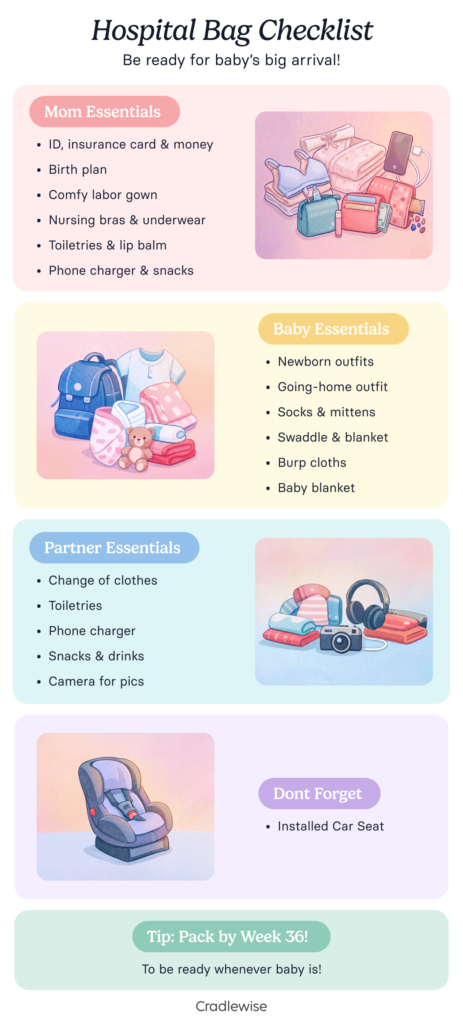
A hospital bag checklist for mom and baby should include documents, comfortable clothing for labor, postpartum must-haves, baby outfits, and a car seat for the trip home.
When to pack hospital bag
While every pregnancy is different, it is recommended to keep your hospital bag checklist ready between 34 and 36 weeks of pregnancy. This gives you enough time to prepare without feeling rushed if labor starts earlier than expected.
“I can speak from personal experience that not packing a hospital bag soon enough is a major mistake,” says Dr. Cook, “My son was born prematurely, and I hadn’t even begun to think about the contents of my hospital bag by the time he came into the world. I had to rely on my husband to pack the bag, which was stressful for both of us. I usually advise the parents in my medical practice to pack that bag by 30 weeks gestation, just in case.”
Many parents keep their hospital bag by the door or in the car so it’s easy to grab when it’s time to head to the hospital.
Situations where you may want to pack earlier
In some cases, your healthcare provider may recommend packing your hospital bag sooner. You may want to be prepared earlier if you:
- are expecting twins or multiples
- have a high-risk pregnancy
- have signs of preterm labor
- are scheduled for an induction or C-section
Tip: Even after your bag is packed, keep a short last-minute checklist on your phone. Some items like your phone, glasses, medications, or daily toiletries, are often still in use at home and can be added right before you leave for the hospital.
Hospital bag checklist for mom
When packing your hospital bag, it helps to focus on the items that will keep you comfortable during labor, delivery, and postpartum recovery. Hospitals usually provide many medical essentials, but bringing a few personal items from home can make your stay feel more comfortable and familiar.
Consider packing a suitcase instead of a duffle as it is easier and more convenient for your birth partner to find what you need in a suitcase while you are recovering.
Below is a hospital bag checklist for mom that covers the most useful items to bring.
1. Important documents
- Photo ID
- Health insurance card
- Birth plan (if you have one)
- Hospital registration forms
- Emergency contact information
Tip: Keep these documents in a small folder or pouch to make your check-in easier when you arrive at the hospital.
2. Comfortable clothing for labor
Many hospitals provide a medical gown, but if you prefer wearing your own comfortable clothing during early labor, it is totally okay.
You may want to pack:
- A loose labor gown or oversized T-shirt
- Comfortable robe or lightweight sweater
- Warm socks or compression socks
- Slip-on shoes or slippers
Tip: Choose clothing that is soft, loose, and easy to change, since labor and delivery can be physically demanding. Soft, old clothes give more comfort.
3. Toiletries and personal care
“Favorite toiletry items are the next most important item to pack,” says Dr. Cook, “While the hospital will usually provide you with necessary care items, it makes a world of difference to have your favorite lotion, body wash, or shampoo with you. Thirdly, comfort is key. Bring your favorite pajamas, slippers, and a few outfits that are soft and loose.”
Common items to pack include:
- Toothbrush and toothpaste
- Face wash and moisturizer
- Deodorant
- Lip balm
- Hairbrush, hair ties, or headband
- Travel-size shampoo and body wash
Tip: Lip balm and moisturizer can be especially helpful since hospital air tends to be dry.
Note: You may not get to wash your hair in case of IV drip postpartum.
3. Labor comfort items
Labor can last several hours, so bringing a few comfort items from home may help you relax.
“ Most of the items in a hospital bag are intended for use after the baby is born. However, if there are items that you consider essential during the labor process (such as music or essential oils) make sure to pack those as well. Please inform the hospital staff of your desire to use such products, as they won’t be permitted if they violate hospital policy.”
Some parents choose to bring:
- A pillow from home
- Relaxing music or a playlist
- Massage oil or lotion
- A handheld fan or cooling towel
- A tablet or laptop
Tip: During the early stages of labor, listening to your playlist, or watching movies or shows can be a welcome distraction.
5. Electronics and chargers
It’s important to bring the necessary electronic devices and their chargers to ensure you’re prepared for any situation.
- Your cell phone
- Charger
Tip: Make sure you pack an extra-long phone charger because you don’t know where the outlets will be in the room, and if you want to have access to your phone from bed, this will be helpful.
6. Postpartum recovery essentials
While hospitals usually provide medical supplies like pads and mesh underwear, some parents prefer bringing a few personal items.
Helpful items may include:
- Nursing bras or comfortable bralettes
- Loose, high-waisted underwear
- Comfortable pajamas or a nursing-friendly nightgown
- Loose clothing for the trip home
- Witch hazel or aloe wipes
- Socks and slippers with a good grip
- A shallow tub for sitz bath
- Electric heating pad for after birth cramps
- Hemorrhoids ice packs
Tip: Choose soft, breathable clothing that is easy to move in, especially if you plan to breastfeed.
7. Snacks and hydration
Labor and postpartum recovery can be physically demanding, so having snacks on hand can be helpful once your provider allows you to eat. Remember to consult with your healthcare provider about any specific dietary restrictions or recommendations during labor.
You might consider packing:
- Easy-to-eat snacks like trail mixes, granola bars, rice cakes, or crackers
- Fresh fruit
- Electrolyte drinks like Gatorade packs or coconut water
- Herbal tea bags
- A reusable water bottle with a straw
Tip: While you’re at it, you can also pack something for your birth partner to have as a snack in case they get hungry.
Packing a variety of snacks and drinks will ensure that you have options that suit your taste preferences and dietary needs.
Hospital bag checklist for baby
While hospitals usually provide basic newborn supplies like diapers and wipes during your stay, packing a few newborn diapers can be helpful, especially if you prefer a specific brand or type for your baby.
Consider packing a separate bag for your baby essentials. It makes it easier for hospital staff or your partner to quickly find what you need during labor and postpartum recovery.
What to pack in hospital bag for baby:
1. Baby clothes and going-home outfit
Your baby will mostly be swaddled during the hospital stay, but you’ll still need a few outfits.
Pack:
- 2–3 newborn outfits
- A special going-home outfit
- Socks or booties
- Soft baby mittens (optional)
Tip: Choose soft, easy-to-wear clothing that is comfortable for your newborn and simple to change.
2. Swaddles and blankets
Many hospitals provide swaddle blankets, but some parents like bringing one from home for extra comfort.
Consider packing:
- A lightweight swaddle blanket
- A soft baby blanket for photos or the ride home
3. Baby care essentials
Hospitals typically provide most newborn care items, but you may want a few extras in your bag.
Optional items include:
- Burp cloths
- Pacifier (if you plan to use one)
- Newborn hat
4. Infant car seat for the trip home
One of the most important things to prepare is your baby’s car seat.
Make sure to:
- Install the car seat in your car ahead of time
- Check that it’s properly secured
- Practice adjusting the straps if needed
Hospital bag checklist for partner
Labor and delivery can take several hours, and in some cases even longer. Having a few essentials on hand allows your partner to focus on supporting you without needing to leave the hospital to grab items.
Suggested items include:
- Change of clothes including sleepwear or lounge clothes
- Comfortable shoes or slippers
- A light jacket or sweater (hospital rooms can feel cool)
- Toiletries
- Contact lens supplies or glasses
- Snacks and drinks
- Phone and phone charger
- Headphones
- Entertainment (book, tablet)
- Camera for photos
Hospital bag checklist for C-section moms
If you are scheduled for a C-section (Cesarean birth) or may need one during delivery (sometimes labor plans change), you may want to include a few extra items in your postpartum recovery kit.
Recovery from a C-section usually requires a slightly longer hospital stay, so comfort and mobility become especially important.
Helpful items for C-section recovery:
- High-waisted underwear
- Loose, soft clothing
- Nursing pillow
- Slip on shoes
- Abdominal support band (if recommended)
Tip: Choose loose, soft clothing that sits above the incision area, such as high-waisted underwear or loose maternity leggings.
What to pack for breastfeeding
Carry comfortable clothes and nursing bras that are convenient for breastfeeding.
According to Dr. Cook, “There is no need to pack a nursing pillow. When it comes to breastfeeding, the most important resource a first-time parent will benefit from is access to a lactation consultant. Similarly, there is no need to bring a breast pump to the hospital.”
Dr. Cook suggests that if you are advised to pump breast milk for your baby, a hospital-grade breast pump will be provided to you.
What not to pack in your hospital bag
Hospitals typically provide many essentials, so you may not need to pack (unless you have a preferred brand). Keeping your bag light makes it easier to manage when you are heading to the hospital.
- Diapers
- Wipes
- Postpartum pads
- Baby blankets
- Peri spray bottle to spray on your perineal area
“Another mistake is packing too many things for the baby,” says Dr. Cook, “Those sweet little loves do not need very much after they are born! Furthermore, essential baby items, such as diapers or a pacifier, will be provided by the hospital. While packing photo-friendly mom and baby going-home outfits are a trend, it’s okay to pass. I didn’t have a set outfit for either of my babies, and they both looked cute coming home for the first time.”
Tip: If you’re unsure about what your hospital provides, check their labor and delivery guidelines or ask your provider ahead of time. Knowing what is already available can help you pack lighter and avoid overpacking your hospital bag.
Conclusion
Packing your hospital bag is one of the final preparations before welcoming your baby into the world. While the list may seem long at first, focusing on the essentials for mom, baby, and your support person can make the process simple and stress-free.
A well-prepared hospital bag checklist ensures you have everything you need for labor, recovery, and your baby’s first trip home.
Pack your bag ahead of time and have a backup plan in case you go into labor earlier than expected. While having a well-prepared hospital bag is important, the most essential thing is to stay flexible and focused on a safe and healthy delivery.
FAQs
Q: When should you pack your hospital bag?
A: Most parents pack their hospital bag around 36 weeks of pregnancy, although some choose to prepare earlier if they have a high-risk pregnancy or signs of early labor.
Q: Do hospitals provide baby essentials?
A: Yes. Most hospitals provide diapers, wipes, and basic baby supplies during your stay, though parents often bring a few personal items for comfort.
Q: How many outfits should I pack for my baby?
A: Most parents pack two to three newborn outfits, including a special going-home outfit for their baby.
Q: Should I bring a nursing pillow to the hospital?
A: A nursing pillow can be helpful if you plan to breastfeed, as it provides support and helps position your baby comfortably during feeds.
Q: How big should a hospital bag be?
A: A small suitcase or medium duffel bag is usually enough for most parents as hospitals provide many essentials like diapers and postpartum supplies, you typically only need enough space for essentials.
Q: Should I pack separate hospital bags for mom and baby?
A: Many parents find it helpful to pack one main hospital bag for mom and a smaller bag for baby. This keeps important items organized and makes it easier for hospital staff or your partner to quickly find what you need during labor and recovery.
Q: How many days of clothes should I pack in my hospital bag?
A: It’s usually enough to pack two or three comfortable outfits for your hospital stay. Most parents stay 1-2 days after a vaginal birth and 2-4 days after a C-section, so a few comfortable clothing options and a going-home outfit are typically sufficient.
You may also like:
You may also like