Parenting
0 min read
When can a toddler sleep with a blanket? A guide to safety and readiness


Cradlewise Staff
One day, your little one is happily curled up in a sleep sack, and the next, they’re asking for a “big kid” blanket. It’s a sweet milestone, but it can also raise an important question for parents: when can a toddler sleep with a blanket?
If you feel both excited and a little unsure about this transition, you’re not alone. Changes in your child’s sleep routine may seem small, but they can bring up important questions about comfort, independence, and sleep safety.
As children grow from babies into toddlers, their sleep needs and abilities start to change. They move more, explore their surroundings, and begin showing preferences about how they sleep. So how do you know when your toddler might be ready for a blanket? And what should parents keep in mind before introducing one into the sleep space?
Let’s walk through how to make this transition to a toddler blanket safely and confidently. You will also find useful insights from Simee Malik, MD, FAAP, a board-certified Pediatrician at Akron Children’s Hospital and Kelsey Pabst, a Registered Nurse & Medical Reviewer at Cerebral Palsy Center.
When can a toddler sleep with a blanket safely?
The American Academy of Pediatrics recommends waiting until at least 12 months before introducing any loose bedding, including blankets, into your child’s sleep space. However, Kelsey Pabst says, “a toddler should be given a blanket around 2 years old since this is when they show developmental readiness.”
“Toddlers at this age are usually able to reposition themselves/move around while sleeping, which definitely lessens the chance of suffocation or entanglement,” she adds.
By this age, most toddlers have stronger motor control, can reposition themselves easily, and can remove a blanket from their face if needed, reducing suffocation risk.
Remember: 12 months is the minimum, 18-24 months is often ideal, and readiness matters just as much as age.
Signs your toddler is ready for a blanket
Age is one piece of the puzzle, but readiness matters just as much. Even after 12 months, not every toddler is immediately ready to sleep with a blanket.
If your toddler shows any of these developmental signs, they may be ready to transition from a sleep sack to a blanket:
1. They move confidently and reposition easily.
Your toddler exhibits signs of good head and neck control, can roll both ways, sit up, crawl or walk, and change positions during sleep without difficulty. Strong motor skills reduce the risk of a blanket covering their face without them being able to move it away.
2. They can get out of bed independently.
If your little one is in a toddler bed, they become more mobile and can get in and out of bed without your help, making blankets a safer choice.
3. They can remove objects from their face.
If a soft object briefly lands near their mouth or nose, they instinctively push it away. This protective reflex is important when introducing loose bedding into their crib or bed.
4. They no longer rely on a sleep sack for containment.
If your toddler isn’t using a toddler sleep sack for mobility control and prefers more freedom of movement, they may be developmentally ready for a small, lightweight blanket.
5. They sleep peacefully.
Your little toddler is an excellent sleeper who sleeps through the night without excessive tossing.
6. They are growing for their toddler sleep sack.
Your toddler is becoming more active and their sleep sack is becoming too restrictive, making it a hazard and impacting their sleep quality.
7. They show interest in using a blanket.
Some toddlers begin pulling a blanket over themselves during story time or mimicking how parents use bedding. Kelsey Pabst says, “One really good sign is when they tuck a stuffed toy under the blanket with them – this usually indicates they recognize that a blanket is safe and is used to make something feel warm and comfy.”
Tip: If you are unsure or re-cover your toddler several times during the evening or night, continuing with a wearable blanket or sleep sack is a safe and effective option well into toddlerhood.
How to introduce a blanket to your toddler?
Once your toddler is ready, introducing a blanket should be a gradual process, not a full bedding makeover overnight. Try these ways in which you can transition from a sleep sack to a blanket for your toddler.
- Start simple. Choose a small, lightweight toddler blanket made of breathable fabric and place it over your toddler after they fall asleep rather than tucking it tightly around them. Dr. Malik suggests, “You can also start by placing it over their legs while keeping them in a familiar sleep sack.” Remember to avoid thick quilts, comforters, or anything heavy.
- Start with daytime naps. Dr. Malik recommends, “Introduce the blanket during naps at first to monitor them.” You can help your toddler understand how to use a blanket during supervised quiet time or naps. Show them how to pull it up and push it down independently.
- Keep the sleep space minimal. Even after introducing a blanket, the crib or toddler bed should stay free of extra loose bedding, pillows, stuffed animals, and other soft objects. A firm, flat mattress with a fitted sheet is still the foundation of safe sleep.
- Create a cozy bedtime routine. Introduce the blanket into your bedtime routine by allowing your toddler to snuggle with it while you read a bedtime story.
- Wait out for other life changes. If your toddler is undergoing a big change, like they are potty training, they have been moved to a new bed, or have a new sibling, or has been put into childcare, give them time to settle before changing their sleep routine.
- Consider the room temperature. If warmth is your main concern, monitor the room temperature and dress your child appropriately. A toddler sleep sack or wearable blanket may still be a safer alternative if your child moves a lot during sleep.
Most importantly, trust the transition process. Some toddlers kick blankets off repeatedly and that’s okay. Keep an eye on your child’s comfort and adjust as and when needed.
How to choose the right blanket for your toddler?
Choosing the right toddler blanket matters just as much as timing. The goal is comfort without compromising safety. Here are a few factors to consider:
- Choose lightweight and breathable fabrics.
Look for cotton or muslin toddler blankets that allow airflow. Avoid thick quilts, heavy fleece, or layered comforters that could trap heat or feel too bulky.
Dr. Malik reminds us, “You want your child to be able to move it easily on their own.”
- Keep it small.
A toddler-sized blanket is safer than a full-size throw. Smaller blankets are less likely to bunch up around your toddler’s face and easier for your child to move independently.
- Skip embellishments and loose parts.
Kelsey Pabst suggests, “Choose blankets with simple hemlines and minimal add-ons to reduce the risk of snagging.” Avoid blankets with tassels, ribbons, large appliqués, or loose stitching that could become a hazard. - Consider alternatives if needed.
If your toddler moves a lot at night or kicks off covers, a toddler sleep sack or wearable blanket can still be a safe and practical option well into the toddler years. - Pay attention to TOG (Thermal Overall Grade).
TOG measures how warm a fabric is. For most homes, a lightweight blanket with a low TOG (around 0.5–1.0) is appropriate, especially if the room is kept at a comfortable temperature (typically 68–72°F or 20–22°C). Higher TOG options may be too warm and increase the risk of overheating, which has been associated with sleep-related risks in younger children.
The right blanket should add warmth and not risk.`
What age is appropriate for a weighted blanket?
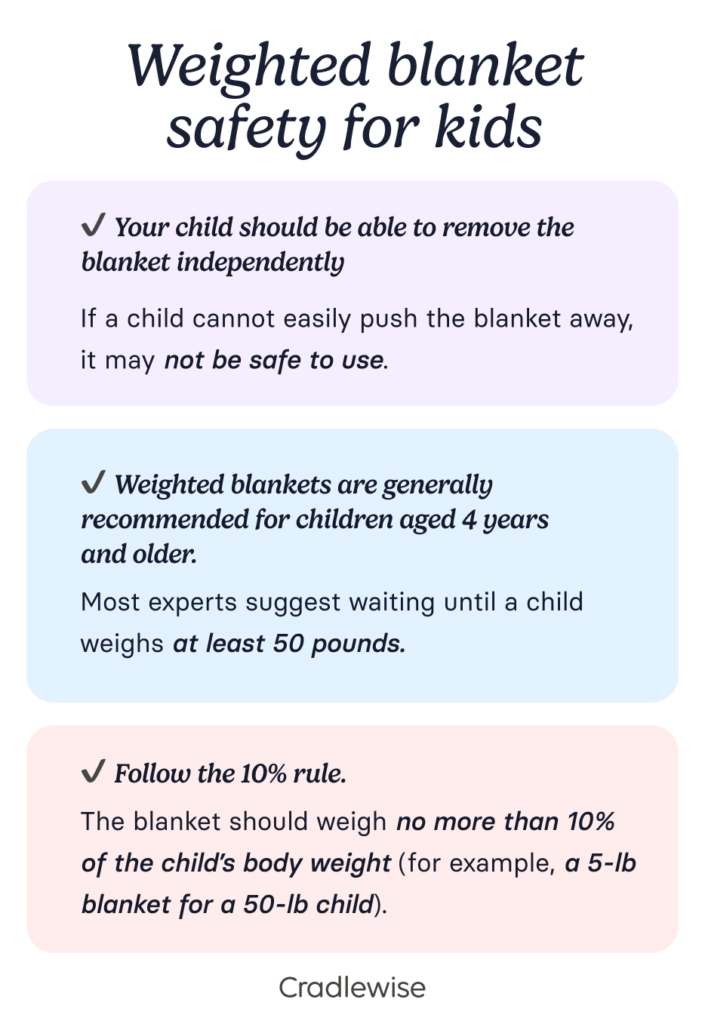
While AAP has recommended to not use weighted blankets, sleepers, swaddles or other weighted objects for baby upto 1 year of age, it has not published the correct age for when children can start using a weighted blanket.
Dr. Malik also gives the following advice for the use of weighted blankets:
When can you introduce a pillow to your toddler?
Dr. Malik suggests, “A pillow can be introduced around the same time as the blanket,” and adds, “Don’t be surprised if your child uses their blanket or pillow in unconventional ways – sometimes they just want to hold them.”
However, we urge you to monitor your toddler during the initial introduction to ensure that they are comfortable.
Safe sleep tips for toddlers
But before we toss in cute little blankets, let’s chat safety first. Even though the risk of SIDS drops significantly after 12 months, creating a safe, simple sleep environment for your toddler still remains a priority.
Here’s how to help your toddler sleep safely:
- The sleep surface should be firm, flat, and free from incline.
- Use only a well-fitted sheet designed for the mattress. Avoid mattress toppers or soft padding.
- Keep the crib or bed free of pillows, bumpers, heavy comforters, stuffed animals, and excess loose bedding.
- If you have introduced a blanket, keep it lightweight and small.
- Even though your toddler rolls both ways independently and finds their own comfortable position, continue to place on their back to start sleep.
- Maintain a room temp between 68–72°F (20–22°C) to avoid overheating.
- Dress your toddler in layers rather than layering multiple blankets.
- “For the first year of life, babies should be in sleep sacks,” says Dr. Malik. But you can always continue to make your toddler wear sleep sacks beyond 12 months to keep them warm and comfortable.
- Weighted blankets are not recommended for toddlers under 4 years of age.
Conclusion
Milestones like introducing a blanket can feel small, but they reflect your child growing, gaining independence, and building new sleep habits. If you have been wondering when can a toddler sleep with a blanket, the answer isn’t just about age. It’s about readiness, development, and keeping sleep spaces simple and safe.
There’s no rush. Follow your child’s cues, trust your instincts, and when in doubt, keep it simple and wait it out.
FAQs
Q: What if your toddler isn't ready for blankets?
A: You can continue using a toddler sleep sack or wearable blanket to keep them warm while maintaining a safer sleep setup.
Q: When should babies stop wearing sleep sacks?
A: There’s no strict age limit for sleep sacks, and many toddlers use them comfortably well past 12 months till they are 2 or 3 years old. As long as your child can move freely and safely, a sleep sack remains a safe alternative to loose blankets.
Q: When can my baby sleep with a blanket?
A: The American Academy of Pediatrics recommends waiting until at least 12 months before introducing loose bedding. However, many experts suggest that 18–24 months is often a more developmentally appropriate time for a toddler blanket.
Q: What should I do if my toddler kicks off their blanket at night?
A: This is very common and usually not a safety concern. Instead of repeatedly covering them, consider dressing them in appropriate sleep layers or using a wearable blanket if they tend to get cold.
Q: When can you introduce a pillow to your toddler?
A: Most toddlers can safely use a small pillow around age 2 to 3, when they have stronger neck control and mobility. Pillows can be introduced at the same time as a blanket if your child seems ready. Choose a firm, toddler-sized pillow and monitor how they use it during the initial transition.
Q: Can I use a weighted blanket for my 3-year-old toddler?
A: Weighted blankets are generally not recommended for children under 4 years old due to safety concerns. Always consult your pediatrician before introducing one, and ensure your child can independently remove it.
Q: Are blankets a risk for SIDS in toddlers?
A: The risk of sudden infant death syndrome (SIDS) drops significantly after 12 months. Toddlers of around 18 to 24 months who show the ability to push a blanket away if it’s covering their face can wear light, breathable blankets (firmly tucked in) for sleep.
Q: Why do babies remove blankets at night?
A: Babies and young toddlers move frequently in their sleep and may kick off blankets unintentionally. They also have a high metabolism and tend to sweat easily. When they feel too warm or uncomfortable, kicking off the blanket is a natural ways to regulate their body temperature and feel comfortable.
You may also like:
- Books to read to your baby: From pregnancy to toddlerhood
- How much sleep does a 2 year old need?
- Is it a phase or a pattern? Understanding toddler sleep regressions through science
Sources:
Right age to introduce loose bedding. American Academy of Pediatrics. 2026. How to Keep Your Sleeping Baby Safe: AAP Policy Explained.
You may also like


