Pregnancy
0 min read
How to prepare for a C-section: What to expect


Cradlewise Staff
If you have been told you will be having a C-section, you might feel a mix of relief, uncertainty, and even a little anxiety. Knowing how to prepare for a C-section can make a world of difference, helping you feel more in control, informed, and ready for the big day.
This guide brings together practical, doctor-backed tips for both your mind and body, along with what to expect on the day and what to pack in your hospital bag. Whether your C-section is planned or unexpected, a little preparation can go a long way in making your experience calmer and smoother.
You will also find useful insights from Juliana Parker, a registered nurse certified in inpatient obstetrics with over 20 years of experience in labor and delivery and founder of Nurse Core Triage, Inc, and Kristin Revere, founder of Gold Coast Doulas, an elite-certified birth doula, a certified VBAC doula, and an elite-certified postpartum and infant care doula service.
How to mentally prepare for a C-section
Preparing your mind for a C-section is just as important as preparing your body. Here are 10 science-backed tips to help you feel calm, confident, and in control:
1. Understand the process
Juliana Parker says, “Understanding what to expect helps reduce fear of the unknown. Even on the day of the procedure, you can ask your nurse to walk you through the process step-by-step.”
Knowing what to expect, especially about anesthesia, risk factors, and recovery, can ease anxiety and help you feel more prepared.
2. Let go of rigid birth expectations
Birth rarely goes exactly as planned. Hence, letting go of your birth expectations and embracing flexibility can reduce stress and disappointment.
3. Create a simple birth plan
Even for a C-section, a birth plan can reduce anxiety and help you feel more in control.
Juliana suggests, “It can include preferences such as communication style during surgery, who is present in the room, music, skin-to-skin contact, feeding preferences, and support in recovery.”
4. Talk to your doctor openly
Do not hesitate to ask your doctor about the procedure, postpartum period recovery, and risks so you feel informed and reassured.
5. Address fears early
Whatever concerns you have, it helps to talk about them with your partner or healthcare team including a nurse, doula, or a therapist, instead of letting anxiety build up.
6. Practice relaxation techniques
Breathing exercises, meditation, or gentle visualization can help manage pre-surgery nerves and promote relaxation.
Kristin Revere recommends, “HypnoBirthing techniques. It is great prep for all types of birth, including cesarean births. The relaxation techniques can calm anxiety, and it is also great for partner involvement and breastfeeding.”
7. Build a support system
Social support reduces cortisol levels and promotes oxytocin release, which can help you stay calm. Lean on your partner, family, or friends to help you make the experience feel less overwhelming.
8. Focus on postpartum recovery, not just birth
Hormonal shifts after birth can affect your mood. Understanding this in advance can help you prepare emotionally and set realistic expectations for the days ahead.
9. Limit overwhelming information
Stick to reliable sources instead of going down online rabbit holes that increase overwhelm and anxiety.
10. Remind yourself of the goal
At the end of it all, the goal is a safe cesarean delivery for both you and your baby. Reminding yourself of it and repeating affirmations like “I am strong” or “I trust my body” can rewire your brain to focus on strength and resilience.
How to prepare physically for a C-section
Your body preps for surgery in remarkable ways. According to the National Library of Medicine, blood volume increases by up to 50% to support you and your baby, while your immune system ramps up to handle potential infections.
Here are 10 science-backed tips to get your body in its best shape for surgery:
1. Follow pre-surgery instructions carefully
Your doctor may advise fasting or specific hygiene steps before the procedure.
2. Stay active
Kristin Revere recommends: Prenatal yoga for core strength and calming the mind, prenatal barre classes or swimming, and pelvic floor physical therapy before a cesarean birth and during recovery.
However, it is advisable to do any form of exercise only if approved by your physician.
3. Eat nourishing meals
Focus on iron-rich and protein-rich foods to support healing post-surgery. Iron helps prevent anemia, while protein aids in tissue repair. Include leafy greens, lean meats, and whole grains in your diet.
4. Stay hydrated
Proper hydration improves blood volume and circulation, which are crucial for recovery. Aim for at least 8-10 glasses of water daily.
5. Stock up on essentials
Keep postpartum supplies, medications, baby essentials, or pre-cooked or easy meals ready at home.
6. Prepare your home for recovery
Set up a comfortable recovery space, preferably where climbing steps are not required. Also keep snacks, pain relief meds, and baby essentials like diapers and outfits for newborn within easy reach, near your bed.
7. Arrange help for postpartum days
You will need support with household tasks and baby care initially. Identify your support team, be it a postpartum doula, your partner, a friend, or a family member.
8. Practice postpartum recovery positions
Though your care team will educate you on the basics, it helps to learn how to move and rest to avoid strain on your incision. For example, use pillows to support your body while breastfeeding or resting.
9. Learn about scar care
Understanding how to care for your incision can promote healing and reduce the risk of complications. Wearing loose, high-waisted clothing will feel better on your incision site, give it room to breathe and heal better.
10. Sleep and rest well before delivery
Sleep supports immune function and stress management. Prioritize rest to help your body prepare for the physical demands of surgery and recovery.
What to expect during C-section
When you know what happens on the day of the C-section surgery, it can take away a lot of the fear of the unknown and help you relax.
1. Before the surgery
You’ll be admitted to the hospital, where the team will guide you through prep steps like changing, monitoring, IV placement, and getting your anesthesia (usually a spinal or epidural). It might feel like a lot is happening at once, but you’ll have a team explaining each step and making sure you’re comfortable.
2. During the procedure
As you will be administered regional anesthesia, you’ll be awake but numb from the chest down, so you won’t feel pain. Rest assured, you will be continuously monitored by your anesthesiologist during the cesarean surgery.
You might feel your baby is delivered sooner than expected, sometimes within 10-15 minutes, and many parents describe it as both surreal and incredibly emotional.
3. After birth
Depending on your hospital and how you’re both doing, you may get a few precious moments of skin-to-skin contact with your baby right away. Even if there’s a brief pause for routine checks, your baby is never far, and those first connections will happen soon.
4. Recovery room
After surgery, you’ll be moved to recovery where your care team will monitor your vital signs as the anesthesia wears off. This is also when early skin-to-skin and feeding can begin.
However, sometimes breastfeeding doesn’t happen right away as it depends on mom and baby, both being stable. You will get space to bond with your baby and begin your recovery journey.
Creating a simple C-section birth plan
Most birth plans include:
- Who will be present: Think about who you want by your side for reassurance and support during the birth. It can be your partner, your friend, or a family member.
- Skin-to-skin preferences: You can request early skin-to-skin contact if it’s medically possible, which can be a beautiful way to begin bonding.
- Feeding preferences: Whether you plan to breastfeed or formula feed, sharing your preference helps the care team support you from the start.
- Music or calming elements: Some hospitals allow music or small personal touches that can make the environment feel more relaxed and familiar.
- Support requests: Among other things, you can also request delayed cord-clamping after the birth, as suggested by Kristin Revere.
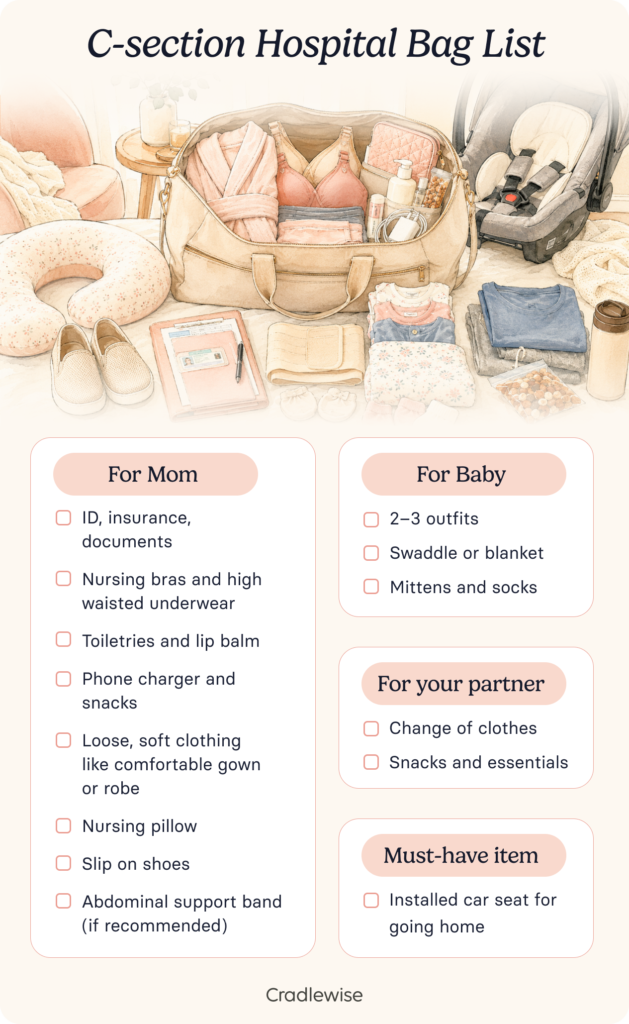
What to pack for your C-section hospital bag
Packing your hospital bag ahead of time can reduce last-minute stress and help you feel more in control. Recovery from a C-section usually requires a slightly longer hospital stay, hence you may want to include a few extra items in your postpartum recovery kit.
Helpful items for C-section recovery:
Final thoughts
This guide on how to prepare for a c-section informs you, supports you, and makes you feel ready for both the birth and recovery that follows. By taking proactive steps like staying active, eating and drinking healthy, and identifying your support team, you feel calm, confident, and in control.
Trust in your strength, lean on your support system, and take it one step at a time. You’ve got this!
FAQs
Q: What is the best last meal to eat before a C-section?
A: A light, balanced meal with protein, whole grains, and easy-to-digest foods is ideal, think something like rice, veggies, and lean protein. Avoid anything too heavy or greasy so you feel comfortable going into surgery.
Q: What should I do the night before a C-section?
A: Focus on rest, hydration, and following your doctor’s instructions, including when to stop eating or drinking. It can also help to double-check your hospital bag and take a few quiet moments to relax and mentally prepare for meeting your baby.
Q: What foods should you avoid the day before a C-section?
A: Try to avoid fatty, fried, or very spicy foods, as well as anything that can cause bloating or discomfort. Simple, nourishing meals are your best bet to keep your body feeling calm and ready.
Q: What should I avoid before a C-section?
A: Avoid eating or drinking as instructed before surgery and follow all medical guidelines carefully. Also, avoid smoking and drinking alcohol.
Q: How long does it take to recover from a C-section?
A: C-section recovery takes about 6-8 weeks, though full healing may take longer, upto 3 months or longer.
Q: Is a planned C-section less stressful than an emergency one?
A: Planned C-sections often feel calmer because you know what to expect and can prepare in advance.
Q: When should I pack my hospital bag for a C-section?
A: It’s best to have your bag ready by 36–37 weeks of pregnancy.
You may also like:
- Cradlewise supported me as I recovered from a C-section.
- Rediscovering intimacy and sex after birth: A guide for new parents.
- Finding your rhythm: How long should a newborn breastfeed at each session?
Sources:
- How to prepare physically for a C-section. National Library of Medicine. 1985. Blood volume changes in normal pregnancy.
You may also like


