Parenting
0 min read
Safe sleep for babies: The do’s and don’ts for new parents


Cradlewise Staff
Bringing your baby home is filled with joy, but also with questions, especially about safe sleep for babies. With updated guidance from the American Academy of Pediatrics (AAP), now you can have more clarity around the new safe sleep guidelines for babies, room sharing with your newborn, safe sleep products, and how to set up a truly safe sleep environment.
Safe infant sleep is about creating a consistent, protective sleep area that reduces the risk of SIDS, suffocation, and other sleep-related infant deaths. From choosing the right crib or bassinet to understanding why weighted blankets aren’t recommended, small decisions make a big difference.
In this blog, we will provide a refresher on the critical do’s and don’ts of safe sleep so you can create the best sleep environment for your little one with confidence. Whether you are a new parent or need an update on the current guidelines by AAP, the information below covers the most up-to-date practices to protect your baby during sleep.
The do’s of putting your baby to bed
The Centers for Disease Control and Prevention (CDC) reports that around 3700 babies in the U.S. die every year in their sleep unexpectedly. Most of these devastating deaths are caused by suffocation, strangulation, or sudden infant death syndrome (SIDS).
Most safe sleep practices are centered around maintaining a safe sleep environment. To prevent sleep-related infant deaths, the AAP has listed several safe sleep practices that may help reduce SIDS.
They also provide guidance on how to prevent unintentional strangulation or suffocation. The recommendations provided by the AAP are for babies up to one year of age.
1. Use a firm sleep surface
As per AAP, any surface that inclines over 10 degrees when your baby is placed on it, is unsafe. Your crib mattress should not be indented when you place your baby in the crib.
The Consumer Product Safety Commission (CPSC) has outlined specific safety standards for cribs, bassinets, and play yards. Check these safety standards to ensure your crib complies with them and has not been recalled by CPSC.
Additionally, crib mattresses are designed to fit specific cribs, so ensure the mattress you use has been made for your crib and fits tightly with no gaps that your baby could fall into and become trapped.
2. Place your baby on their back
In comparison to babies who sleep on their stomachs or sides, babies who sleep on their backs are less likely to die unexpectedly. Side lying can lead to babies rolling over more easily, onto their stomachs.
You may worry that your baby will choke if they are placed on their backs, but their gag reflex and airway anatomy prevent this from happening.
Premature babies are initially placed on their stomachs in the NICU, but when your baby is medically stable, you should begin placing them on their back.
Furthermore, some babies roll independently onto their stomachs when they are 3 or 4 months old, even if you place them on their backs. If your baby is comfortable rolling from tummy to back and vice versa, you do not need to change their position.
3. Keep the sleep environment clear
Ensure there are no suffocation hazards or objects that can cause entrapment in the crib, such as blankets, comforters, loose bedding, soft toys, pillows, mattress toppers, or bumper pads.
These items could block your baby’s airflow if they roll into them. Only a fitted sheet should be used in a crib to prevent accidental suffocation.
4. Use a sleep sack or swaddle
If you are worried about your baby becoming cold without a comforter or blanket, the AAP recommends wrapping them in a swaddle or putting them in a sleep sack.
Conversely, there is also the risk of overheating, which may increase the risk of SIDS. The general rule is to dress your baby in one additional layer than what you are wearing to ensure warmth but prevent overheating.
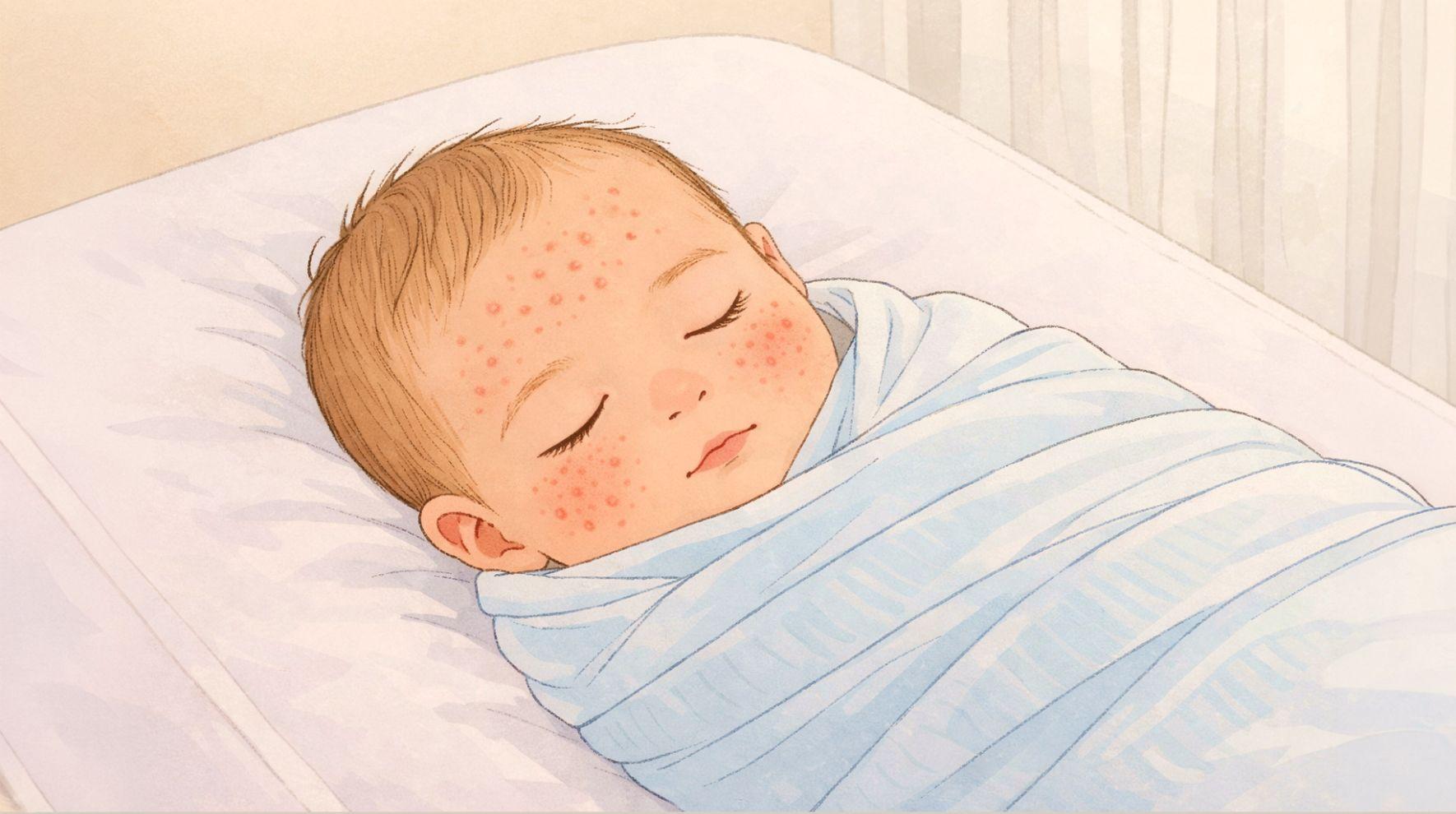
There are signs to check if your baby is overheating. A flushed face, sweating, and hot chest are a few tell-tale signs that your little one is too hot. Babies expel excess heat from their heads, so there is no need to place a hat on their heads while at home.
Once your baby shows signs of rolling over, remove the swaddle as the risk of suffocation is higher if your baby is swaddled when they roll over.
5. Offer a pacifier
Not all babies take to a pacifier, but if they do, pacifiers can help reduce SIDS even if they fall out once the baby drifts off to sleep. As long as you do not tie the pacifier around your baby’s neck with a string or a clip (which can cause strangulation), it is safe to use.
The don’ts of putting your baby to bed
1. Don’t share a sleep space with your baby
The AAP does not recommend sharing a sleep space with your baby. If you feed your baby in bed, move them to their crib when they are full and show signs of tiredness.
If you’re up late and feeding in bed where you might fall asleep, ensure there are no pillows, blankets, or sheets that could restrict your baby’s airflow by covering their face. When you wake up, place your baby in their own bed.
Instead of bed sharing, the AAP recommends room sharing as it can reduce SIDs by up to 50%. Place your baby’s bassinet or crib close to your bed for easy access.
2. Don’t use weighted blankets or swaddles
The CPSC urges parents not to use weighted blankets or swaddles as these products drastically reduce the oxygen saturation levels in infants. Prolonged exposure to low oxygen levels can harm your baby’s brain development.
3. Don’t smoke around your baby
Smoking around your baby can increase the risk of SIDS, even if you are smoking on the balcony. Smoking includes cigarettes, vapes, and electronic cigarettes.
It is safest not to smoke near your baby at all. If you are a smoker, it is not recommended to share a bed with your little one, even if you don’t smoke in bed.
4. Don’t use cardiorespiratory monitors as a way to prevent SIDS
These products do not have the same safety guidelines or standards as other medical devices, and there is no evidence that wearable heart rate monitors or pulse oximetry monitors reduce SIDS.
If you wish to use them, you can, as long as you don’t use them as a substitute for the safe sleep guidelines outlined above.
5. Don’t cover your baby’s head during sleep
It is recommended to cover your newborn’s head after birth to maintain a temperature above 97.9. However, it is not advisable to cover their head during sleep beyond the early newborn stage. Keeping it can lead to overheating and the risk of SIDS.
Conclusion
Creating a safe sleep environment does not require complicated products or constant worry. A firm crib or bassinet, a clear sleep area, room sharing without bed sharing, and avoiding unsafe products like weighted blankets all work together to reduce the risk of SIDS and other sleep-related dangers. The safest infant sleep setup is simple, flat, and free of added items.
When in doubt, remember this: back to sleep, on a firm surface, in a clear sleep environment, every time.
FAQs
Q: Does using a pacifier reduce SIDS risk?
A: Yes. Offering a pacifier at nap time and bedtime has been associated with a reduced risk of SIDS. If the pacifier falls out after your baby falls asleep, it does not need to be replaced.
Q: Are baby monitors or breathing monitors recommended to prevent SIDS?
A: No. Home cardiorespiratory monitors and wearable tracking devices have not been shown to reduce SIDS risk and should not replace established safe sleep practices.
Q: Can my baby sleep in a swing, car seat, or inclined sleeper?
A: No. Babies should not routinely sleep in sitting or inclined devices. If a baby falls asleep in a car seat, stroller, or swing, they should be moved to a firm, flat crib or bassinet as soon as possible.
Q: Can babies use weighted blankets or weighted swaddles?
A: No. Weighted blankets and weighted swaddles are not recommended for infant sleep. They may reduce oxygen levels and increase the risk of suffocation. A wearable sleep sack without added weight is a safer alternative.
Q: Is room sharing safer than bed sharing?
A: Yes. The AAP recommends room sharing because it can reduce the risk of SIDS by up to 50 percent. Your baby should sleep in the same room as you, but on a separate sleep surface such as a crib or bassinet.
Q: Is it safe for babies to sleep on their stomachs?
A: Babies should not be placed on their stomachs to sleep as this increases the risk of SIDS. Always place your baby on their back for sleep, especially during the first 6 months. If your baby learns to roll both ways and rolls onto their stomach, you don’t need to reposition them.
Q: What is considered a safe sleep environment for babies?
A: A safe sleep environment for babies includes a firm, flat mattress in a crib or bassinet that meets current CPSC safety standards, covered only by a fitted sheet. The sleep area should be free of soft bedding, toys, pillows, bumpers, and loose items.
You may also like:
- Books to read to your baby: From pregnancy to toddlerhood
- PURPLE Crying: What It Is, Why It Happens, and How to Get Through It
- Do babies really snore? When it’s sweet and when it’s a sign to check in
Sources:
- SIDS. AAP Publications. 2022. Sleep-Related Infant Deaths: Updated 2022 Recommendations for Reducing Infant Deaths in the Sleep Environment.
- SIDS and sleep-related infant deaths. CDC Reproductive Health. 2024. Helping Babies Sleep Safely.
- Room sharing reduces the risk of SIDS. American Academy of Pediatrics. 2026. How to Keep Your Sleeping Baby Safe: AAP Policy Explained
- Protective effect of pacifiers on the incidence of SIDS. National Library of Medicine. 2004. Do pacifiers reduce the risk of sudden infant death syndrome? A meta-analysis.
- CPSC standards when purchasing a crib or mattress. Consumer Product Safety Commission. 2011. “Retailers required to sell only cribs that meet CPSC’s new crib standards.”
- Chapter 19 A United States Perspective. National Library of Medicine. 2018. SIDS Sudden Infant and Early Childhood Death: The Past, the Present and the Future.
- CPSC’s latest data show that between 2019 and 2021.CPSC. 2024. New CPSC Report Shows Unsafe Sleep Environments Are Leading Cause of Injuries and Deaths with Nursery Products.
You may also like