Pregnancy
0 min read
C-section recovery tips: How to sleep, feed, and exercise after surgery


Cradlewise Staff
The first few weeks after birth can feel like a blur. But when you are recovering from surgery, everything from sitting up to feeding your baby can feel just a little harder.
That’s why having the right C-section recovery tips can make all the difference.
Life after C-section is more than just about healing your incision. Your life after C-section would involve how you sleep comfortably, move safely, feed your baby without pain, eat to recover, and take care of yourself while adjusting to a completely new routine.
In this guide, we walk you through what recovery after C-section really looks like and how to make everyday moments feel easier, one small step at a time.
We also talked to Dr. Stanislaw Miaskowski, MD, OB/GYN, from Orlando Health Winnie Palmer Hospital, Juliana Parker, Founder/Registered Nurse at Nurse Core Triage, Inc, and Erica Manto Paulson, Certified Doula, Childbirth Educator & the founder of Nurture in Cincinnati, Ohio, who have shared their useful insights for mothers after C-section surgery.
C-section recovery timeline: What to expect
A C-section is a major surgery and recovery takes time. Understanding the C-section recovery timeline helps set realistic expectations for new moms.
- First 48 hours: Pain, swelling, and limited movement are common. You will be encouraged to start gentle movement.
- Weeks 1-2: You are home, moving slowly, managing pain, and adjusting to newborn care.
- Weeks 3-6: Your mobility improves, but internal healing is still ongoing. And certain movements can still be painful. Bending and lifting are still not advisable.
- 6-8 weeks: Many are cleared for light exercise and daily routines.
During c-section recovery, be prepared for some days to feel easier than others. You can read up in detail about the C-section recovery timeline (what to expect week by week) by clicking here.
How long is the recovery from a C-section
C-section recovery typically takes about 6 to 8 weeks for initial physical healing, though full internal recovery can take up to 3 months or longer. Most parents begin to feel better within a few weeks, but it’s important to allow your body time to heal gradually.
How to sleep after C-section delivery?
Best sleeping positions after C-section
Erica Manto Paulson recommends, “For sleep, many people find that strategic pillow support makes a huge difference—a pillow under the knees when lying on the back or behind the back and between the knees when side-lying can reduce strain on the abdomen and lower back.”
When can you start bending after C-section?
When can you exercise after C-section?
You can start with light movement like walking (but avoid the stairs) within days, but most moms are cleared for postpartum workout around 6-8 weeks, depending on their recovery. You can still not do heavy lifting (lifting anything heavier than the baby), deep twisting, or abdominal crunches until after medical clearance.
Dr. Miaskowski recommends, “Pelvic floor exercises (kegels) can begin immediately in the postpartum period. Abdominal strengthening, for example, has been shown to decrease diastasis recti (separation of the six-pack muscles) in women after cesarean delivery.”
Erica Manto Paulson says, “Working with a women’s health PT can be incredibly helpful. These specialists can guide gentle, progressive exercises that support healing, restore core stability, and help the body safely return to movement after birth.”
How to breastfeed after C-section?
Dr. Miaskowski recommends the following breastfeeding positions to avoid pressure on the incision and to enhance comfort:
- Side-lying: Allows you to rest while feeding without pressure on the incision.
- Football (clutch) hold: Your infant is tucked above your arm, keeping the weight off the incision.
- Elevated positioning: Using pillows to support your newborn at the breast level reduces strain on your back, shoulder, and chest muscles.
Nurse Juliana Parker adds, “Pillows will quickly become your best friend for both sleep and feeding support.”
How to use bathroom after C-section?
You will usually be encouraged to get up and walk to the bathroom within 24 hours, which helps improve circulation and prevent complications.
It’s common to experience:
- Mild pain when sitting, standing, or using the toilet
- Difficulty passing urine initially (especially after catheter removal)
- Constipation due to surgery, pain medicine, and reduced movement
Most new mothers fear taking a poop after c-section, and justly so. Drinking plenty of water, eating fiber-rich foods, and taking stool softeners make things easier in the first few days.
When to have sex after C-section?
There’s no exact timeline for having sex after birth, but most doctors recommend waiting until your 6-week postpartum checkup before having sex after a C-section.
This allows time for:
- The uterus and cervix to heal
- Vaginal bleeding (lochia) to stop
- The incision to strengthen and reduce the risk of infection
When to bathe after C-section?
You can usually start showering within 24-72 hours after a C-section, as long as your incision is protected and healing well. Just pat your incision, try not to scrub.
However, soaking in a bathtub, pool, or hot tub should be avoided until the incision has healed (around 3-6 weeks), as since submerging the incision too early can lead to infection.
C-section recovery tips
Prevent constipation and support digestion
Digestive discomfort is very common after a C-section. Around 52% of new moms experience postpartum constipation, with a slightly higher risk after a C-section.
- Eat fiber-rich foods (vegetables, fruits, whole grains) to help prevent constipation.
- Drink plenty of fluids.
- Move regularly to help your bowel movements.
Set up your space for easier recovery
Setting up your space according to your needs and convenience can help you limit unnecessary movement and restrict you from taking stairs while you are recovering.
- Keep essentials like diapers, a change of clothes, and other baby-related items in various places in your home so you don’t have to move a lot to get the job done.
- Keep snacks, pain meds, and water within easy reach.
- Share the room with your newborn so you don’t have to get up.
Ask for help early
Do not hesitate to ask for help with meals, chores, or baby. Remember, you are not alone and you do not have to do this alone.
Avoid overcommitting socially
Juliana Parker says, “Your body needs time to rest and recover, so try not to fill your calendar with activities or visitors.”
While in the initial few weeks after your cesarean delivery, stepping out for your check-up is unavoidable, try not to over-exert by frequently going out for shopping, leisure visits, or traveling. Instead, call in a few close people who support you emotionally, but don’t expect much from you.
What to eat after C-section for fast recovery
Focus on getting adequate nutrition to support your healing, breastfeeding, and breast milk production.
What foods are good for C-section recovery?
Erica Manto Paulson suggests:
- Protein-rich foods (eggs, beans, lean meats) to help with recovery and wound healing
- Iron-rich foods to replenish blood loss
- Fiber-rich foods (vegetables, fruits, whole grains) to help prevent constipation
- Hydrating foods and plenty of fluids
Doula tip: We suggest limiting processed foods and prioritize warm, nourishing meals that are easier to digest and supportive of healing during the early postpartum weeks.
What foods to avoid after C-section delivery?
Juliana Parker recommends, “Foods to limit include highly processed foods, excessive sugar, and foods that may worsen constipation or bloating.”
Helpful C-section recovery essentials
Some simple recovery tools can make everyday life easier:
- abdominal binder
- nursing pillow
- stool softener
- high-waisted underwear
- heating pad
- long phone charger
- water bottle with straw
- bedside snack basket
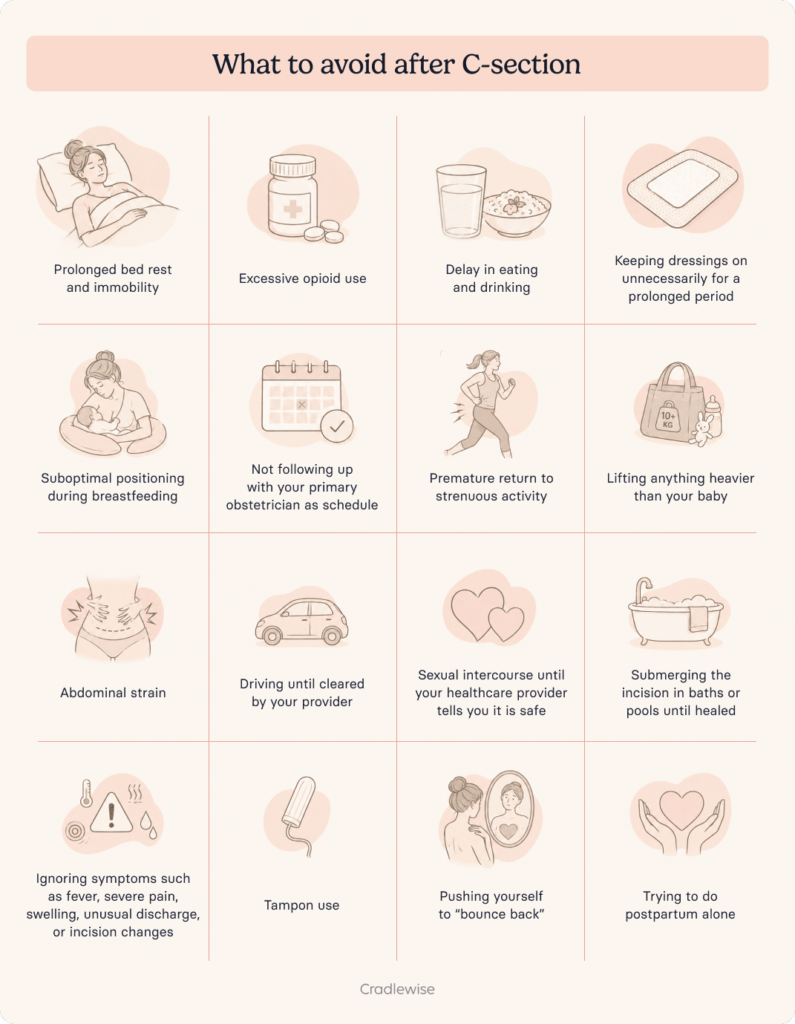
What to avoid after C-section
We have compiled a list of things to avoid after C-section, after consulting our medical experts.
Conclusion
Life after a C-section is a journey made up of small, steady steps.
The right C-section recovery tips can help you feel more comfortable, more confident, and more supported as you move through those early weeks.
You are healing, adjusting, and caring for a new life all at once. Give yourself the same care and patience you would offer someone you love.
FAQs
Q: When can I exercise after C-section?
A: You can start with light movement like walking within a few days, but most moms are cleared for postpartum workout around 6-8 weeks, depending on their recovery and doctor’s advice.
Q: When can I start bending after C-section?
A: Gentle bending for daily tasks can begin within the first week as comfort allows, but deeper bending or movements that strain your core should be avoided for about 4-6 weeks.
Q: What is the 5-5-5 rule for postpartum C-section recovery?
A: The 5-5-5 rule suggests resting for 5 days in bed, 5 days on the bed, and 5 days around the bed to support gradual healing and avoid overexertion after delivery.
Q: When can you start driving after a caesarean section?
A: Most doctors recommend waiting about 4-6 weeks before driving, or until you can move comfortably, brake suddenly without pain, and are no longer taking strong pain medication (opioids can cause somnolence). It is advisable to consult with your primary obstetrician to provide clearance for driving.
Q: When can you take a bath postpartum?
A: You can usually shower within 24-72 hours after a C-section, but soaking in a bath should wait until your incision has healed, typically around 3-6 weeks.
Q: Is C-section recovery very painful?
A: C-section recovery can feel quite painful in the first few days, especially around the incision and when moving, coughing, or getting out of bed. However, the discomfort usually improves within 2–3 weeks.
You may also like:
- 10 unexpected benefits of babywearing (besides having both hands free).
- The 4th trimester explained: What’s happening to your baby (and you)
- Self care awareness month: 10 micro-moments of peace for exhausted new parents
Sources:
- C-section recovery timeline. NHS UK. Recovery Ceasarean Section.
- Postpartum constipation. National Library of Medicine. 2021. Pregnancy, puerperium and perinatal constipation – an observational hybrid survey on pregnant and postpartum women and their age-matched non-pregnant controls.
You may also like


