Pregnancy
0 min read
First-trimester exhaustion explained: Causes, relief, and what helps

Medically Reviewed Dr. Rachel Miller, Obstetrician & Gynecologist at Atrium Health
Written by Cradlewise Staff
Pregnancy may look like a picture postcard, glowing skin, voluminous hair, a cute bump, all smiles, but behind the scenes, it can feel very different. There may be days when all you want to do is hit the pillow and melt into the couch, no matter how much sleep you got the night before. You’re not lazy and you are not sick; this is first-trimester exhaustion.
That bone-deep tiredness that seems to come out of nowhere? It’s your body’s way of saying, “Hey, I’m doing a lot right now.” In fact, experts say early pregnancy can feel a lot like running a marathon, minus the sneakers.
We spoke with two OB-GYNs, Dr. Rachel Miller of Atrium Health and Dr. Shannon Scott Schellhammer of Orlando Health Winnie Palmer Hospital for Women and Babies, to unpack what’s really happening in your body, when this phase ends, and how to make it through with a little more rest.
What causes first-trimester exhaustion?
Those early pregnancy signs can sneak up on fast, sometimes as soon as a week after conception. One day you’re powering through your to-do list, and the next, getting out of bed feels like climbing a mountain.
“ I often describe the first trimester as your body literally building an entire organ from scratch (the placenta). It takes much more energy than you could imagine. The hormone that’s responsible for the fatigue is progesterone. Think of the fatigue as a sign that your body needs to slow down in order to do its important work.”
Every minute of your first trimester, your body is hard at work behind the scenes, building a brand-new organ – the placenta, ramping up blood volume, creating new tissue, and balancing a surge of hormones. It’s putting in serious overtime, even when you’re just sitting still.

Did you know?
By the end of the first trimester, your body’s blood volume has already increased by up to 50% to help build the placenta and support your baby. No wonder you’re exhausted, your body’s basically training for a marathon while you’re sitting on the couch.
When does first-trimester exhaustion start and when does it peak?
First-time exhaustion usually sets in within the first 1-2 weeks after conception, well before other symptoms show up. It tends to become intense through weeks 6 -10, when hormone levels and the energy demands of placenta-building are climbing fastest.
How long will this “marathon” phase of fatigue last?
The good news: this season of all-day tiredness doesn’t last forever. Most parents-to-be start noticing their energy return around the end of the first trimester. Around weeks 13–14, you may find you can finally make it through the day without crashing mid-afternoon.
Think of the second trimester as your “runner’s high” moment, a burst of energy before you head into the home stretch later on.
Why does pregnancy fatigue feel so different from normal tiredness?
You know that tired feeling after staying up too late or squeezing in a tough workout?
Well, first-trimester fatigue feels different. This isn’t the kind of exhaustion a nap or a smoothie can fix. It’s a deep, all-over exhaustion that seeps into your bones and makes even small tasks feel monumental because your body is juggling massive hormonal changes, higher energy demands, and nonstop adjustments to support your growing baby, all at once.
Dr. Rachel Miller explains it best: “I’ve never run a marathon, but I have been pregnant. (The furthest I’ve run is six miles.) Fatigue hits everyone differently. Some people handle it more easily, but for others, it really can feel like running a marathon.”
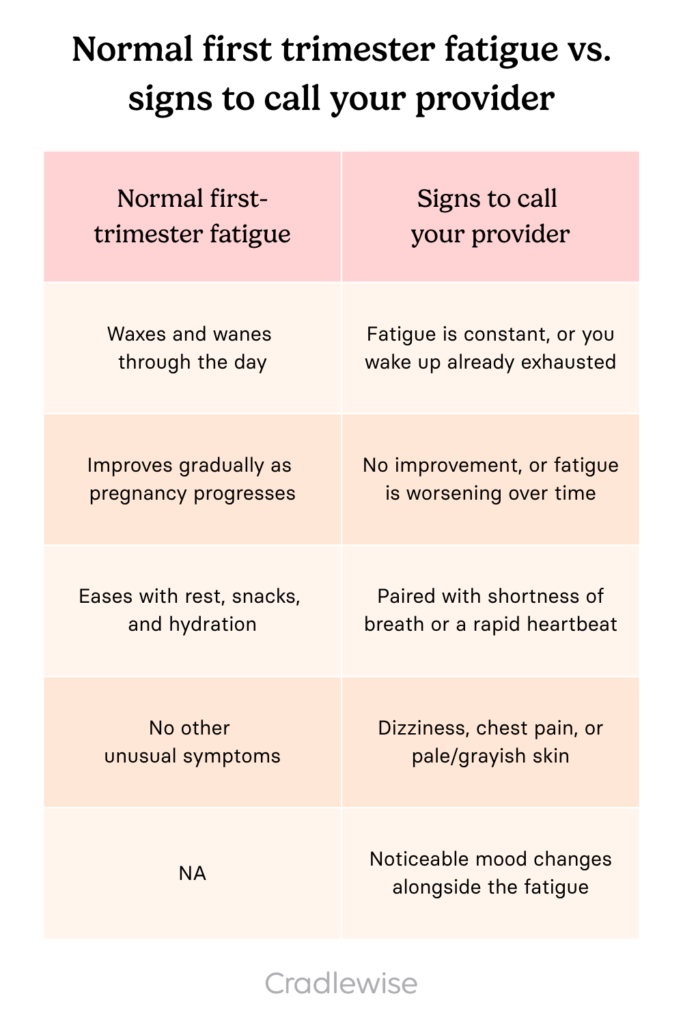
“ First-trimester fatigue will wax and wane throughout the day and improve as you progress in pregnancy. Versus medical issues causing fatigue will be more consistent throughout the day and you will likely wake up fatigued. You may also experience other symptoms such as shortness of breath, muscle aches, skin changes such as dryness or color changes with medical conditions causing fatigue.”
How to beat pregnancy insomnia in the first trimester?
It’s a strange paradox: exhausted all day, then wide awake the moment your head hits the pillow. If that’s happening to you, there’s a reason for it.
“ It is common when you lay down at night, your body is able to rest but your mind has a moment to reflect on the day or the next day. It is important to do some mind-calming exercises if you are having trouble falling asleep. Try not to get anxious or worried about not falling asleep, as it will only keep you up more.”
Napping in the first trimester
Naps can genuinely help, but the wrong nap can work against you at bedtime and keep you awake.
If you nap, keep it earlier in the day and on the shorter side, and as Dr. Schelhammer suggests, consider a short walk or a swim afterward to help your body wind down again by bedtime.
Cradlewise Tip: If daytime exhaustion is colliding with nighttime insomnia, small wind-down habits like an earlier bedtime and a consistent pre-sleep routine can help.
For more strategies, see our guide to natural remedies for insomnia during pregnancy.
First trimester exhaustion tips: How to recharge when you’re running on empty
Here’s the truth: you can’t outsmart pregnancy fatigue. But you can make small adjustments to help your body recharge and cope.
- Snack often. Eat small, frequent meals that combine protein and complex carbs, like yogurt and fruit, or hummus with whole-grain crackers, to keep your blood sugar steady.
- Sip, sip, sip. Dehydration can sneak up fast, especially if you’re battling pregnancy nausea and vomiting. Keep a water bottle handy.
- Move gently. A slow walk, a swim or a few prenatal yoga stretches can actually boost circulation and energy levels.
- Nap without guilt. If your body’s asking for rest, listen. Just keep naps short and early, as covered above..
Dr. Miller adds, “Small, frequent snacks, staying hydrated, and gentle exercise like walking can give you more energy. Don’t forget about the power naps during lunch break!”
How do you balance work, family, and extreme tiredness?
If you’re trying to juggle work deadlines, family responsibilities, and a growing baby, all while barely keeping your eyes open, you’re already doing your best. This phase can test even the most organized person.
Give yourself permission to let go of the “extras.”
Dr. Miller adds: “This is tough! I tell my patients that they have to set boundaries and establish what is non-negotiable. Forget about the ‘extra stuff’ for now. Don’t feel guilty for take-out for dinner or letting the laundry go an extra week. All that is fine.”
Pregnancy is not the time to prove you can ‘do it all.’ It’s time to slow down, let go, and focus on what really matters: your health and your baby.
When to call your doctor about fatigue
Feeling wiped out is a hallmark of early pregnancy, and most of the time, it’s completely normal.
But sometimes, fatigue can be a sign of something else, like anemia or thyroid issues.
Dr. Miller advises, “If the fatigue is paired with shortness of breath, rapid heartbeat, or chest pain, dizziness, pale or grayish colored skin, or if there are mood changes associated with the fatigue. These are indications that there may be something else going on. Be sure to address these with your physician or midwife.”
When in doubt, it’s always better to get checked. Your doctor can make sure there’s no underlying issue.
Conclusion
Your body is running one of the most intense endurance events there is, 24/7, without visible medals or finish lines. If you need extra rest, naps, or slower mornings, take them. You’re not weak. You’re growing a human inside you, and that’s the most powerful kind of strength there is.
The first-trimester exhaustion may hit you hard, but remember: this is for a very short time, and second-trimester energy is waiting for you at the finish line.
FAQs
Q: Is it normal to be completely exhausted during the first trimester?
A: Yes. Rapid hormonal shifts, especially rising progesterone, along with the energy demands of building the placenta, make significant fatigue a normal part of early pregnancy. Rest often, eat small frequent meals, and stay hydrated as your body adjusts.
Q: When does first-trimester exhaustion peak?
A: Fatigue often intensifies through weeks 6 to 10, as hormone levels and the energy cost of early placental development climb. Most people start feeling more like themselves by weeks 13-14.
Q: Why am I exhausted all day but can't fall asleep at night?
A: It’s a common pattern. During the day, hormonal and physical demands wear you down, but at night, your mind finally has space to reflect on the day, which can delay sleep. Gentle, mind-calming routines before bed can help.
Q: How long should I nap during the first trimester?
A: Aim for 30 to 60 minutes, earlier in the day rather than late afternoon or evening, so your nap supports rest without affecting your nighttime sleep.
Q: When should I worry about first-trimester fatigue?
A: Most fatigue waxes and wanes and gradually improves. Consistent, unrelenting exhaustion, or fatigue paired with shortness of breath, a rapid heartbeat, dizziness, or skin changes, is worth mentioning to your provider.
You may also like:
- When do babies start kicking? Your guide to baby’s first movements.
- Ask the expert: How to choose the right prenatal vitamins during pregnancy.
- The Dirty Dozen during pregnancy: How to think about produce, pesticides, and what to wash.
Sources:
- Body’s blood volume increases by up to 50%. Cardiovascular Journal of Africa. 2016. Physiological changes in pregnancy.
You may also like


