


The Ultimate Guide
to Baby Sleep
Why do babies sleep the way they do? How many naps should they be taking? And how can you preserve your own sleep and sanity? Find the answers in these month-by-month evidence-based guides.








Bounce to month
0–24 months, just like our crib.


Dr. Anoop Rao

Medical Advisor
Dr. Rao is a Neonatologist at the Lucile Packard Children's Hospital at Stanford. He is triple board-certified in Pediatrics, Neonatology, and Clinical Informatics.
Dr. Rao is also an educator and a Clinical Assistant Professor at Stanford University School of Medicine. He has an MS degree in Biological Engineering from MIT, followed by fellowship training at Harvard.
Other related reads

Science of baby sleep
Baby travel sleep checklist: Everything you need for naps and bedtimes away from home
Because a baby travel sleep checklist helps recreate familiar sleep cues, making naps and bedtimes easier away from home.

Science of baby sleep
Toddler Bedtime Routine: How to Handle Bedtime Battles
A consistent toddler bedtime routine can make evenings easier. Here's how to build one, handle bedtime battles and help your child settle.

The Ultimate Guide to Baby Sleep
Why do babies sleep the way they do? How many naps should they be taking? And how can you preserve your own sleep and sanity? Find the answers in these month-by-month evidence-based guides.


Bounce to month
We have you covered from 0 — 24 months, just like our crib.

Dr. Anoop Rao
|Medical AdvisorDr. Rao is a Neonatologist at the Lucile Packard Children's Hospital at Stanford. He is triple board-certified in Pediatrics, Neonatology, and Clinical Informatics.
Dr. Rao is also an educator and a Clinical Assistant Professor at Stanford University School of Medicine. He has an MS degree in Biological Engineering from MIT, followed by fellowship training at Harvard.
Other related reads

Science of baby sleep
Baby travel sleep checklist: Everything you need for naps and bedtimes away from home
Because a baby travel sleep checklist helps recreate familiar sleep cues, making naps and bedtimes easier away from home.

Science of baby sleep
Toddler Bedtime Routine: How to Handle Bedtime Battles
A consistent toddler bedtime routine can make evenings easier. Here's how to build one, handle bedtime battles and help your child settle.
Science of baby sleep
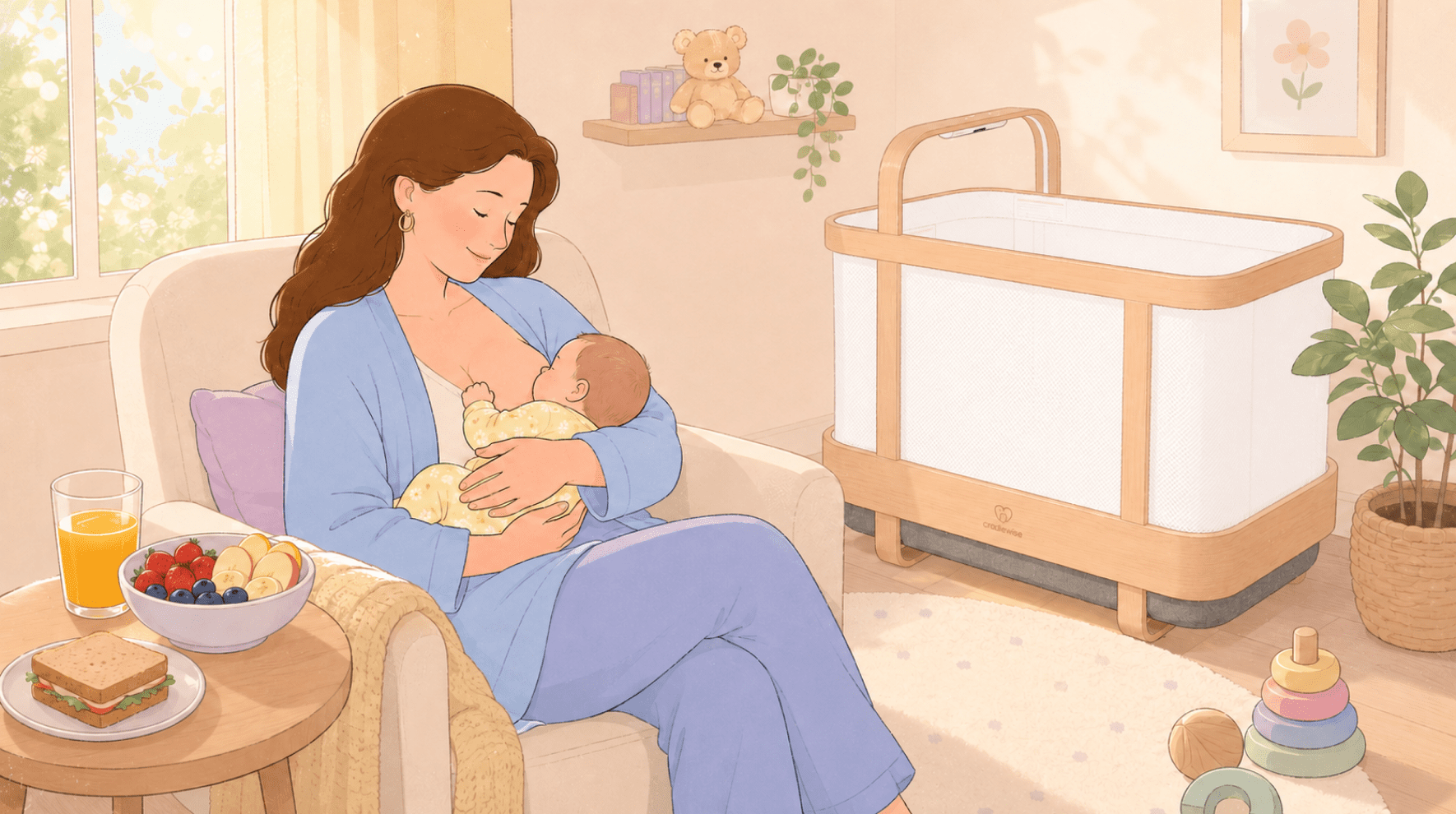
Newborn falling asleep during breastfeeding: Is it normal?
Learn why newborns fall asleep while nursing, how to tell if your baby is full or just sleepy, and how to wake a sleepy baby.